

Introduction
Water is one of the most valuable natural resources supporting human life, agriculture, industry, infrastructure, and ecosystems. However, increasing population, rapid urbanization, industrial growth, and climate change are placing immense pressure on India's water resources.
Groundwater levels are declining across many parts of the country, while demand for water continues to rise. In this scenario, rainwater harvesting has emerged as one of the most effective and sustainable solutions for water conservation and groundwater recharge.
Rainwater harvesting involves collecting, storing, and recharging rainwater for future use. It not only helps conserve water but also supports environmental sustainability and regulatory compliance.
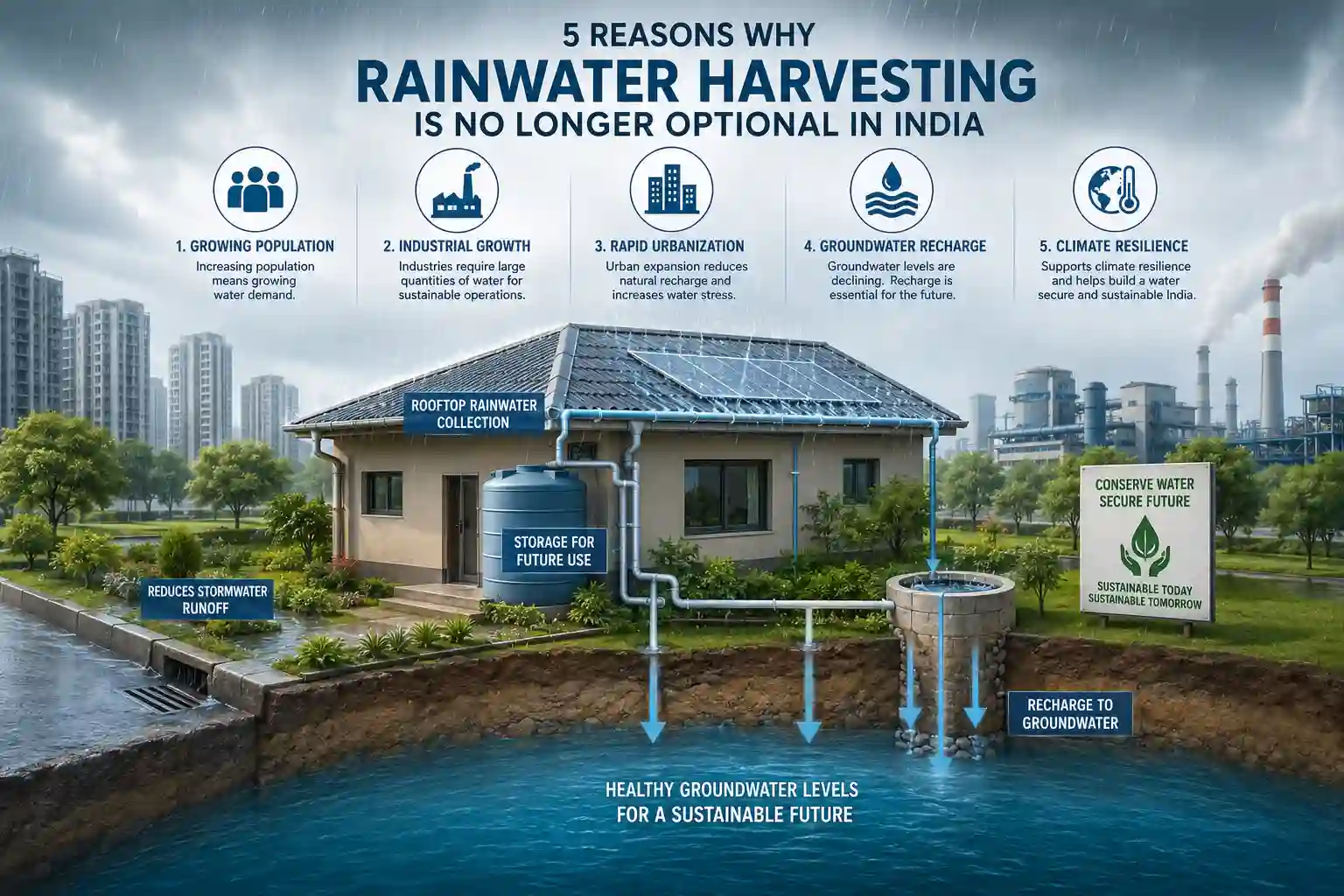
Here are five key reasons why rainwater harvesting is becoming a necessity rather than an option.
Growing Population Means Growing Water Demand
India is one of the world's most populous countries, and the demand for water continues to increase every year.
Water is required for:
- Drinking purposes
- Household activities
- Agriculture
- Industries
- Commercial establishments
- Infrastructure development
As population increases, pressure on natural water resources also increases. Groundwater extraction has become one of the primary sources of water supply in many regions.
Without adequate groundwater recharge, future generations may face severe water shortages. Rainwater harvesting helps replenish groundwater reserves and supports long-term water security.
2. Industrial Growth Requires Sustainable Water Management
Industrial development is essential for economic growth, employment generation, and infrastructure development.
However, industries require significant quantities of water for:
- Manufacturing processes
- Cooling systems
- Boiler operations
- Cleaning and utility services
In many industrial areas, groundwater has become the primary source of water supply.
At the same time, urban expansion and industrial development often reduce green cover and natural recharge zones. This can lead to declining groundwater levels and water scarcity.
Rainwater harvesting allows industries to supplement water resources, improve groundwater recharge, and reduce dependence on external water sources.
3. Rapid Urbanization is Increasing Water Stress
India is witnessing rapid urbanization, with increasing migration from rural areas to cities.
This has led to:
- Expansion of residential projects
- Commercial developments
- Industrial parks
- Roads and urban infrastructure
As open land is replaced with concrete surfaces, rainwater that would naturally recharge groundwater aquifers is diverted into drains and stormwater systems.
The result is:
- Reduced groundwater recharge
- Increased urban flooding
- Falling groundwater levels
- Higher dependence on borewells
Rainwater harvesting helps cities capture and utilize rainfall effectively while improving groundwater availability.
4. Groundwater Aquifers Need Recharge
Groundwater is one of India's most important water resources.
Industries, residential societies, institutions, commercial establishments, and infrastructure projects often rely on groundwater to meet daily water requirements.
Unfortunately, groundwater extraction in many regions exceeds natural recharge rates.
Some common reasons include:
- Excessive borewell extraction
- Reduction in open green spaces
- Increased paved surfaces
- Poor groundwater recharge infrastructure
Rainwater harvesting helps reverse this trend by directing rainwater back into the ground through:
- Recharge pits
- Recharge wells
- Percolation pits
- Recharge trenches
- Rooftop rainwater harvesting systems
Industries using coal and liquid fuels generally attract higher pollution scores compared to cleaner fuels like PNG, LPG, CNG, or electricity.Many groundwater authorities now require rainwater harvesting systems as a condition for granting groundwater extraction permissions.
5. Rainwater Harvesting Supports Climate Resilience
Climate change is affecting rainfall patterns, groundwater availability, and water security across the country.
Deforestation, urbanization, and unsustainable resource use can disrupt natural hydrological cycles and reduce groundwater recharge.
The consequences include:
- Drought conditions
- Delayed monsoons
- Water scarcity
- Increased temperatures
- Reduced ecosystem resilience
Rainwater harvesting helps improve climate resilience by:
- Conserving water resources
- Supporting groundwater recharge
- Reducing pressure on freshwater sources
- Improving drought preparedness
- Enhancing long-term sustainability
It is one of the simplest and most effective climate adaptation measures available today.
Additional Benefits of Rainwater Harvesting
Apart from groundwater recharge, rainwater harvesting also offers several practical benefits:
- Reduces dependence on groundwater
- Improves water availability
- Supports agriculture and irrigation
- Reduces stormwater runoff
- Helps mitigate urban flooding
- Low operating and maintenance costs
- Environment-friendly and sustainable
- Supports regulatory compliance for many projects
- Enhances long-term water security
Rainwater Harvesting and Environmental Compliance
Rainwater harvesting is increasingly becoming a regulatory requirement under:
- Groundwater NOCs
- Environmental Clearance conditions
- Building approval regulations
- Water conservation guidelines
Many industries, commercial projects, group housing projects, and infrastructure developments are now required to install and maintain rainwater harvesting systems as part of their environmental compliance obligations.
Conclusion
India's future water security depends on how effectively we manage and conserve available water resources today.
Population growth, industrial expansion, urbanization, groundwater depletion, and climate change are all increasing pressure on freshwater resources.
Rainwater harvesting offers a practical, sustainable, and cost-effective solution to address these challenges.
Whether you are an industry, infrastructure developer, commercial establishment, institution, or homeowner, investing in rainwater harvesting is not just an environmental responsibility—it is a necessity for a water-secure future.