

Introduction
Electronic equipment has become an essential part of modern industries, offices and commercial operations. Computers, servers, printers, communication devices, electrical components and other electronic products support everyday business activities. However, frequent upgrades, equipment replacement and technological changes also generate increasing quantities of electronic waste.
Improper handling of discarded electronic equipment can result in environmental pollution, resource loss and regulatory risks. Businesses therefore need a systematic approach to identifying, storing, tracking and channelizing their electronic waste.
An E-Waste Audit helps organizations examine their existing waste management practices, identify compliance gaps and improve the recovery and recycling of discarded electronic equipment. It also supports responsible waste management under India's E-Waste (Management) Rules, 2022.
What Is an E-Waste Audit?
An E-Waste Audit is a systematic evaluation of the electronic waste generated, stored, handled and transferred by an organization. It examines the sources and categories of discarded electronic equipment, quantities generated, storage arrangements, records maintained and the methods used for recycling or disposal.
The assessment helps businesses understand whether their current practices are aligned with applicable environmental requirements and whether electronic waste is being transferred through authorized channels.
An E-Waste Audit generally examines:
- Types and quantities of electronic equipment discarded.
- Sources and frequency of e-waste generation.
- Storage and segregation arrangements.
- Records of collection and transfer.
- Details of registered recyclers or refurbishers.
- Applicable registration and reporting requirements.
- Gaps in documentation and waste handling procedures.
The objective is to establish better control over electronic waste from the point of generation until its authorized handover or processing.
Which Businesses Should Consider an E-Waste Audit?
Organizations involved in manufacturing, importing, refurbishing, dismantling, recycling or using electrical and electronic equipment should evaluate their responsibilities under the applicable rules.
The E-Waste (Management) Rules, 2022 cover the following principal stakeholder categories:
1. Manufacturers
Businesses manufacturing electrical and electronic equipment listed under Schedule I must examine their responsibilities for manufacturing-related e-waste, registration and applicable returns.
2. Producers
Companies manufacturing or selling notified electronic equipment under their own brand, including certain importers and brand owners, have Extended Producer Responsibility (EPR) obligations.
Businesses can understand the broader framework through our guide on Extended Producer Responsibility (EPR) in India.
3. Refurbishers
Businesses involved in refurbishing electronic equipment must manage the e-waste generated during their activities and comply with applicable registration and recordkeeping requirements.
4. Dismantlers
Entities involved in dismantling electronic equipment should follow applicable requirements for handling and channelizing e-waste.
5. Recyclers
Registered recycling facilities must maintain records of collected and processed e-waste, manage residual materials and follow applicable CPCB requirements.
For businesses planning to establish a recycling facility, our article on E-Waste Recycling Plant Setup in India provides a related overview.
6. Bulk Consumers
Large organizations using electronic equipment should ensure that the e-waste generated by them is handed over only to the entities permitted under the applicable rules.
The 2022 Rules also contain specific exclusions, including micro enterprises as defined under the MSMED Act, 2006. Applicability should be checked according to the entity's actual category and activities.
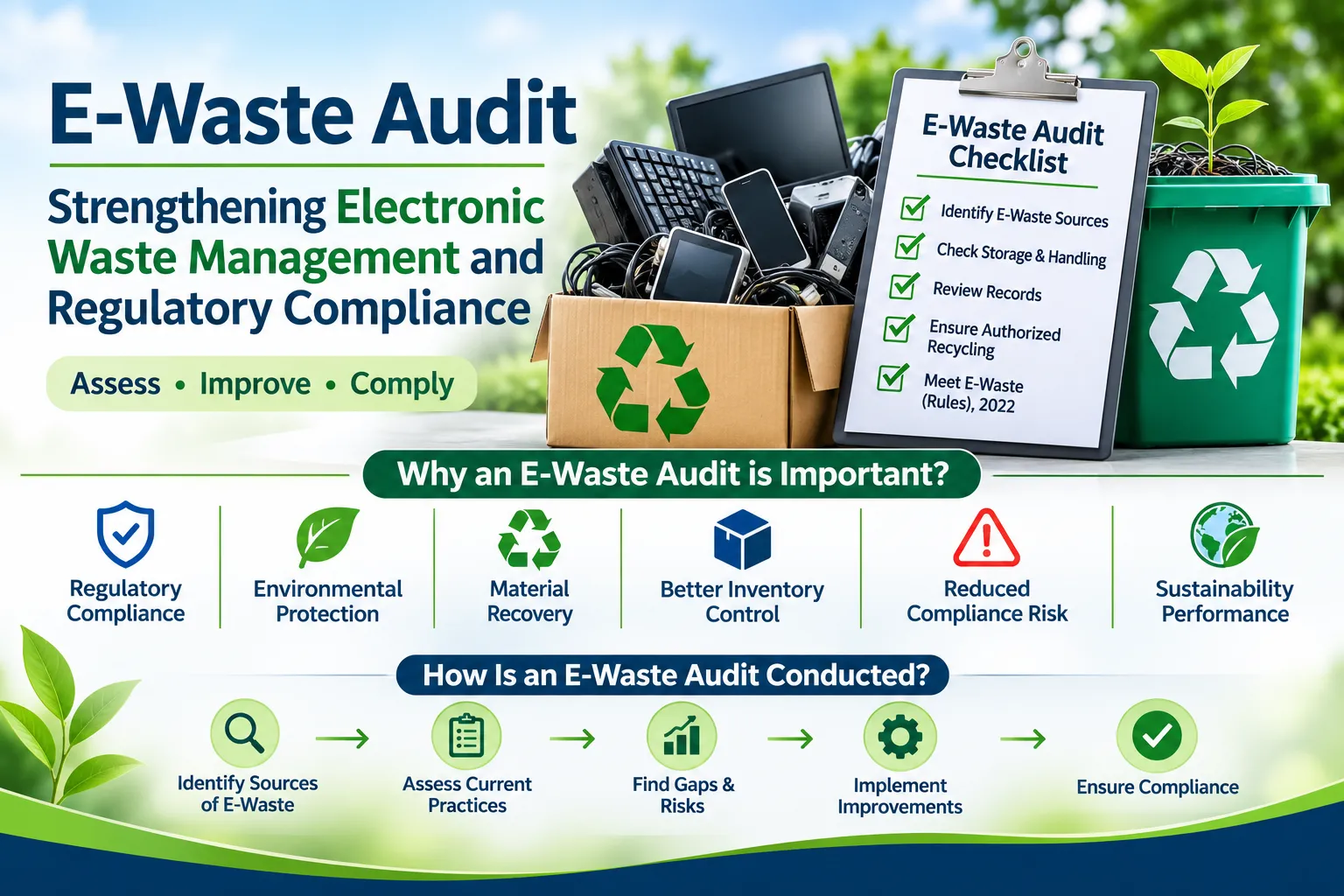
Why Is an E-Waste Audit Important?
Electronic waste can contain valuable recoverable materials as well as substances that require careful handling. An organized assessment helps businesses improve waste management practices while reducing operational and environmental risks.
Regulatory Compliance: Identifies gaps in applicable registration, recordkeeping, reporting and authorized waste handover requirements.
Environmental Protection: Helps prevent uncontrolled disposal and improper handling of electronic components containing potentially hazardous substances.
Material Recovery: Encourages the recovery of valuable materials through authorized recycling and refurbishment channels.
Better Inventory Control: Provides visibility into discarded equipment, waste quantities and the movement of electronic waste.
Reduced Compliance Risk: Helps identify documentation gaps and unsuitable disposal practices before they become serious regulatory issues.
Sustainability Performance: Supports resource efficiency, responsible procurement and circular economy initiatives.
How Is an E-Waste Audit Conducted?
A structured audit should examine the complete electronic waste management process within an organization. The following steps provide a practical assessment framework.
1. Identify Sources of Electronic Waste
Begin by identifying departments, production activities and operational areas where electronic waste is generated.
Common examples include:
- Computers, laptops and servers.
- Printers, scanners and photocopiers.
- Telecommunication and networking equipment.
- Electrical and electronic components.
- Control panels and electronic instruments.
- Discarded office and industrial electronic equipment.
2. Prepare an E-Waste Inventory
Prepare a record of discarded electronic equipment, including its category, quantity, condition, source and storage location. This inventory helps establish the amount and type of waste generated during a defined period.
3. Examine Collection and Storage Practices
Review how electronic waste is segregated, collected and stored before transfer. Check whether storage arrangements prevent breakage, uncontrolled mixing and inappropriate handling.
4. Verify Authorized Channelization
Examine whether discarded electronic equipment is transferred through appropriate registered producers, refurbishers or recyclers, as applicable under the rules.
Maintain supporting records such as handover documents, invoices, receipts and relevant transaction details.
5. Review Regulatory Applicability
Identify the organization's role under the E-Waste (Management) Rules, 2022. Review registration, EPR obligations, recordkeeping and return-filing requirements relevant to that category.
For more information about producer registration, read our guide on E-Waste EPR Registration.
6. Conduct a Compliance Gap Assessment
Compare actual practices with applicable regulatory requirements. Identify missing records, unsuitable storage arrangements, incorrect waste channelization and other areas requiring corrective action.
7. Recommend Corrective Measures
Develop practical recommendations for improving segregation, inventory management, authorized recycling, documentation and internal monitoring.
8. Prepare the Audit Report
Document the assessment findings, waste inventory, compliance observations, identified gaps and recommended corrective actions. The report can support internal environmental management and regulatory reviews where relevant.
Key Compliance Requirements Under E-Waste Management Rules, 2022
India's E-Waste (Management) Rules, 2022 came into force on 1 April 2023, replacing the earlier 2016 Rules. The framework introduced an Extended Producer Responsibility mechanism supported by an online portal.
Important compliance areas include:
Registration: Manufacturers, producers, refurbishers and recyclers covered by the rules must obtain the applicable registration through the CPCB E-Waste EPR Portal.
Extended Producer Responsibility: Producers must meet applicable EPR obligations through the prescribed portal-based mechanism and recycling certificates.
Authorized Waste Management: Bulk consumers must hand over generated e-waste only to the permitted entities specified under the rules.
Record Maintenance: Relevant stakeholders must maintain prescribed information about e-waste generation, collection, processing and transfers.
Return Filing: Applicable stakeholders must submit quarterly and annual returns through the prescribed system according to their regulatory category.
Verification and Audit: CPCB may verify compliance through random inspections and periodic audits and take action in cases of violations.
Environmental Responsibility: Stakeholders must follow applicable requirements for responsible handling, recycling and disposal of electronic waste.
Businesses should refer to the latest rules, amendments, CPCB instructions and portal notices to confirm the requirements applicable to their activities.
What Should an E-Waste Audit Report Include?
A useful audit report should provide a clear picture of the organization's electronic waste management system and highlight areas requiring improvement.
Typical report sections may include:
- Organization and facility details.
- Scope and period of the audit.
- Sources and categories of e-waste.
- Quantity of electronic waste generated.
- Inventory and storage observations.
- Details of authorized waste handlers.
- Records of waste transfers and recycling.
- Applicable registration and reporting status.
- Compliance gaps and observations.
- Environmental and operational risk areas.
- Recommended corrective and preventive measures.
- Action plan for improving e-waste management.
The final report format should be aligned with the purpose of the assessment and any specific regulatory or contractual requirement.
Common E-Waste Management Mistakes Businesses Should Avoid
Even organizations with established waste disposal arrangements can have gaps in their documentation and handling practices.
Common mistakes include:
- Mixing electronic waste with general municipal or industrial waste.
- Selling discarded equipment to unauthorized scrap dealers.
- Failing to maintain an updated e-waste inventory.
- Not verifying the registration status of the receiving entity.
- Keeping incomplete handover and recycling records.
- Ignoring applicable EPR registration and return requirements.
- Treating an internal waste assessment as a substitute for statutory registration or reporting.
- Failing to review changes in applicable rules and CPCB directions.
Periodic assessment and corrective action can help organizations improve control over these activities.
Businesses handling multiple waste categories should also review the applicable requirements for Hazardous Waste Authorization to understand their separate responsibilities.
How Simplicomp Supports E-Waste Audits
Simplicomp helps businesses evaluate their electronic waste management arrangements and understand the environmental compliance requirements relevant to their operations.
Our consultancy support includes:
- E-Waste Management Assessment: Reviewing existing waste generation, collection, storage and transfer practices.
- Waste Inventory Review: Identifying electronic waste categories and evaluating available quantity records.
- Regulatory Applicability Assessment: Understanding the organization's responsibilities under the E-Waste (Management) Rules, 2022.
- Documentation Support: Reviewing waste records, handover documents and applicable compliance information.
- Authorized Recycler Verification: Helping businesses assess the registration status of proposed waste-handling partners.
- Compliance Gap Identification: Highlighting documentation and operational shortcomings.
- Corrective Action Recommendations: Suggesting improvements in segregation, storage, recordkeeping and waste channelization.
- Ongoing Compliance Guidance: Supporting businesses in understanding applicable registration, reporting and EPR-related requirements.
With Simplicomp's environmental consultancy support, organizations can develop a more organized approach to electronic waste management while improving their regulatory preparedness.
Conclusion
Responsible electronic waste management requires more than simply removing discarded computers, machinery components and other electronic equipment from a workplace. Businesses need to understand how much e-waste they generate, how it is stored, where it is transferred and whether the relevant regulatory requirements are being followed.
An E-Waste Audit provides a practical way to examine these activities, identify weaknesses and improve waste management procedures. It also helps organizations strengthen documentation, promote authorized recycling and support resource recovery.
By working with Simplicomp, businesses can assess their e-waste management practices, address compliance gaps and take informed steps towards more responsible electronic waste handling.
Related Guides & Resources
- Plastic Waste EPR Registration Process in India (Complete Guide for PIBOs) →
- Hazardous Waste Authorization Process in India: Complete Compliance Guide →
- Environmental Audit for Industries: Types, Process & Compliance Benefits →
- Form V Environmental Statement Explained: Applicability, Format & Filing Requirements →
- How Long Groundwater NOC Takes →
Need Help with E-Waste EPR Registration?
Simplicomp assists businesses with:
- E-Waste EPR Registration
- CPCB Portal Registration
- EPR Compliance Management
- Annual Return Filing
- EPR Documentation
- Environmental Compliance Support