

Introduction
What Is Environmental Due Diligence?
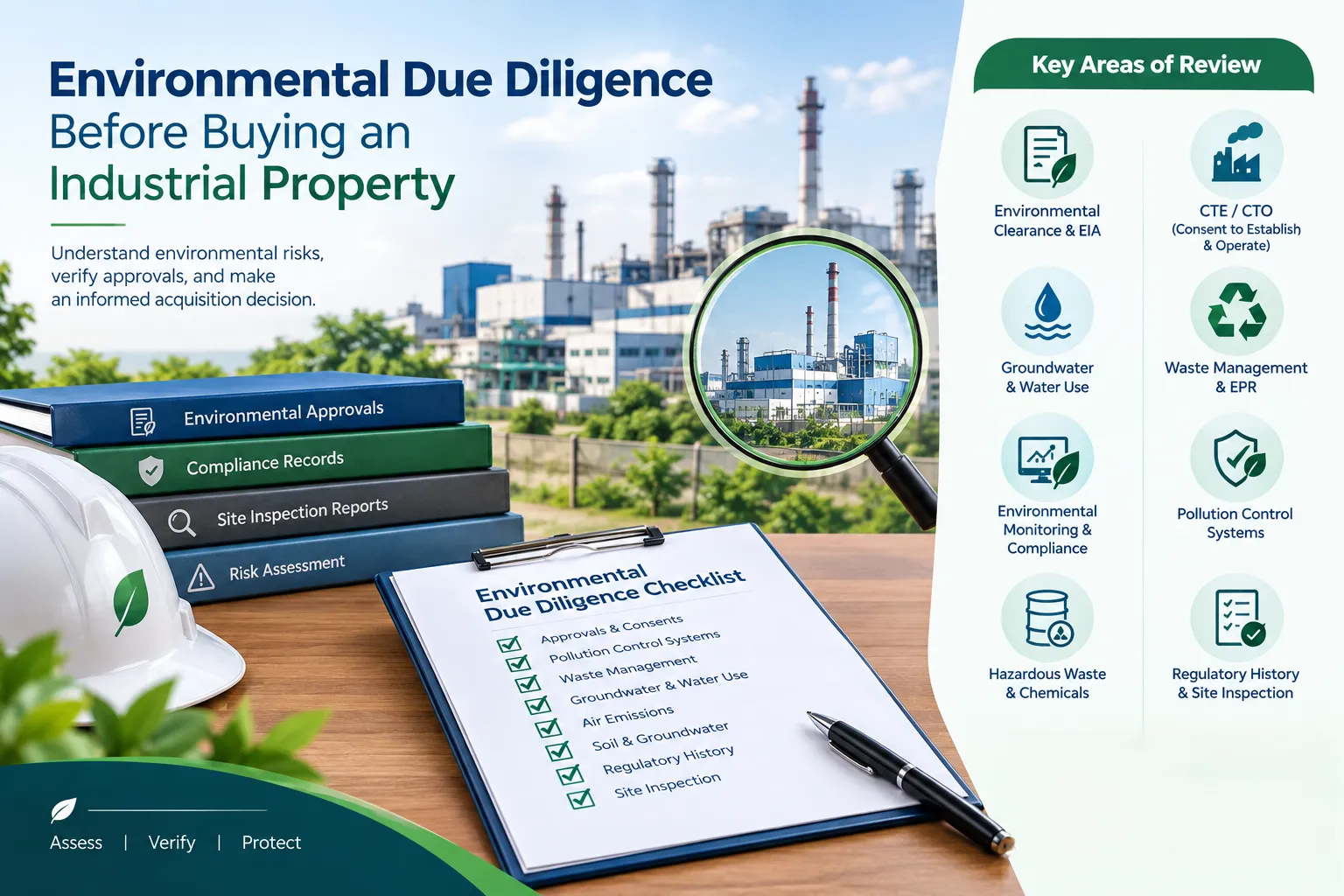
Environmental due diligence is a structured review of the environmental condition, approvals, compliance records, pollution-control systems, and regulatory history of an industrial property.
The assessment may include:
- Environmental Clearance applicability and approval status
- Consent to Establish (CTE) and Consent to Operate (CTO)
- Pollution Control Board records and consent conditions
- Groundwater extraction and NOC requirements
- Waste-management records and authorisations
- Hazardous waste storage and disposal arrangements
- Air and wastewater pollution-control systems
- Environmental monitoring reports
- Previous inspection reports and regulatory communications
- Site conditions and potential contamination
- Compliance obligations associated with the proposed future use
The objective is to identify environmental risks before they become financial, regulatory, or operational problems for the buyer.
Why Environmental Due Diligence Matters Before Acquisition
An industrial property may appear suitable for purchase while carrying unresolved environmental obligations from its previous owner or occupant.
For example, a property may have an expired CTO, production capacity different from the approved capacity, unauthorised changes in manufacturing processes, inadequate waste-storage arrangements, or pollution-control equipment that is no longer suitable for the proposed operation.
Simply purchasing the property does not automatically mean that all previous environmental permissions, approvals, conditions, or liabilities can be ignored. Their applicability and transferability should be independently verified with respect to the proposed transaction and future activity.
Environmental due diligence helps the buyer understand these issues before committing to the acquisition.
Environmental Approvals and Consent Status
One of the first areas to examine is the regulatory approval history of the property.
Depending on the nature and scale of the activity, the review may include:
- Environmental Clearance, where applicable
- Consent to Establish
- Consent to Operate
- Authorisations under applicable waste-management rules
- Groundwater permissions or NOC, where applicable
- Other environmental permissions relevant to the activity
The documents should be checked against the actual site, approved capacity, products, manufacturing processes, fuel, water consumption, pollution-control systems, and operating conditions.
An approval may exist on paper but may not necessarily cover the buyer's proposed activity or the current physical configuration of the facility.
For understanding the relationship between these two major pollution-control approvals, see Difference Between CTE and CTO in India.
Pollution Control Board Records
Pollution Control Board records can provide important information about the environmental history of an industrial property.
The review should consider available records relating to:
- CTE and CTO
- Consent conditions
- Renewal applications
- Inspection reports
- Environmental monitoring
- Show-cause notices or directions
- Compliance submissions
- Production capacity
- Effluent and emission requirements
- Pollution-control equipment
- Previous non-compliance observations
This review can help identify whether the site has had unresolved compliance issues or whether additional regulatory action may be required before the proposed operation can begin.
Buyers can also compare the property's existing records against an Environmental Compliance Checklist for Industries in India to identify important areas that may require further verification.
Checking the Actual Site Against Approved Records
A major part of environmental due diligence is comparing regulatory documents with the physical condition of the property.
The site inspection may examine:
- Existing production areas
- Installed machinery
- Boilers, furnaces or generators
- ETP/STP systems
- Air-pollution-control equipment
- Chemical storage areas
- Hazardous-waste storage areas
- Solid-waste storage
- Drainage and wastewater pipelines
- Water-storage systems
- Groundwater abstraction points
- Discharge points
- Greenbelt and environmental infrastructure
Differences between approved documents and actual site conditions can indicate potential compliance concerns.
Environmental Clearance Review
If the existing facility or proposed future activity falls within a category requiring Environmental Clearance, the applicable EC status should be reviewed carefully.
The assessment should consider:
- Whether EC was required for the project
- Whether an EC was obtained, where applicable
- Approved project capacity
- Approved land use and project configuration
- Environmental conditions attached to the approval
- Compliance with applicable EC conditions
- Expansion or modification history
A buyer should not assume that an existing industrial property automatically has valid environmental approval for a new activity, expansion, increased capacity, or changed process.
The relevant approval records can be reviewed alongside the Documents Required for Environmental Clearance (EC) in India – Complete Checklist to understand the documentation that may need verification.
Groundwater and Water-Use Compliance
Water availability and groundwater use can create significant environmental obligations for industrial properties.
If groundwater is being extracted, the buyer should verify:
- Existing groundwater permission or NOC, where applicable
- Approved groundwater abstraction quantity
- Number and location of borewells
- Water meters and monitoring arrangements
- Recharge structures
- Water-use records
- Compliance submissions
- Current groundwater-related obligations
The buyer should also assess whether the proposed activity will increase water demand or require additional permissions.
For a broader review of applicable requirements, see Groundwater Extraction Permission in India: Regulatory Requirements, Approvals & Compliance.
Waste Management and Hazardous Waste
Industrial properties may generate hazardous waste, used oil, process residues, chemical waste, packaging waste, plastic waste, e-waste, or other regulated waste streams depending on the activity.
Due diligence should examine:
- Existing waste categories
- Storage arrangements
- Authorisations
- Waste quantity records
- Disposal records
- Agreements with authorised recyclers or disposal facilities
- Annual returns and related records
- Storage-area compliance
- Historical accumulation of waste
Improperly stored or abandoned waste can create environmental and financial liabilities for the property.
Where hazardous waste is involved, the buyer should also review the Hazardous Waste Authorization Process in India: Complete Compliance Guide to understand the relevant authorisation and compliance requirements.
Wastewater and Effluent Treatment Systems
Where the property generates industrial effluent or domestic sewage, the existing treatment infrastructure should be evaluated.
The assessment may include:
- ETP/STP capacity
- Design and treatment process
- Actual operating condition
- Inlet and outlet arrangements
- Sludge management
- Treated-water reuse or disposal
- Monitoring records
- Maintenance history
- Compliance with applicable consent conditions
An existing ETP or STP should not automatically be considered adequate simply because it is installed at the site. Its capacity and performance should be assessed against the buyer's proposed activity.
For understanding the treatment systems that may be relevant during a site assessment, see STP vs ETP: What's the Difference Between Sewage Treatment Plants and Effluent Treatment Plants.
Air Pollution and Emission Sources
Industrial operations may involve boilers, furnaces, DG sets, process emissions, material handling, or other sources of air pollution.
The review should cover:
- Identified emission sources
- Fuel type and consumption
- Stack arrangements
- Air-pollution-control devices
- Stack monitoring
- Fugitive emission controls
- Applicable consent conditions
- Monitoring and maintenance records
Any proposed change in production or fuel use should also be assessed from an environmental compliance perspective.
Soil and Groundwater Contamination Risk
Previous industrial activities can sometimes leave contamination in soil or groundwater, particularly where chemicals, fuels, oils, hazardous waste, or industrial effluent were handled improperly.
Potential areas for investigation include:
- Chemical storage zones
- Fuel storage areas
- Waste-storage locations
- Old effluent treatment areas
- Drainage channels
- Spill-prone areas
- Abandoned tanks or pipelines
- Areas with visible staining or unusual odour
Where the site history indicates potential contamination, additional environmental investigation or sampling may be appropriate.
Hazardous Chemical Storage
If hazardous chemicals are stored or used at the property, the buyer should review the storage arrangements and applicable safety and environmental requirements.
The assessment may include:
- Chemical inventory
- Storage quantities
- Storage-area design
- Safety measures
- Spill-control arrangements
- Emergency response systems
- Material Safety Data Sheets/Safety Data Sheets
- Applicable regulatory documentation
This is particularly important where the buyer intends to continue or modify the existing chemical-intensive operation.
Review of Previous Environmental Notices
Previous regulatory communications can reveal issues that may not be obvious from current approvals.
The due-diligence review should consider available:
- Inspection reports
- Show-cause notices
- Directions
- Closure-related communications
- Compliance notices
- Environmental complaints
- Court or regulatory proceedings, where relevant
- Pending compliance actions
Understanding the property's regulatory history can help the buyer assess potential exposure before finalising the transaction.
Documents to Review Before Buying
A practical environmental due-diligence document checklist may include:
- Environmental Clearance, where applicable
- CTE and CTO
- Consent renewal documents
- Consent conditions
- Pollution Control Board inspection reports
- Environmental monitoring reports
- Waste authorisations
- Hazardous waste records
- Annual environmental returns
- Groundwater NOC or permission, where applicable
- Water consumption and abstraction records
- ETP/STP records
- Air-emission monitoring reports
- Waste disposal records
- Previous environmental notices
- Compliance reports
- Site plans and environmental infrastructure details
The exact documents required will depend on the property's previous and proposed industrial activities.
Site Inspection Is Essential
Document review alone may not provide a complete picture of the property's environmental condition.
A physical inspection can help identify differences between records and actual conditions, such as:
- Unrecorded equipment
- Additional production areas
- Unauthorised storage
- Damaged pollution-control systems
- Improper waste storage
- Unused or abandoned tanks
- Additional borewells
- Unapproved discharge arrangements
- Signs of historical spills or contamination
The inspection findings should be compared with the available regulatory records before the acquisition decision is finalised.
Environmental Due Diligence Process
A structured assessment generally follows these stages:
1. Collect Property and Regulatory Documents
Gather available approvals, consents, authorisations, monitoring reports, inspection records, and environmental correspondence.
2. Review Regulatory Status
Check the validity, scope, conditions, and compliance status of the property's environmental permissions.
3. Understand Previous Industrial Activity
Review the site's historical use, manufacturing processes, raw materials, chemicals, production capacity, and waste streams.
4. Conduct a Site Assessment
Inspect the property and compare actual site conditions with approved documents and available records.
5. Identify Environmental Risks
Assess potential issues relating to pollution, waste, groundwater, emissions, wastewater, contamination, and regulatory compliance.
6. Assess Future Use
Determine whether the proposed activity, production capacity, process changes, or expansion will require additional approvals or modifications.
7. Prepare a Due-Diligence Report
Document identified risks, supporting records, site observations, compliance gaps, and recommended actions for consideration before acquisition.
Environmental Due Diligence Checklist
Before purchasing an industrial property, buyers should consider the following:
| Area | Key Checks |
|---|---|
| Environmental Clearance | Applicability, approval status, conditions |
| CTE/CTO | Validity, capacity, conditions, renewal |
| Waste | Authorisations, storage, disposal records |
| Groundwater | NOC/permission, abstraction, metering |
| Wastewater | ETP/STP capacity and condition |
| Air Emissions | Stacks, APCD, monitoring |
| Chemicals | Storage, inventory, safety systems |
| Soil/Water | Potential contamination |
| Regulatory History | Notices, inspections, directions |
| Site Condition | Actual use vs approved records |
| Future Activity | Additional approvals or modifications |
Risks of Skipping Environmental Due Diligence
Purchasing an industrial property without an environmental review can expose the buyer to unexpected costs and regulatory complications.
Potential issues may include:
- Environmental compliance expenditure
- Requirement for new or modified approvals
- Pollution-control system upgrades
- Waste disposal costs
- Groundwater-related compliance requirements
- Remediation or investigation costs
- Operational delays
- Regulatory notices
- Restrictions on proposed expansion
- Difficulty obtaining fresh environmental permissions
These risks can affect both the financial value of the property and the feasibility of the buyer's proposed industrial activity.
For a broader understanding of potential compliance-related financial exposure, see Environmental Compensation Explained in India: When Industries Can Be Penalized.
Environmental Due Diligence for Future Expansion
Due diligence is not limited to continuing the previous owner's activity.
If the buyer plans to increase production, change the manufacturing process, add new products, install additional machinery, increase water consumption, introduce new chemicals, or modify pollution-control systems, the proposed changes should be assessed separately.
Existing permissions may not automatically cover the new configuration.
Therefore, acquisition due diligence should consider both the property's existing environmental status and the buyer's intended future use.
Where the proposed change involves an increase in production without an increase in pollution load, the No Increase in Pollution Load (NIPL): How to Enhance Production Capacity Without Going Through the Complete EC Process framework may also be relevant for further assessment.
How SimpliComp Can Help
SimpliComp supports industries, investors, developers, and project proponents with environmental due-diligence assessments for industrial properties.
Our support can include:
- Environmental approval and consent review
- EC applicability assessment
- CTE/CTO review
- Consent-condition assessment
- Groundwater compliance review
- Waste-management compliance assessment
- Environmental documentation review
- Site-level environmental assessment
- Pollution-control infrastructure review
- Identification of environmental compliance gaps
- Future activity and expansion-related environmental assessment
- Regulatory compliance guidance
The objective is to help buyers understand the environmental position of an industrial property before making a major acquisition decision.
Conclusion
Environmental due diligence should be an important part of acquiring an industrial property. Existing approvals, pollution-control systems, waste records, groundwater use, regulatory history, and site conditions can all influence the property's environmental risk profile.
A proper assessment helps identify potential compliance issues before they become unexpected costs or operational barriers. By reviewing both the property's existing environmental status and the buyer's proposed future activity, businesses can make more informed acquisition decisions.
For professional environmental due-diligence support, SimpliComp can assist with regulatory review, site assessment, compliance evaluation, documentation review, and environmental risk identification.
Related Guides & Resources
- EIA Clearance Process →
- Environment Protection Act 1986 →
- Pollution Control Bord Consent Condition →
- EPR & Waste Management →
- Environmental Protection Act 1986 →
Need Help with Environmental Compliance?
Simplicomp provides support for:
- Environmental Clearance (EC)
- CTE & CTO approvals
- Groundwater NOC approvals
- EPR registration
- Hazardous waste compliance
- Environmental monitoring
- SPCB compliance management
- Environmental audits and reporting