

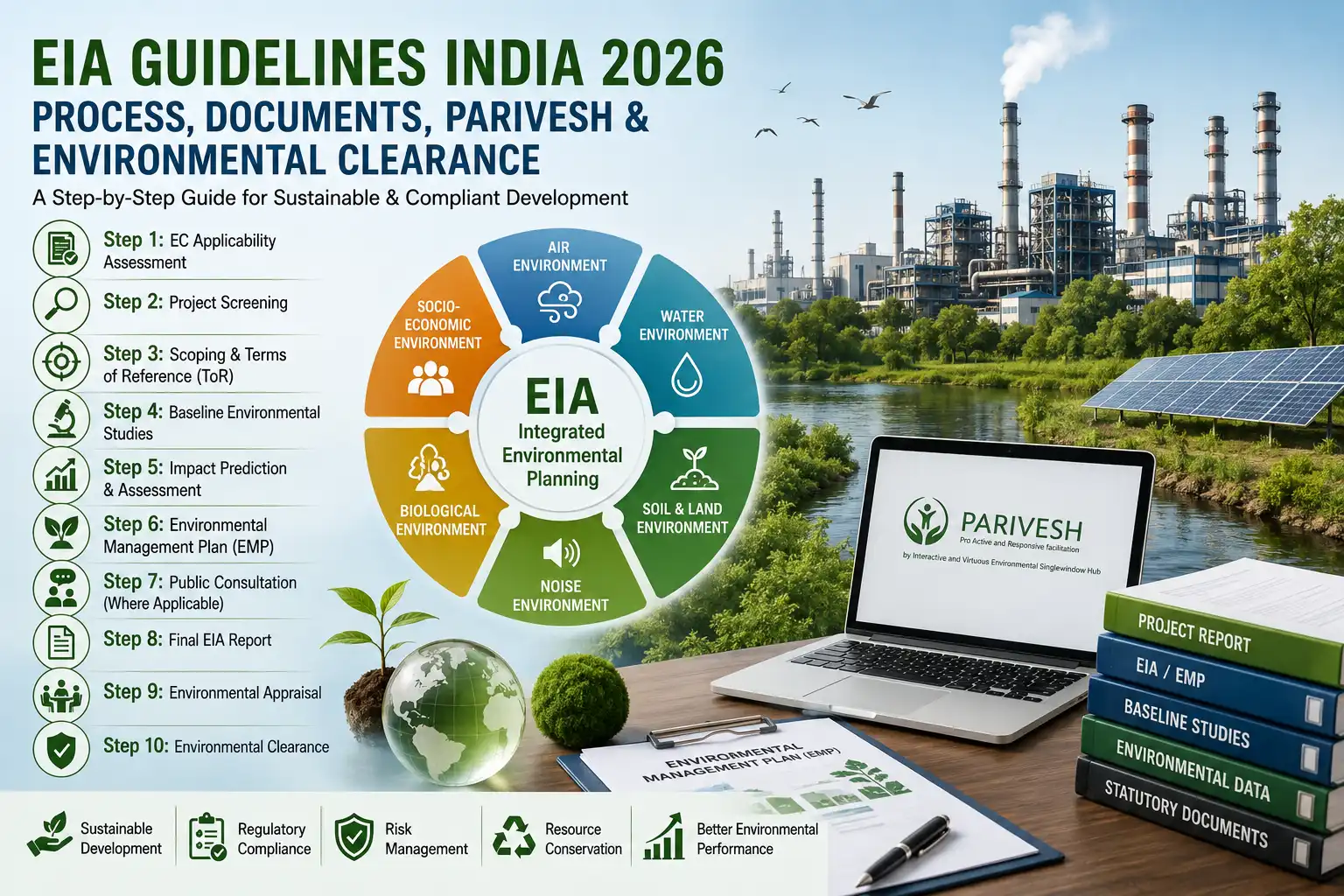
Introduction
Setting up a steel plant involves significant investment in land, machinery, energy, raw materials, water resources and pollution-control infrastructure. Because steel and metallurgical projects can have considerable environmental implications, environmental planning needs to begin well before construction and production activities commence.
Environmental Impact Assessment, commonly known as EIA, is an important part of India's environmental regulatory framework for projects and activities that require prior Environmental Clearance.
Large industrial, infrastructure, mining, construction and other development projects can influence air quality, water resources, land, ecology, biodiversity and local communities. EIA provides a structured approach to identify these potential impacts and develop suitable measures for avoiding, minimizing or managing them.
For project proponents, understanding the EIA guidelines in India, applicable project category, Environmental Clearance requirements, PARIVESH application process and environmental documentation is important before project implementation.
A properly planned EIA process can help identify environmental risks at an early stage and integrate mitigation measures into the project's design and Environmental Management Plan.
This guide explains the major aspects of the EIA process in India, including project screening, scoping, environmental studies, EIA report preparation, public consultation, appraisal, Environmental Clearance and post-EC compliance.
What Is Environmental Impact Assessment?
Environmental Impact Assessment (EIA) is a systematic process used to identify and evaluate the potential environmental impacts of a proposed project.
It helps answer important questions such as:
- What environmental impacts could the project create?
- Which natural resources may be affected?
- What pollution sources could arise?
- What mitigation measures are required?
- How can environmental impacts be reduced?
- What monitoring should be carried out?
- What environmental management measures should be implemented?
The EIA process therefore connects project planning with environmental management.
Rather than treating environmental protection as a separate activity after project development, EIA encourages environmental considerations to be incorporated into project planning.
Why Is EIA Important for Industrial and Infrastructure Projects?
Industrialization and infrastructure development are essential for economic growth, but development activities can place pressure on environmental resources.
Potential impacts may include:
- Air pollution
- Water pollution
- Soil contamination
- Waste generation
- Noise pollution
- Groundwater stress
- Land-use changes
- Habitat disturbance
- Resource consumption
- Greenhouse gas emissions
- Traffic-related impacts
An environmental assessment helps the project proponent understand these risks before implementation.
It also provides the basis for preparing an Environmental Management Plan (EMP) and implementing appropriate pollution-control and environmental management measures.
EIA and Environmental Clearance in India
EIA and Environmental Clearance are closely connected but are not exactly the same thing.
EIA is the environmental assessment and documentation process.
Environmental Clearance (EC) is the regulatory approval granted by the competent authority for projects covered by the applicable EC requirements, subject to specified conditions.
Depending on the project category and applicable provisions, the EC process may involve:
- Screening
- Scoping
- Terms of Reference
- Baseline environmental studies
- EIA/EMP preparation
- Public consultation, where applicable
- Appraisal
- Decision on Environmental Clearance
- Post-EC compliance
The exact sequence and applicable requirements depend on the project category and regulatory framework.
EIA Project Categories in India
Projects covered under the EIA framework are generally classified into Category A and Category B based on the applicable schedule and regulatory provisions.
Category A Projects
Category A projects are generally appraised at the central level through the applicable central environmental appraisal mechanism.
These projects can involve significant environmental implications based on their activity, capacity or location.
Category B Projects
Category B projects are generally considered at the state level through the applicable state environmental appraisal authorities.
Category B projects can have further regulatory distinctions depending on the applicable provisions.
Important Point
Project categorization should not be determined only by the name of the industry.
It should be assessed based on factors such as:
- Project activity
- Production capacity
- Built-up area
- Location
- Environmental sensitivity
- Applicable schedule item
- Expansion requirements
- Regulatory provisions
Therefore, a project-specific EC applicability assessment is recommended before starting the application process.
Key Environmental Risks Considered During EIA
An EIA generally examines multiple environmental components depending on the nature and location of the project.
1. Air Environment
The assessment may consider:
- Existing ambient air quality
- Particulate matter
- Gaseous pollutants
- Industrial emissions
- Vehicular emissions
- Fugitive emissions
The objective is to understand existing conditions and evaluate potential changes resulting from the project.
2. Water Environment
Water assessment may include:
- Surface water quality
- Groundwater quality
- Water availability
- Water requirement
- Wastewater generation
- Effluent treatment
- Water reuse
- Discharge arrangements
For water-intensive projects, a detailed water balance is particularly important.
3. Soil and Land Environment
The study can examine:
- Existing land use
- Soil characteristics
- Land-use changes
- Potential contamination
- Waste storage areas
- Impacts associated with project development
4. Noise Environment
Noise assessment may consider:
- Existing noise levels
- Construction activities
- Plant machinery
- Transportation
- Material handling
- Operational activities
Mitigation measures can then be incorporated into the project design.
5. Biological Environment
Depending on project location and characteristics, the assessment may examine:
- Flora
- Fauna
- Wildlife
- Habitats
- Ecologically sensitive areas
- Biodiversity
Projects located near environmentally sensitive areas may require additional assessment or approvals.
6. Socio-Economic Environment
An environmental assessment can also consider the project's potential effect on:
- Local communities
- Employment
- Infrastructure
- Transportation
- Public services
- Community health
- Local economic activity
Step-by-Step EIA Process in India
The EIA process varies according to the project category and applicable requirements, but the major stages can be understood as follows.
Step 1: Environmental Clearance Applicability Assessment
The first step should be determining whether the proposed project requires prior Environmental Clearance.
The assessment should consider:
- Project type
- Capacity
- Location
- Expansion proposal
- Schedule applicability
- Sensitive areas
- Applicable exemptions or conditions
This stage is important because starting project activities without understanding applicable environmental approval requirements can create regulatory complications.
Step 2: Project Screening
Where applicable, screening helps determine the level of environmental assessment required for a Category B project.
The project details and applicable regulatory provisions are reviewed to determine the subsequent requirements.
The exact applicability depends on the nature and category of the project.
Step 3: Scoping and Terms of Reference
For projects requiring detailed EIA, scoping helps identify the environmental issues that need to be studied.
The applicable Terms of Reference (ToR) specify the studies and information that need to be addressed in the EIA documentation.
A good ToR compliance approach should ensure that every applicable requirement is properly addressed.
Step 4: Baseline Environmental Studies
Baseline studies establish the existing environmental conditions of the project area.
Depending on the project, baseline studies may include:
- Ambient air monitoring
- Water quality monitoring
- Soil analysis
- Noise monitoring
- Meteorological data
- Ecological studies
- Socio-economic assessment
The baseline information provides a reference against which potential project impacts can be assessed.
Step 5: Impact Prediction and Assessment
Once baseline information is available, the potential impacts of the proposed project are evaluated.
The assessment can cover:
- Construction impacts
- Operational impacts
- Air emissions
- Wastewater
- Solid waste
- Hazardous waste
- Water consumption
- Noise
- Traffic
- Ecology
- Community impacts
The objective is not simply to identify impacts but also to determine their significance and develop appropriate mitigation measures.
Step 6: Environmental Management Plan
The Environmental Management Plan (EMP) is a key component of environmental planning.
It converts impact assessment findings into practical management measures.
An EMP may cover:
- Air pollution control
- Water management
- Wastewater treatment
- Solid waste management
- Hazardous waste management
- Noise control
- Greenbelt development
- Rainwater management
- Environmental monitoring
- Occupational health and safety
- Emergency preparedness
The EMP should be practical, measurable and aligned with the proposed project configuration.
Step 7: Public Consultation
Public consultation is applicable to certain projects as prescribed under the relevant environmental clearance framework.
It provides affected communities and other stakeholders an opportunity to raise concerns related to the proposed project.
Issues can include:
- Air pollution
- Water availability
- Waste management
- Employment
- Traffic
- Public health
- Land use
- Environmental safeguards
Where public consultation is applicable, the concerns raised and the project's responses should be appropriately documented.
Step 8: Final EIA Report
After completing the required studies and incorporating applicable consultation findings, the final EIA documentation is prepared.
The final report may contain:
- Project description
- Site details
- Baseline environmental conditions
- Impact assessment
- Alternatives
- Risk assessment
- Disaster management planning
- Environmental Management Plan
- Monitoring programme
- Public consultation details
- Additional studies, where applicable
The report should accurately represent the proposed project.
Step 9: Environmental Appraisal
The competent environmental appraisal authority examines the submitted documents and assesses the environmental implications of the project.
The appraisal may involve technical questions and requests for additional information or clarification.
Project proponents should ensure that:
- Project information is consistent
- Environmental data is properly documented
- ToR requirements are addressed
- Mitigation measures are realistic
- EMP commitments are clear
Step 10: Environmental Clearance
If the project meets the applicable requirements and receives approval, Environmental Clearance is granted subject to specified conditions.
These conditions become important compliance obligations for the project proponent.
Obtaining EC should therefore be viewed as the beginning of an ongoing environmental compliance responsibility rather than the final step.
PARIVESH and Environmental Clearance Applications
PARIVESH is the online platform used for processing various environmental, forest, wildlife and related proposals.
Project proponents and consultants need to submit the applicable project information and supporting documentation through the designated online system.
Depending on the proposal, documentation can include:
- Application forms
- Project reports
- Site details
- Maps
- Conceptual plans
- EIA/EMP documents
- Environmental studies
- Compliance information
- Supporting certificates
- Other regulatory documents
The exact documents depend on the project type and applicable approval.
Important Documents Required for EIA and EC
The documentation requirement varies from project to project.
Commonly required information can include:
Project Documents
- Project report
- Site plan
- Layout plan
- Land documents
- Project location details
- Production capacity
- Manufacturing process
Environmental Information
- Baseline monitoring data
- Water analysis
- Air quality data
- Noise monitoring
- Soil analysis
- Ecological information
- Water balance
- Waste generation details
Regulatory Documents
- Application forms
- Previous EC, where applicable
- Existing environmental approvals
- Pollution Control Board consents
- Compliance reports
- Other applicable permissions
Technical Documents
- Process flow diagram
- Material balance
- Water balance
- Pollution-control details
- Waste-management plan
- Greenbelt plan
- Environmental monitoring programme
The final checklist should always be prepared according to the specific project.
Common Environmental Risks in Industrial Projects
Industrial projects may face several environmental risks if proper planning is not undertaken.
Air Pollution
Industrial processes, fuel combustion and material handling can generate emissions.
Water Pollution
Untreated or inadequately managed wastewater can affect surface and groundwater resources.
Waste Management
Improper storage or disposal of industrial and hazardous waste can create environmental risks.
Resource Depletion
Excessive consumption of water, energy and raw materials can increase environmental pressure.
Biodiversity Impact
Projects located in or near sensitive ecological areas may create additional risks to biodiversity.
Climate and Carbon Risks
Energy-intensive projects may have significant greenhouse gas emissions and may need suitable energy-efficiency and emission-reduction measures.
How Industries Can Reduce Environmental Risks
Environmental management should begin during project design.
Some useful approaches include:
- Water conservation
- Water recycling
- Energy efficiency
- Renewable energy integration
- Efficient pollution-control systems
- Waste minimization
- Waste recycling
- Greenbelt development
- Rainwater harvesting
- Real-time monitoring where applicable
- Regular environmental monitoring
- Proper documentation
- Timely compliance reporting
The best approach depends on the project's process, capacity and environmental characteristics.
Role of Technology in Environmental Management
Technology is increasingly being used to improve environmental monitoring and resource management.
Examples include:
- Online emission monitoring
- Continuous water-quality monitoring
- Automated data logging
- Advanced wastewater treatment
- Energy monitoring systems
- GIS-based environmental mapping
- Remote sensing
- Digital compliance management
However, technology should complement rather than replace proper environmental planning, monitoring and regulatory compliance.
Why Accurate Environmental Data Matters
Environmental documentation should be supported by reliable and traceable data.
Project proponents should maintain records relating to:
- Environmental monitoring
- Water consumption
- Waste generation
- Waste disposal
- Pollution-control equipment
- Emission monitoring
- Effluent quality
- Greenbelt development
- Compliance activities
Accurate documentation helps demonstrate that the project is implementing its environmental commitments.
It can also make future compliance reviews and regulatory interactions more organized.
EIA and Sustainable Industrial Development
EIA should not be viewed only as a regulatory formality.
A properly conducted environmental assessment can help industries identify opportunities for:
- Resource conservation
- Water efficiency
- Energy efficiency
- Waste reduction
- Pollution prevention
- Cleaner production
- Circular resource use
- Better environmental performance
When environmental planning is incorporated into the project from the beginning, mitigation measures can often be integrated more effectively into plant design and operations.
Common Mistakes in the EIA Process
Project proponents should be careful about several common issues.
1. Starting Activities Without Checking EC Applicability
The applicability of prior EC should be assessed before undertaking activities that require approval.
2. Incomplete Project Information
Incorrect or inconsistent project details can lead to regulatory queries.
3. Poor Baseline Data
Environmental studies should be properly planned and documented.
4. Ignoring Site Sensitivity
Protected areas, forests, water bodies and other environmental sensitivities should be assessed at the site-selection stage.
5. Weak Water Balance
Water requirement and wastewater generation should be calculated realistically.
6. Inadequate EMP
An EMP should contain practical mitigation and monitoring measures rather than generic statements.
7. Poor ToR Compliance
Every applicable ToR requirement should be addressed systematically.
8. Delayed Compliance
Post-EC conditions and reporting requirements should be tracked after approval.
EIA Compliance After Environmental Clearance
Environmental responsibility continues after EC approval.
Depending on the project and approval conditions, the project proponent may need to undertake:
- Environmental monitoring
- EC compliance reporting
- Pollution-control measures
- Waste-management compliance
- Water management
- Greenbelt development
- Environmental audits or assessments where applicable
- Regulatory reporting
- Record maintenance
The exact frequency and requirements should be followed according to the applicable EC conditions and regulatory framework.
How SimpliComp Helps With EIA and Environmental Clearance
SimpliComp Tech LLP provides environmental consultancy and regulatory support for industrial, infrastructure, construction and other development projects.
Our EIA and Environmental Clearance support can include:
EIA Applicability Assessment
We review the proposed project to identify applicable environmental clearance requirements and regulatory pathways.
Project Categorization
We help determine the applicable project category based on the project activity, capacity, location and relevant regulatory provisions.
PARIVESH Support
We assist with preparation and coordination of documents required for online submission through the applicable PARIVESH process.
EIA & EMP Documentation
Our team supports the preparation and coordination of environmental documentation covering project impacts and mitigation measures.
Environmental Studies Coordination
We assist in coordinating relevant environmental baseline studies and technical assessments.
ToR Compliance
We help organize the EIA documentation to address applicable Terms of Reference requirements.
Public Consultation Support
Where applicable, we assist with documentation and regulatory coordination associated with the public consultation process.
Environmental Clearance Support
We support project proponents throughout the regulatory process and assist with responses to technical observations and queries.
Post-EC Compliance
Our support can also extend to environmental compliance documentation and monitoring after EC approval.
Why Choose SimpliComp for EIA Consultancy?
Environmental Clearance involves multiple technical and regulatory components.
SimpliComp focuses on connecting the project's technical details with its environmental compliance requirements.
Our approach considers:
- Project activity
- Project capacity
- Site location
- Environmental sensitivity
- Air emissions
- Water requirements
- Waste generation
- Pollution-control systems
- EIA requirements
- EMP
- Regulatory approvals
- Post-EC compliance
This helps project proponents develop a more structured approach to environmental approvals and compliance.
EIA Process Checklist
Before starting an EIA/EC process, review the following:
- EC applicability assessed
- Project category identified
- Site suitability assessed
- Environmental sensitivity checked
- Project report prepared
- Land details verified
- Manufacturing/process details finalized
- Water requirement calculated
- Water balance prepared
- Waste generation estimated
- Pollution sources identified
- Baseline studies planned
- ToR requirements reviewed
- EIA report prepared
- EMP prepared
- Public consultation applicability checked
- Regulatory documents compiled
- PARIVESH submission prepared
- Appraisal responses prepared
- EC conditions reviewed
- Post-EC compliance plan prepared
Conclusion
The EIA process in India plays an important role in integrating environmental considerations into development planning. For projects requiring Environmental Clearance, proper assessment of air, water, land, ecology, waste, resource consumption and socio-economic factors can help identify potential risks and develop suitable mitigation measures.
A successful EIA process requires more than preparing a report. It involves accurate project information, reliable environmental studies, proper documentation, regulatory coordination and continued compliance after approval.
Project proponents should therefore begin environmental planning at an early stage and identify applicable approvals before project implementation.
SimpliComp Tech LLP provides environmental consultancy support for EIA, Environmental Clearance, EMP, environmental studies, regulatory approvals and post-EC compliance.
Related Guides & Resources
- E Waste Recycling Plant Setup in India →
- Public Hearing Process in EIA →
- Terms of Reference in EIA →
- EC Approval Timeline India →
- Environmental Compliance Document Checklist →
Need Help with CPCB Categorization & Pollution Board Approvals?
Simplicomp provides support for:
- CPCB categorization assessment
- CTE & CTO approvals
- Pollution Board NOC applications
- Environmental compliance audits
- Hazardous waste compliance
- Industrial compliance management