
Introduction
Setting up a steel plant involves significant investment in land, machinery, energy, raw materials, water resources and pollution-control infrastructure. Because steel and metallurgical projects can have considerable environmental implications, environmental planning needs to begin well before construction and production activities commence.
For projects covered under the applicable provisions of the EIA Notification, 2006, obtaining prior Environmental Clearance (EC) is an important regulatory requirement.
A steel plant project may need to undergo a detailed environmental assessment covering air emissions, water consumption, wastewater, solid waste, hazardous waste, noise, land use, ecology, energy consumption and other environmental parameters.
For this reason, selecting an appropriate site and understanding the applicable EC process at the planning stage can significantly improve project preparedness.
For this reason, selecting an appropriate site and understanding the applicable EC process at the planning stage can significantly improve project preparedness.
Why Environmental Clearance Is Important for Steel Plants
Steel manufacturing and metallurgical operations can involve several activities with environmental implications, including:
- Raw material handling
- Mineral processing
- Mineral processing
- Sintering
- Pelletization
- Iron making
- Steel making
- Rolling
- Casting
- Fuel combustion
- Material transportation
- Water consumption
- Waste generation
Depending on the project configuration, these activities can generate air emissions, wastewater, solid waste, process waste and other environmental impacts.
Environmental Clearance provides a regulatory framework for evaluating these impacts and identifying suitable mitigation measures before project implementation.
The objective is not simply to obtain an approval but to ensure that environmental safeguards are incorporated into the project's design, construction and operation.
Site Selection for a Steel Plant
Site selection is one of the most important decisions in a steel plant project.
An unsuitable location can create difficulties during environmental appraisal and may also increase future compliance risks.
Before finalizing the land, the project proponent should undertake an environmental site assessment.
Important considerations may include:
- Distance from protected areas
- Eco-sensitive areas
- Forest areas
- Wildlife habitats
- Water bodies
- Rivers
- Human settlements
- Agricultural land
- Groundwater conditions
- Existing industrial development
- Air quality
- Water availability
- Transportation connectivity
- Existing environmental pollution
- Land-use compatibility
The exact distance criteria and restrictions applicable to a particular project should be checked against the current regulatory provisions and location-specific environmental sensitivities.
Environmental Sensitivity of the Project Location
A proposed steel plant should be assessed against the environmental sensitivity of its surroundings.
The assessment may include:
Protected Areas
Check for nearby:
- National Parks
- Wildlife Sanctuaries
- Tiger Reserves
- Biosphere Reserves
- Conservation areas
- Wildlife corridors
Forest Areas
The presence of forest land or protected forest areas can introduce additional regulatory requirements.
Eco-Sensitive Zones
If the project falls within or near an Eco-Sensitive Zone, additional restrictions and assessments may apply.
Water Bodies
The project location should be evaluated in relation to:
- Rivers
- Lakes
- Reservoirs
- Wetlands
- Drainage channels
- Groundwater resources
Human Settlements
Nearby villages, towns and densely populated areas should be considered while assessing air emissions, traffic, noise and other impacts.
Understanding the Environmental Clearance Category
One of the first steps is determining the applicable category of the proposed project under the prevailing EIA Notification, 2006 and its amendments.
Broadly, projects are considered under:
- Category A
- Category B
However, categorization depends on the specific project activity, capacity, configuration and applicable schedule provisions.
Therefore, a steel plant should not assume its category simply based on the word “steel plant.” The project-specific applicability should be assessed carefully.
What Information Is Required for EC Application?
A steel plant EC application requires detailed project information.
The project proponent may need to provide information relating to:
- Project location
- Land area
- Existing land use
- Production capacity
- Manufacturing process
- Raw materials
- Fuel
- Water requirement
- Power requirement
- Wastewater
- Air emission sources
- Solid waste
- Hazardous waste
- Pollution-control equipment
- Greenbelt
- Environmental monitoring
- Transportation
- Occupational and environmental safety
- Environmental management measures
The level of detail depends on the applicable project category and regulatory requirements.
Environmental Impact Assessment for Steel Plants
Where EIA is applicable, the Environmental Impact Assessment report becomes an important part of the EC process.
The EIA study evaluates the environmental conditions around the proposed project and assesses the likely impacts of the project.
For a steel plant, studies may address:
Air Environment
Assessment of:
- Ambient air quality
- Particulate matter
- Gaseous pollutants
- Process emissions
- Stack emissions
- Fugitive emissions
Water Environment
Assessment of:
- Surface water
- Groundwater
- Water requirement
- Wastewater generation
- Effluent characteristics
- Water balance
Noise Environment
The study may evaluate existing noise levels and potential noise sources from:
- Machinery
- Material handling
- Transportation
- Plant operations
Land Environment
Assessment can include:
- Existing land use
- Soil characteristics
- Land-use changes
- Potential contamination
Biological Environment
Depending on the project location, ecological assessment may include:
- Flora
- Fauna
- Wildlife
- Sensitive habitats
- Ecological features
Socio-Economic Environment
The study may also consider:
- Local population
- Employment
- Infrastructure
- Public health
- Traffic
- Community concerns
Terms of Reference for Steel Plant EIA
For projects requiring detailed EIA, the Terms of Reference (ToR) provide the framework for the studies and information expected in the EIA report.
The ToR can specify project-specific studies and assessments.
For a steel or metallurgical project, the project proponent should carefully review every ToR condition before preparing the EIA report.
The EIA should then address the applicable ToR requirements comprehensively.
This is important because incomplete responses to ToR conditions can result in queries during appraisal.
Carbon Emissions and Decarbonization Planning
Carbon management has become an increasingly important consideration for energy-intensive industrial projects.
Steel manufacturing can have significant energy and carbon implications depending on the process, fuel mix and technology used.
Accordingly, project proponents should assess:
- Energy consumption
- Fuel consumption
- Greenhouse gas emissions
- Carbon intensity
- Energy-efficiency measures
- Renewable energy opportunities
- Waste-heat recovery
- Process optimization
- Carbon-reduction strategies
Where the applicable ToR requires a decarbonization programme or carbon-footprint assessment, the project should provide a structured plan covering relevant emissions, reduction strategies and measurable actions.
A good decarbonization plan should ideally include:
- Baseline assessment
- Emission sources
- Carbon accounting
- Reduction targets
- Energy transition strategy
- Renewable-energy integration
- Carbon sequestration, where applicable
- Monitoring indicators
- Time-bound implementation plan
Public Consultation for Steel Plant Projects
Public consultation can be an important component of the EC process for projects where it is applicable.
The purpose is to understand concerns raised by people who may be affected by the proposed project and provide an opportunity for those concerns to be considered during environmental appraisal.
Issues raised during public consultation can relate to:
- Employment
- Air pollution
- Water availability
- Traffic
- Waste management
- Health concerns
- Land use
- Local infrastructure
- Environmental safeguards
The project proponent should prepare appropriate responses and mitigation commitments based on the applicable process.
Environmental Management Plan for Steel Plants
The Environmental Management Plan (EMP) translates the environmental assessment into practical mitigation and management measures.
For a steel plant, the EMP may address:
Air Pollution Control
Measures can include suitable systems for controlling:
- Process emissions
- Fugitive dust
- Material-handling emissions
- Stack emissions
Water Management
The project should develop a suitable:
- Water balance
- Wastewater treatment system
- Water-reuse strategy
- Rainwater management plan
Waste Management
Steel plants can generate several waste streams, depending on the process.
The EMP should identify appropriate systems for:
- Collection
- Storage
- Recycling
- Reuse
- Treatment
- Authorized disposal
Greenbelt Development
Greenbelt planning should consider:
- Available land
- Plantation density
- Suitable species
- Local climatic conditions
- Survival rate
- Maintenance
Pollution-Control Planning for Steel Plants
Pollution-control infrastructure should be considered during project design rather than added later.
Depending on the process, environmental infrastructure may include:
- Bag filters
- Scrubbers
- Electrostatic precipitators
- Dust suppression systems
- Fume extraction systems
- ETP
- STP
- Water-recycling systems
- Solid-waste management systems
- Continuous emission monitoring systems, where applicable
The appropriate technology depends on the actual process configuration and regulatory requirements.
Water Management in Steel Plants
Water management is another important consideration for steel projects.
The project should establish a clear water balance covering:
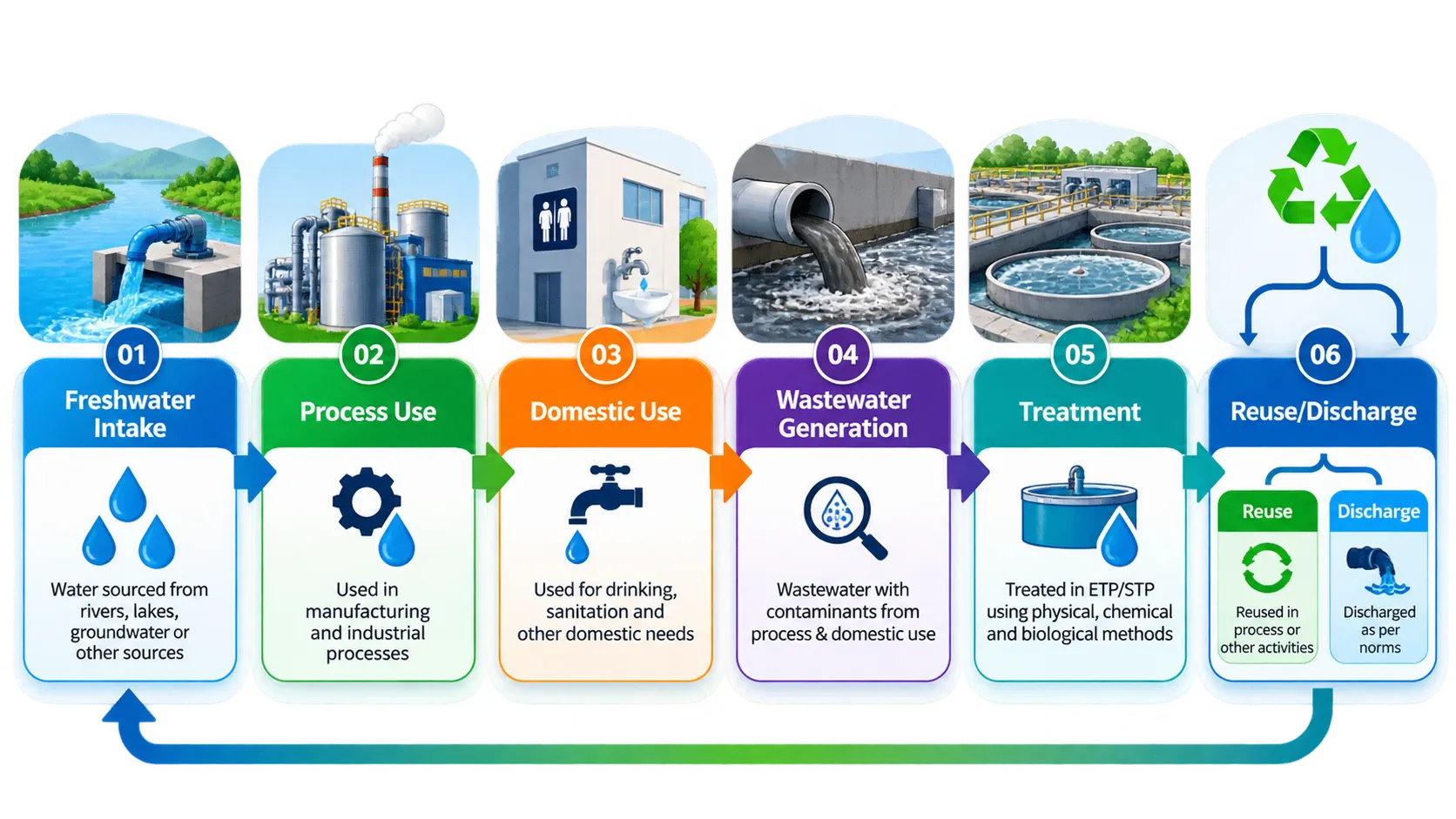
Depending on the project, water conservation measures may include:
- Recycling treated water
- Reuse of process water
- Rainwater harvesting
- Cooling-water optimization
- Reduction of freshwater intake
- Leak prevention
- Process optimization
The objective should be to minimize freshwater consumption and maximize reuse wherever technically feasible.
Solid and Hazardous Waste Management
Steel plants can generate different types of industrial waste depending on their processes.
Potential waste streams may include:
- Slag
- Dust
- Sludge
- Mill scale
- Refractory waste
- Used oil
- Hazardous waste
- Packaging waste
- Other process residues
Each waste stream should be identified and managed according to the applicable waste-management rules and authorization requirements.
Where reuse or recycling is possible, the project should evaluate such options before considering final disposal.
Other Approvals That May Be Required
Environmental Clearance may be one of several approvals required for a steel plant.
Depending on the project, additional approvals can include:
- Consent to Establish
- Consent to Operate
- Hazardous Waste Authorization
- Groundwater permission/NOC
- Forest-related approval
- Wildlife-related approval
- CRZ clearance, where applicable
- Factory-related approvals
- Fire and safety approvals
- Building and local authority permissions
- Other sector-specific permissions
The actual requirement depends on the location, project configuration and applicable laws.
Therefore, project proponents should prepare an environmental approval matrix before starting the project.
General Environmental Clearance Process for a Steel Plant
The EC process can broadly involve the following stages, depending on the project's category and applicability:
Step 1: Project Screening
Determine EC applicability and project category.
Step 2: Site and Environmental Assessment
Review the proposed location and environmental sensitivities.
Step 3: Application on PARIVESH
Submit the applicable application and project information through the designated regulatory system.
Step 4: ToR
Where applicable, obtain Terms of Reference for detailed environmental studies.
Step 5: Baseline Environmental Studies
Collect relevant environmental data as prescribed.
Step 6: EIA/EMP Preparation
Prepare the EIA and EMP addressing the applicable requirements.
Step 7: Public Consultation
Complete public consultation where applicable.
Step 8: Final EIA Submission
Incorporate relevant findings and responses and submit the final documentation.
Step 9: Expert Appraisal
The project is evaluated by the competent appraisal authority as applicable.
Step 10: Environmental Clearance
If approved, EC is granted subject to specified conditions.
The actual procedure can vary according to the category and project-specific requirements.
How to Avoid Delays in Steel Plant EC
A steel plant EC application can involve extensive technical information.
Project proponents can reduce avoidable delays by:
- Starting environmental studies early
- Checking EC applicability before land finalization
- Reviewing current ToR requirements
- Preparing accurate project details
- Maintaining consistent production figures
- Preparing a proper water balance
- Assessing pollution-control requirements
- Addressing environmental sensitivities
- Preparing the EIA systematically
- Keeping supporting documents ready
- Tracking regulatory queries
- Planning public consultation requirements
- Preparing compliance commitments realistically
Common Mistakes in Steel Plant EC Applications
Finalizing Land Without Environmental Due Diligence
A project may face difficulties if environmental sensitivities are identified after land acquisition.
Inconsistent Project Data
Differences between the project report, EC application, EIA, CTE and other documents can result in clarification requests.
Underestimating Water Requirement
A weak or incomplete water balance can affect environmental appraisal.
Inadequate Pollution-Control Planning
Pollution-control systems should be technically suitable for the proposed process.
Ignoring Carbon Management
Where carbon/decarbonization studies are required under applicable ToR, the requirement should be addressed comprehensively.
Incomplete ToR Compliance
Every applicable ToR point should be systematically mapped to the EIA report.
Post-EC Compliance for Steel Plants
Obtaining Environmental Clearance does not complete the project's environmental responsibilities.
After EC, the project must comply with the conditions specified in the approval.
Post-EC compliance can involve:
- Environmental monitoring
- Pollution-control operation
- Water management
- Waste management
- Greenbelt maintenance
- Environmental reporting
- Compliance documentation
- Implementation of mitigation measures
Where periodic EC compliance reporting is applicable, reports should be prepared and submitted within the prescribed timelines.
How SimpliComp Helps With Steel Plant Environmental Clearance
SimpliComp Tech LLP provides environmental consultancy support for industrial and infrastructure projects, including steel and metallurgical projects.
Our support can include:
EC Applicability Assessment
We review the proposed project to identify the applicable environmental clearance requirements.
Site Environmental Assessment
We help project proponents identify important environmental sensitivities before proceeding with project development.
EIA & EMP Coordination
We support preparation and coordination of the required environmental documentation.
ToR Compliance
We help map applicable ToR requirements with the studies and information required in the EIA.
Environmental Studies
We coordinate relevant baseline and technical environmental assessments as required for the project.
Public Consultation Support
Where applicable, we assist with documentation and regulatory coordination associated with public consultation.
Carbon & Decarbonization Assessment
Where required, we can support assessment and documentation related to carbon footprint, emissions reduction and decarbonization planning.
Regulatory Coordination
We assist project proponents in navigating the applicable environmental approval process and responding to regulatory observations.
Post-EC Compliance
Our support can continue after EC through environmental compliance documentation and regulatory monitoring.
Why Choose SimpliComp for Steel Plant EC Consultancy?
A steel plant requires coordinated environmental planning across multiple areas.
SimpliComp focuses on understanding the complete project rather than treating EC documentation as an isolated activity.
Our approach considers:
- Project capacity
- Manufacturing process
- Site location
- Environmental sensitivity
- Water requirement
- Air emissions
- Waste generation
- Pollution-control infrastructure
- EIA requirements
- EMP
- Carbon management
- Regulatory approvals
- Post-EC compliance
This integrated approach can help project proponents prepare their environmental documentation more effectively.
Steel Plant EC Checklist
Before proceeding with the EC process, a project proponent should review:
- Project category assessed
- EC applicability confirmed
- Site environmental sensitivity reviewed
- Land-use status checked
- Protected areas assessed
- Forest/wildlife aspects reviewed
- Water availability assessed
- Manufacturing process finalized
- Production capacity established
- Raw materials identified
- Fuel requirement assessed
- Water balance prepared
- Wastewater generation assessed
- Air emission sources identified
- Pollution-control systems planned
- Waste-management plan prepared
- Greenbelt strategy developed
- EIA/EMP requirements identified
- ToR requirements reviewed
- Carbon/decarbonization requirements assessed
- Public consultation applicability checked
- Other environmental approvals identified
- Post-EC compliance plan prepared
Conclusion
Obtaining Environmental Clearance for a steel plant requires careful planning from the earliest project stage. Site selection, environmental sensitivity, project categorization, EIA studies, Terms of Reference, pollution-control planning, water management, waste management and carbon considerations can all influence the environmental appraisal of the project.
A project proponent should therefore avoid treating EC as a documentation exercise that begins only after the plant design has been finalized. Environmental considerations should be integrated into site selection, plant design and project planning from the beginning.
The exact EC requirements depend on the project's capacity, process, location and applicable regulatory provisions. Therefore, a project-specific assessment is essential before proceeding.
SimpliComp Tech LLP supports industries and project proponents with Environmental Clearance consultancy, EIA/EMP documentation, environmental studies coordination, regulatory compliance and post-EC support.
Related Guides & Resources
- Factory Setup Environmental Approvals NCR →
- Pollution Control Compliance →
- Consent to Establish (CTE) →
- Environmental Compliance Checklist →
- Environmental Compliance Document Checklist →
Need Help with CPCB Categorization & Pollution Board Approvals?
Simplicomp provides support for:
- CPCB categorization assessment
- CTE & CTO approvals
- Pollution Board NOC applications
- Environmental compliance audits
- Hazardous waste compliance
- Industrial compliance management