

Introduction
Acquiring or leasing an existing factory can help businesses expand without establishing a new facility. However, before taking over an industrial unit, it is essential to review its environmental approvals, pollution-control systems, compliance history, and potential liabilities.
A factory may have operational machinery and valid permissions but still face issues such as expired consents, soil contamination, improper hazardous waste disposal, or inadequate wastewater treatment.
Environmental due diligence helps businesses identify these risks, estimate potential costs, and plan corrective actions before starting operations. Reviewing applicable Environmental Clearance and EIA requirements is also important where environmental approval may be required.
What Are Environmental Liabilities in an Existing Factory?
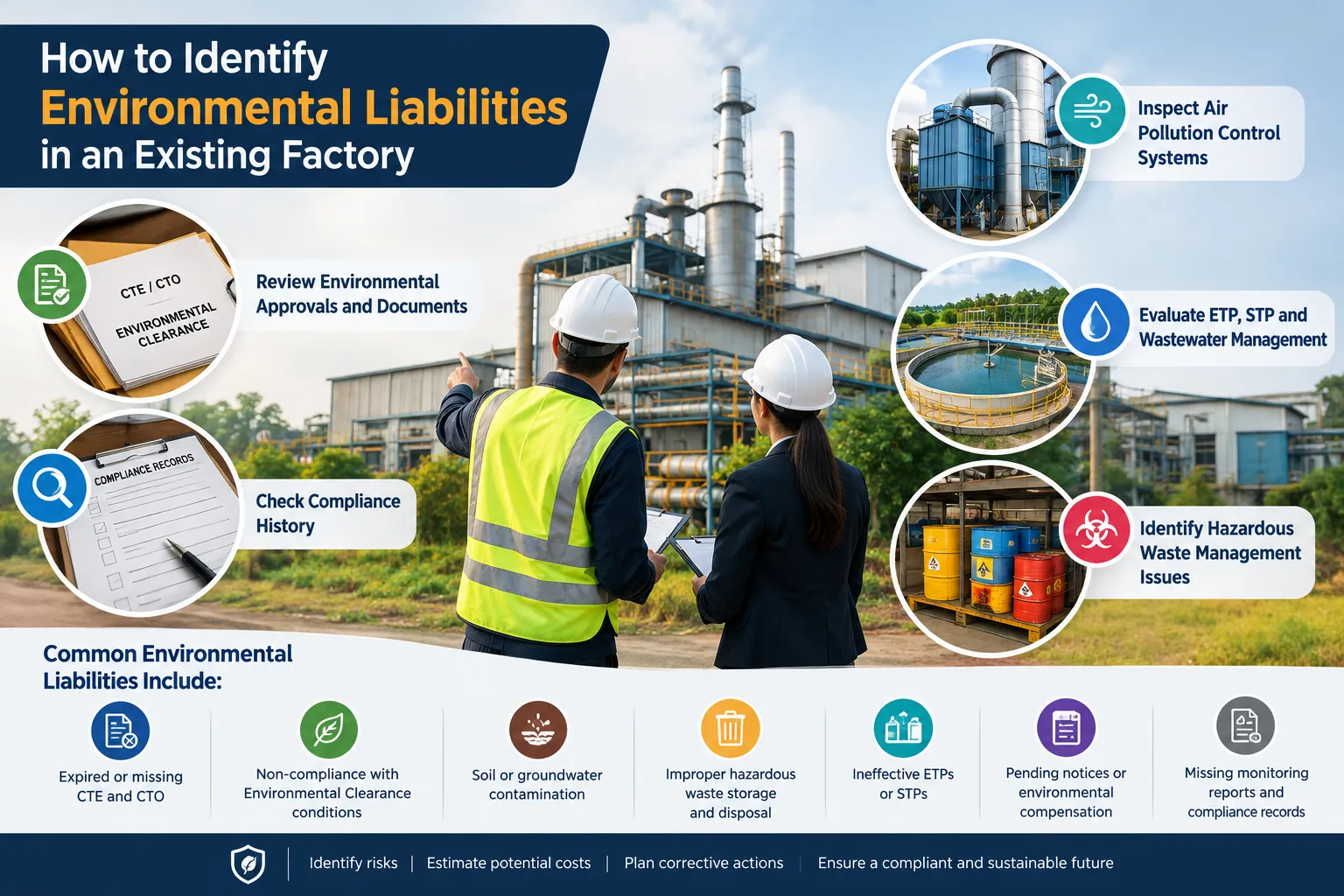
Environmental liabilities are potential legal, financial, operational, or remediation obligations arising from pollution, regulatory non-compliance, or improper waste management.
Common examples include:
- Expired or missing Consent to Establish (CTE) and Consent to Operate (CTO).
- Non-compliance with Environmental Clearance (EC) conditions.
- Soil or groundwater contamination caused by chemical spills.
- Improper hazardous waste storage and disposal.
- Ineffective Effluent Treatment Plants (ETPs) or Sewage Treatment Plants (STPs).
- Pending regulatory notices or environmental compensation.
- Missing environmental monitoring reports and compliance records.
The extent of these liabilities depends on the factory's activities, location, operational history, and applicable environmental regulations.
1. Review Environmental Approvals and Documents
Start by examining the factory's environmental approvals and regulatory records. Existing permissions may not cover current production capacity, installed machinery, or proposed expansion.
Important documents include:
- CTE and CTO permissions.
- Environmental Clearance, where applicable.
- Hazardous Waste Authorization, where required.
- Groundwater extraction permissions, where applicable.
- Environmental monitoring and audit reports.
- Waste management records and regulatory returns.
- Inspection reports, notices, and compliance submissions.
Verify the validity of each permission and compare approved conditions with actual operations.
Professional CTE and CTO consultancy can help identify consent-related documentation gaps and applicable compliance requirements.
Why it matters: Missing, expired, or inconsistent approvals can lead to regulatory action, operational restrictions, and additional expenses.
2. Check the Factory's Environmental Compliance History
A factory's previous compliance record may reveal problems that are not visible during a physical inspection.
Review correspondence with the relevant State Pollution Control Board (SPCB), Pollution Control Committee, and other competent authorities.
Check for previous show-cause notices, emission or effluent violations, unresolved complaints, missing monitoring reports, and pending corrective actions.
Confirm whether earlier violations have been addressed and whether supporting evidence was submitted to the relevant authorities.
Repeated non-compliance may indicate poor maintenance, inadequate environmental management, or insufficient employee training. An environmental audit can help identify compliance gaps and corrective action requirements.
3. Inspect Air Pollution Control Systems
Manufacturing, metal processing, chemical production, and material handling activities may generate dust, fumes, gases, and other air pollutants.
Inspect bag filters, scrubbers, dust collectors, ducts, chimneys, and other installed pollution-control equipment. Review maintenance records and stack emission monitoring reports where applicable.
Look for visible dust emissions, leaking ducts, damaged equipment, poor housekeeping, and systems that remain switched off during production.
These issues may indicate the need for repairs, equipment upgrades, or further environmental assessment.
4. Evaluate ETP, STP, and Wastewater Management
Wastewater management is an important part of environmental due diligence. Factories may generate industrial effluent, equipment-washing water, domestic sewage, and contaminated stormwater.
Inspect the ETP, STP, and associated drainage systems. Verify:
- Treatment capacity compared with actual wastewater generation.
- Treatment efficiency and operating conditions.
- Effluent testing and monitoring records.
- Sludge handling and disposal arrangements.
- Wastewater reuse, recycling, and discharge practices.
- Leakage, overflow, or bypass incidents.
- Compliance with applicable discharge limits.
An undersized or poorly maintained treatment plant can cause pollution, repair expenses, and regulatory problems. Independent laboratory testing may be necessary if treatment performance is uncertain.
Explore ETP and STP solutions to understand wastewater treatment, recycling, and pollution-control options for industrial facilities.
5. Identify Hazardous Waste Management Issues
Factories handling chemicals, oils, solvents, or certain industrial processes may generate hazardous waste. Improper storage and disposal can cause contamination and regulatory liabilities.
Review applicable authorizations, waste categories, quantities generated, storage arrangements, and disposal records.
Check whether hazardous waste is properly labelled, spill containment measures are available, and waste quantities match generation and dispatch records. Verify that waste is transferred to authorized recyclers or treatment facilities, as applicable.
Inspect areas used for storing used oil, sludge, chemical residues, and contaminated containers. Leaking containers, stained floors, and missing disposal records may indicate potential environmental risks.
Review relevant Hazardous Waste Management Compliance requirements to identify gaps in storage, handling, documentation, and disposal practices.
6. Assess Soil and Groundwater Contamination Risks
Historical contamination can be a significant hidden liability in an existing factory. Leaks from underground tanks, pipelines, chemical storage areas, and waste handling zones may contaminate soil or groundwater.
Review historical site activities, spill records, storage systems, and previous environmental investigations.
During inspection, look for oil stains, chemical residues, damaged flooring, leaking tanks, and unlined waste storage areas.
A visual inspection alone cannot confirm contamination. If credible risks are identified, a qualified environmental professional may recommend soil and groundwater sampling through a competent laboratory.
The findings can help determine whether further investigation, containment, remediation, or long-term monitoring is necessary.
7. Review Water Consumption and Groundwater Permissions
Water-intensive industries may face environmental liabilities if extraction exceeds permitted limits or required permissions are missing.
Review water sources, daily consumption, production requirements, and wastewater generation. Where groundwater extraction permissions are required, verify their validity and compliance with applicable conditions.
Compare water consumption records with production data and water balance calculations. Significant differences may indicate leakage, inefficient processes, or inaccurate reporting.
Water recycling and reuse can reduce consumption and improve environmental performance. Businesses should also review applicable groundwater compliance requirements to understand relevant permissions and reporting obligations.
8. Examine Environmental Monitoring and Reporting
Environmental monitoring records help demonstrate compliance with applicable standards and approval conditions.
Review reports covering stack emissions, ambient air quality, wastewater, noise, groundwater, and other parameters required for the factory.
Check whether monitoring was conducted at the prescribed frequency, results meet applicable limits, and required reports were submitted to the relevant authorities.
Missing records or unexplained exceedances can create compliance risks even when pollution-control equipment appears functional.
Environmental monitoring and compliance support can help businesses review records, coordinate applicable monitoring activities, and identify reporting gaps.
9. Conduct an Environmental Due Diligence Assessment
Environmental due diligence combines document verification, physical inspection, compliance review, and risk assessment to identify existing and potential liabilities.
A typical assessment includes:
- Document review: Examine approvals, consent conditions, monitoring reports, and waste records.
- Site inspection: Assess production areas, treatment plants, storage facilities, and drainage systems.
- Compliance gap analysis: Compare actual operations with applicable regulatory requirements.
- Contamination assessment: Identify areas requiring soil or groundwater investigations.
- Liability evaluation: Estimate compliance, repair, remediation, and monitoring costs.
- Corrective action plan: Prioritize risks, timelines, responsibilities, and recommended measures.
The assessment should distinguish confirmed violations from potential risks and matters requiring further investigation.
10. Estimate Financial and Operational Risks
After identifying environmental issues, businesses should evaluate their potential financial and operational impact.
Possible expenses include:
- Renewal or modification of environmental permissions.
- Upgrades to ETPs, STPs, and air pollution control systems.
- Soil and groundwater testing or remediation.
- Hazardous waste removal and authorized disposal.
- Environmental monitoring and reporting.
- Equipment repairs and compliance improvements.
- Applicable environmental compensation or regulatory proceeding costs.
Prepare a risk register documenting each issue, supporting evidence, potential impact, estimated cost, recommended action, and responsible person.
During an acquisition, significant findings should be considered during commercial negotiations and legal review. Contractual arrangements may allocate certain responsibilities but do not automatically eliminate statutory obligations.
An environmental audit can support compliance reviews and help prioritize corrective actions before finalizing an acquisition or lease.
11. How Simplicomp Can Help
Simplicomp provides environmental consultancy support to businesses assessing industrial compliance requirements and potential environmental liabilities.
Our services may include:
- Environmental approval and consent document reviews.
- CTE, CTO, and EC applicability assessments.
- Environmental compliance gap assessments.
- ETP, STP, and air pollution control system reviews.
- Hazardous waste management compliance assessments.
- Environmental monitoring and reporting reviews.
- Coordination for soil, groundwater, and wastewater investigations.
- Environmental due diligence support for factory acquisition or takeover.
- Corrective action planning and compliance documentation.
- Ongoing environmental compliance support.
The scope depends on the factory's industry, location, operational history, and applicable regulations.
Businesses can explore Simplicomp's Environmental Clearance and EIA consultancy, CTE and CTO consultancy, and environmental monitoring and compliance services for relevant support.
Conclusion
Environmental liabilities in an existing factory may arise from outdated approvals, historical pollution, improper waste management, ineffective treatment systems, or unresolved regulatory issues.
A structured environmental due diligence assessment helps identify these concerns before they lead to unexpected expenses or operational disruption. Businesses should review approvals, inspect pollution-control infrastructure, assess contamination risks, and estimate corrective action costs before acquiring or leasing an industrial facility.
Planning to acquire or take over an existing factory? Contact Simplicomp for environmental compliance assessment, due diligence support, and guidance on identifying potential environmental liabilities.
Related Guides & Resources
- factory-setup-environmental-approvals-ncr →
- Environment Protection Act 1986→
- Environmental Due Diligence Existing Factory →
- About National Green Tribunal →
- How to Identify Environmental Liabilities Existing Factory →
Need Help with Environmental Compliance?
Simplicomp provides support for:
- Environmental Clearance & EIA
- Pollution Control Consent
- Groundwater Compliance
- Operational Environmental Compliance
- CAQM Closure & Resumption Support