

Introduction
Consent to Establish (CTE), also known as Pollution NOC or SPCB Consent, is a mandatory environmental approval required before establishing certain industrial, commercial, infrastructure, healthcare, and construction projects in India.
The approval is issued by the respective State Pollution Control Board (SPCB) or Pollution Control Committee (PCC) to ensure that proposed projects comply with environmental regulations and pollution control standards before construction or installation activities begin.
CTE approval helps regulate:-
- Air pollution
- Water pollution
- Wastewater discharge
- Industrial emissions
- Hazardous waste generation
What is Consent to Establish (CTE) or Pollution NOC?
Definition
Consent to Establish (CTE) is a pre-establishment environmental approval required under pollution control laws before setting up certain industries, manufacturing units, commercial establishments, hospitals, hotels, infrastructure projects, and construction activities.
The approval confirms that the proposed project has adequate pollution control measures and environmental safeguards.
CTE is commonly referred to as:
- Pollution NOC
- SPCB Consent
- Factory Pollution Approval
- Pollution Control Certificate
Why CTE Approval is Important
Consent to Establish ensures that:
- Industries adopt pollution control measures before operations
- Wastewater and emissions are managed properly
- Environmental impacts are minimized
- Projects comply with pollution control regulations
Operating or constructing certain projects without valid CTE approval may result in penalties, closure notices, or regulatory action.
Who Requires Consent to Establish (CTE)?
CTE approval may be required for:
- Manufacturing industries
- Industrial units
- Construction projects
- Commercial buildings
- Hotels and hospitality projects
- Hospitals and healthcare facilities
- Food processing industries
- Chemical and pharmaceutical industries
- Infrastructure projects
Applicability depends on:
- Industry category
- Pollution potential
- Manufacturing process
- Water and air emissions
Regulatory Authorities for SPCB Consent & Pollution NOC
State Pollution Control Boards (SPCBs)
State Pollution Control Boards issue Consent to Establish approvals and monitor pollution control compliance within respective states.
SPCBs regulate:
- Industrial emissions
- Wastewater discharge
- Air pollution control
- Hazardous waste management
- Environmental monitoring
Approval procedures and documentation requirements may vary between states.
Pollution Control Committees (PCCs)
Pollution Control Committees perform similar functions in Union Territories where SPCBs are not operational.
Central Pollution Control Board (CPCB)
CPCB develops pollution control standards and environmental guidelines applicable across India.
Red, Orange, Green & White Category Industries
Industries are classified based on pollution potential into:
- Red Category
- Orange Category
- Green Category
- White Category
The classification affects:
- CTE applicability
- Documentation requirements
- Inspection frequency
- Consent validity period
Red category industries generally require stricter environmental compliance and monitoring.
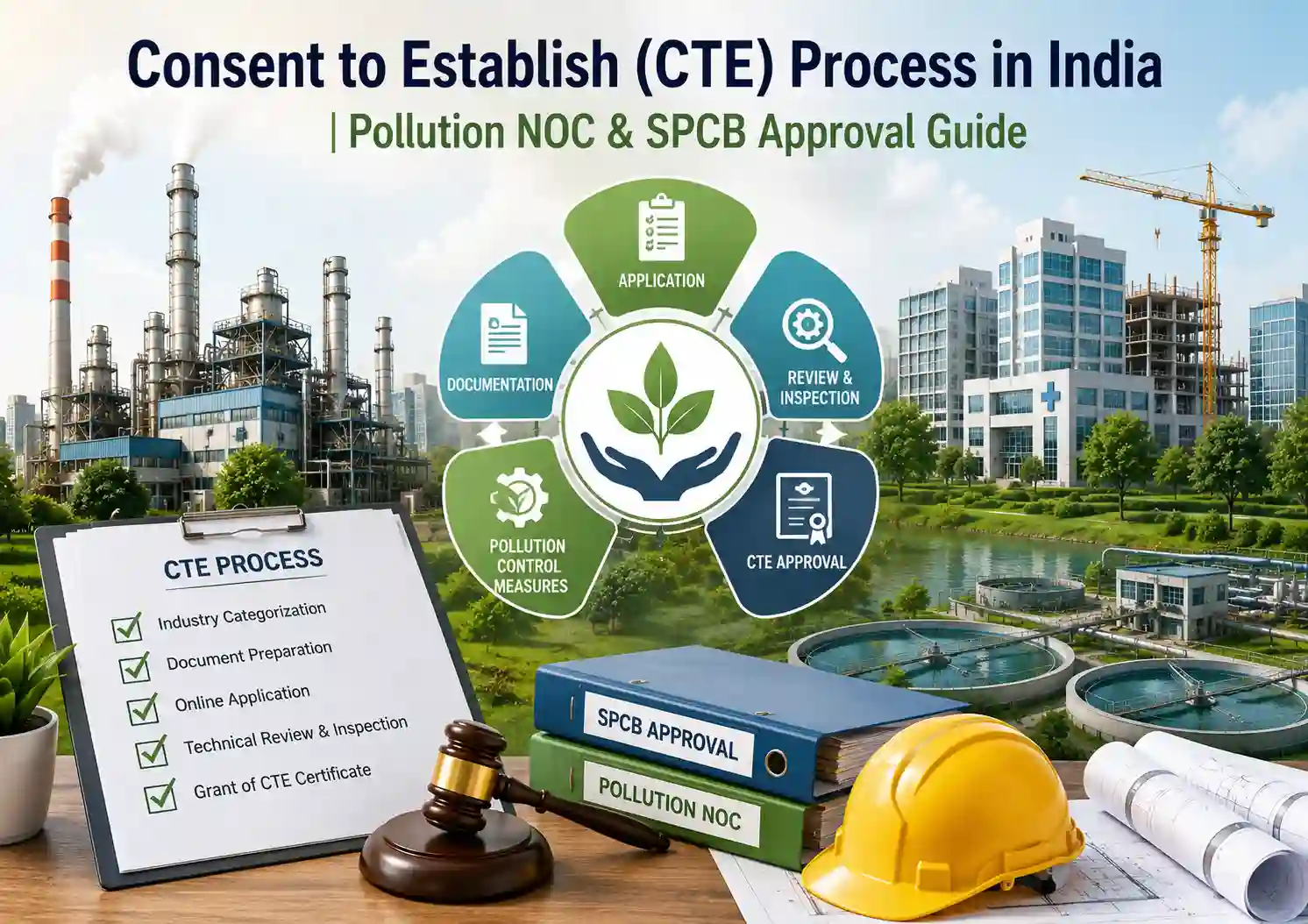
Consent to Establish (CTE) & Pollution NOC Application Process
Step 1 – Industry Categorization
The first step involves identifying:
- Industry category
- Pollution potential
- Applicability of SPCB consent requirements
Correct categorization is critical for approval readiness.
Step 2 – Preparation of Documents
Typical documents include:
- Site layout plan
- Manufacturing process details
- Water balance study
- Land documents
- Project report
- Air and wastewater details
- STP/ETP details
- Environmental management plan
Step 3 – Online SPCB Consent Application
Applications are submitted through online SPCB consent management systems.
The process generally includes:
- Online application submission
- Document upload
- Fee payment
- Application tracking
Step 4 – Technical Review & Inspection
Authorities review:
- Pollution control measures
- Wastewater generation
- Emission control systems
- Site suitability
- Environmental safeguards
Site inspections may be conducted depending on project category.
Step 5 – Grant of Consent to Establish Certificate
Upon satisfactory review, SPCB issues:
- Consent to Establish Certificate
- Pollution NOC approval
- Environmental consent conditions
Approval may include conditions related to:
- STP/ETP installation
- Emission control systems
- Waste management
- Environmental monitoring
Documents Required for Consent to Establish (CTE)
Common documents include:
- Site plan/layout
- Land ownership documents
- Industry registration documents
- Manufacturing process flow
- Water balance study
- Air pollution details
- STP/ETP proposal
- Project report
Incomplete documentation is one of the most common causes of SPCB approval delays.
Role of STP & ETP in Pollution Control Compliance
Pollution control systems help industries comply with wastewater and discharge standards.
Sewage Treatment Plant (STP)
STPs treat domestic wastewater generated from residential, commercial, and institutional projects.
Effluent Treatment Plant (ETP)
ETPs treat industrial wastewater before discharge or reuse.
Consent to Establish (CTE) vs Consent to Operate (CTO)
Consent to Establish (CTE)
Required before project establishment or construction activities begin.
Consent to Operate (CTO)
Required before commencing industrial or commercial operations.
Validity of Consent to Establish Certificate
CTE validity depends on:
- Industry category
- SPCB regulations
- Nature of project
Approvals may require renewal or extension if the project is not commissioned within the prescribed period.
Common Reasons for CTE Rejection
Common causes include:
- Incorrect industry categorization
- Incomplete documentation
- Improper STP/ETP planning
- Non-compliance with zoning regulations
- Insufficient pollution control measures
Proper environmental planning significantly improves approval readiness.
Penalties for Operating Without Pollution NOC
Operating without valid pollution control approval may result in:
- Environmental compensation
- Closure notices
- Consent cancellation
- Legal action
- Operational restrictions
Industries operating without valid SPCB consent may face regulatory action under environmental laws.
Online SPCB Consent Management Systems
Most SPCBs operate digital consent management systems for:
- CTE applications
- CTO renewals
- Compliance submissions
- Consent status tracking
- Environmental reporting
Online systems improve transparency and approval monitoring.
Related Environmental Library Pages
Need Help with Consent to Establish (CTE) Approval?
Simplicomp provides support for:
- Consent to Establish (CTE) approvals
- Pollution NOC applications
- SPCB documentation and coordination
- STP and ETP compliance
- Pollution control planning and regulatory support