

Introduction
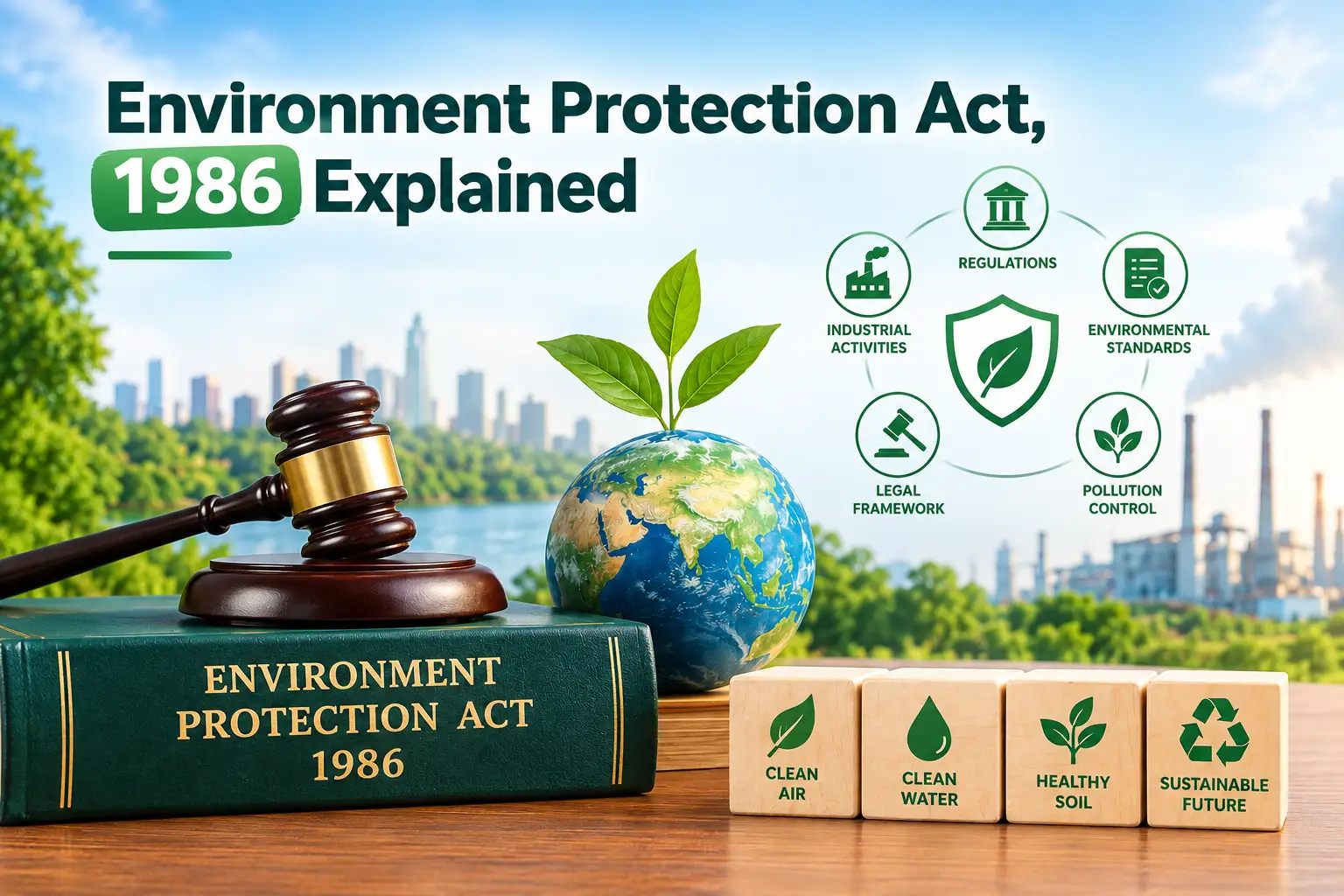
The Environment (Protection) Act, 1986 (EPA) is one of India’s key environmental laws and provides a broad legal framework for protecting and improving the environment. It empowers the Central Government to establish environmental standards, regulate activities that may cause pollution, and take measures to prevent and control environmental risks.
For industries, infrastructure projects, commercial establishments and other regulated activities, the Act is important because several environmental rules, notifications and standards operate within the framework created by this legislation.
Understanding the Environment (Protection) Act, 1986 (EPA) is therefore essential for businesses seeking to maintain environmental compliance and manage pollution-related responsibilities effectively.
What Is the Environment Protection Act, 1986?
The Environment (Protection) Act, 1986 was enacted to provide a comprehensive framework for the protection and improvement of the environment and for preventing, controlling and reducing environmental pollution.
Under Section 2, the Act defines important terms such as environment, environmental pollutant, environmental pollution, hazardous substance, and occupier. These definitions help establish the scope of environmental responsibilities under the Act.
The Act provides a legal framework for:
- Protection and improvement of environmental quality
- Prevention and control of environmental pollution
- Establishment of environmental standards
- Regulation of industrial activities
- Safe handling of hazardous substances
- Environmental monitoring and inspection
- Pollution prevention and corrective measures
- Enforcement of environmental requirements
Unlike laws dealing with a specific type of pollution, the EPA provides a broader framework under which various environmental rules and regulatory measures operate.
For a related sector-specific environmental law, see Water (Prevention and Control of Pollution) Act, 1974 Explained.
Why Is the Environment Protection Act Important?
Industrialisation, urban development, infrastructure expansion and increasing resource consumption can create environmental risks if activities are not properly regulated.
The Environment Protection Act helps establish a framework for:
- Controlling air, water and land pollution
- Prescribing environmental quality standards
- Regulating industrial activities with environmental risks
- Managing hazardous substances
- Supporting environmental monitoring and enforcement
- Providing powers to regulatory authorities
- Establishing detailed environmental rules and standards
Section 3 gives the Central Government broad powers to take measures for protecting and improving environmental quality and preventing, controlling or reducing pollution.
This makes the Act an important foundation for environmental compliance in India.
Industries can also use an Environmental Compliance Checklist for Industries in India to review their broader regulatory obligations.
Powers of the Central Government Under the EPA
The Act gives the Central Government extensive powers to address environmental risks and regulate activities that may cause pollution.
Prescribing Environmental Standards
Under Sections 3 and 6, the Central Government can establish measures and make rules relating to environmental quality and pollution-control standards.
These requirements may cover:
- Air quality
- Water quality
- Soil quality
- Emission limits
- Effluent discharge limits
- Noise levels
- Pollutant concentrations
- Hazardous substances
Industries must identify and comply with the standards applicable to their specific activities.
Regulating Industrial Activities
Under Sections 3 and 5, the Central Government can regulate activities, processes and industries that may create environmental risks.
Section 5 also allows written directions to be issued, which may include directions for regulating or restricting industrial operations and, where legally applicable, closure or stoppage of certain services.
Issuing Environmental Rules and Notifications
The EPA provides the broader legal framework for various environmental rules and regulatory requirements.
Section 25 gives the Central Government the power to make rules for implementing the provisions of the Act.
Environmental regulatory frameworks may therefore cover areas such as:
- Environmental Impact Assessment
- Waste management
- Hazardous substances
- Plastic waste
- E-waste
- Battery waste
- Environmental standards
- Pollution-control requirements
For the EIA framework, see EIA Notification 2006: Environmental Clearance Framework in India.
For a practical overview of the current approval framework, see EIA Guidelines India 2026: Process, Documents, PARIVESH & Environmental Clearance.
Environment Protection Act and Pollution Control
The EPA is closely connected with pollution-control requirements applicable to industries and other regulated activities.
Section 7 – Emission and Discharge Standards
Section 7 prohibits industries from discharging or emitting environmental pollutants beyond the prescribed standards.
This can be relevant to:
- Industrial emissions
- Wastewater discharge
- Effluent
- Other regulated pollutants
Industries should therefore monitor their emissions and discharges against applicable standards.
For wastewater-quality parameters, see BOD, COD, TDS & TSS in Wastewater.
Section 8 – Hazardous Substances
Under Section 8, hazardous substances must be handled in accordance with prescribed procedures and safeguards.
Industries handling hazardous chemicals or substances should maintain appropriate:
- Storage systems
- Handling procedures
- Safety measures
- Emergency arrangements
- Records and documentation
For related compliance requirements, see Hazardous Waste Authorization Process in India.
Section 9 – Accidental Pollution
Section 9 addresses situations involving accidental or unforeseen pollution.
Where an incident results in pollution beyond prescribed standards, the responsible person is required to take steps to prevent or mitigate pollution and inform the relevant authorities as required.
Role of CPCB and State Pollution Control Boards
The Central Pollution Control Board (CPCB) and State Pollution Control Boards (SPCBs) play important roles in India's pollution-control and environmental compliance framework.
Central Pollution Control Board
CPCB's functions may include:
- Environmental monitoring
- Technical guidance
- Development and implementation of standards
- Coordination with State Boards
- Pollution-control programmes
- Environmental data and assessment
The CPCB Industry Categorization Explained guide explains how industries are classified into different pollution categories.
State Pollution Control Boards
SPCBs are involved in several industry-level regulatory activities, including:
- Consent to Establish (CTE)
- Consent to Operate (CTO)
- Environmental inspections
- Effluent and emission monitoring
- Waste authorisations
- Compliance verification
- Regulatory directions
The exact requirements vary according to the industry, location, pollution category and applicable state regulations.
For more information, see Consent to Establish (CTE) Process in India and CTO Renewal Documents Process Explained
Important Rules and Frameworks Under the EPA
The Environment Protection Act provides the legal framework for making detailed environmental rules.
Environmental Impact Assessment
The EIA framework regulates specified projects that require environmental appraisal and, where applicable, prior Environmental Clearance.
Hazardous Waste Management
Hazardous waste regulations establish requirements relating to the storage, handling, transportation, treatment, recycling and disposal of hazardous waste.
Industries should also understand Hazardous Waste Storage & Spill Management for Industrial Units as part of practical hazardous-waste management.
Plastic Waste Management
Plastic waste regulations establish responsibilities for applicable producers, importers, brand owners and other entities, including Extended Producer Responsibility (EPR) requirements where applicable.
For more information, see Plastic Waste EPR Registration Process in India.
E-Waste Management
E-waste regulations establish responsibilities for entities covered by the applicable framework, including requirements relating to collection, recycling, processing and EPR.
See E-Waste EPR Registration Process in India for a detailed overview.
Battery Waste Management
Battery waste regulations establish requirements for applicable producers and other entities concerning collection, recycling, resource recovery and EPR obligations.
Environmental Standards Under the EPA
Environmental standards are an important part of the EPA framework.
Sections 6 and 7 are particularly relevant because they provide the framework for prescribing and complying with pollution-related standards.
Depending on the activity, standards may relate to:
- Air emissions
- Effluent discharge
- Noise
- Pollutant concentrations
- Environmental quality
- Waste handling
- Specific industrial pollutants
Industries should identify activity-specific environmental standards rather than relying on generic limits.
Compliance Requirements for Industries
Environmental compliance requirements depend on the nature and scale of the activity.
Industries should review:
- Nature of manufacturing activity
- Production capacity
- Raw materials
- Water consumption
- Wastewater generation
- Air emissions
- Hazardous substances
- Waste generation
- Environmental approvals
- SPCB consent conditions
- Environmental Clearance conditions, where applicable
- Environmental monitoring requirements
Under Section 20, the Central Government may require information, reports, returns and other environmental data. Maintaining accurate and updated records is therefore an important part of compliance management.
For a broader compliance review, see Environmental Approvals & Compliance Checklist Required to Set Up a Manufacturing Plant in India.
Common Environmental Compliance Documents
Depending on the industry and applicable regulations, environmental compliance documentation may include:
- Environmental Clearance
- Consent to Establish
- Consent to Operate
- Waste authorisations
- EPR registration
- Environmental monitoring reports
- Waste-disposal records
- Water consumption records
- Emission monitoring reports
- ETP/STP operational records
- Hazardous-waste records
- Environmental compliance reports
- Inspection records
Proper documentation helps industries demonstrate compliance during inspections and regulatory reviews.
Industries can also refer to Documents Required for Environmental Clearance (EC) in India for an EC-specific documentation checklist.
Consequences of Environmental Non-Compliance
Environmental violations can result in regulatory and legal consequences depending on the nature and severity of the violation.
The EPA provides enforcement mechanisms that may include regulatory directions and prosecution.
For example:
- Section 5 provides for certain environmental directions by the Central Government.
- Section 15 provides for penalties for contravention of the Act, rules, orders or directions, subject to the applicable law.
- Section 16 deals with offences committed by companies and provides for liability of responsible persons in specified circumstances.
Other consequences may include:
- Regulatory notices
- Corrective-action directions
- Environmental compensation
- Restrictions on activities
- Legal proceedings
- Additional monitoring requirements
The actual consequence depends on the applicable law, violation, facts of the case and regulatory proceedings.
For more information, see Environmental Compensation Explained in India.
Environment Protection Act and Environmental Audits
Environmental audits help industries review their compliance status and identify potential gaps.
An environmental audit may examine:
- Environmental approvals
- Consent conditions
- Waste management
- Water consumption
- Wastewater treatment
- Air pollution control
- Hazardous-material handling
- Environmental monitoring
- Recordkeeping
- Previous inspection observations
Regular compliance reviews can help industries identify issues before they develop into significant regulatory problems.
For a detailed guide, see Environmental Audit for Industries: Types, Process & Compliance Benefits.
Common Mistakes Made by Industries
1. Treating Environmental Compliance as a One-Time Activity
Environmental compliance requires continuous monitoring and periodic review.
2. Ignoring Changes in Operations
Changes in production capacity, raw materials, processes or pollution load may affect environmental requirements.
For capacity changes where pollution load does not increase, industries may also need to understand the concept of No Increase in Pollution Load (NIPL).
3. Poor Record Maintenance
Incomplete monitoring reports, waste records or operational documents can create compliance difficulties.
4. Operating Pollution-Control Equipment Improperly
ETP, STP, air-pollution-control equipment and other systems should be operated and maintained as required.
5. Delaying Regulatory Renewals
CTO, authorisations, registrations and other approvals should be tracked and renewed within applicable timelines.
For example, industries can refer to the CTO Renewal Process & Documents Required in India.
6. Not Tracking Regulatory Changes
Environmental rules, standards and regulatory requirements can change. Industries should periodically review applicable requirements.
How SimpliComp Can Help
SimpliComp assists industries and project developers with environmental compliance and regulatory requirements, including:
- Environmental compliance assessment
- Environmental Clearance consultancy
- CTE and CTO consultancy
- EIA and EMP support
- Waste-management compliance
- EPR registration and compliance
- Environmental monitoring coordination
- Environmental audit support
- Pollution-control compliance review
- Regulatory documentation
The scope of consultancy depends on the project's location, industry, capacity and applicable environmental requirements.
Conclusion
The Environment (Protection) Act, 1986 provides one of the broadest legal frameworks for environmental protection and pollution control in India.
Through provisions such as Sections 3, 5, 6, 7, 8, 9, 10, 11, 15, 16 and 25, the Act provides mechanisms for environmental protection, standard-setting, regulation, inspection, pollution control, hazardous-substance safeguards, enforcement and rule-making.
For industries and projects, compliance is not limited to obtaining a single approval. Businesses must continuously monitor their environmental obligations, maintain records, operate pollution-control systems properly and review requirements whenever their operations or applicable regulations change.
A proactive environmental compliance approach can help reduce regulatory risks while supporting responsible and sustainable business operations.
Related Insight & Resources
- EIA Clearance Process →
- Public Hearing Process in EIA →
- EC Application Mistakes Parivesh →
- Environmental Clearance for Steel Plants India →
- ec-approval-timeline-india →
Need Help with Environmental Clearance & EIA Services
Simplicomp assists industries with:
- Environmental Impact Assessment (EIA) Studies
- Environmental Clearance (EC) Approvals
- Forest Clearance / NOC
- Aravali NOC / Clearance
- Geo-Hydrology & Baseline Studies
- Environmental & Social Due Diligence
- Wildlife Clearance