

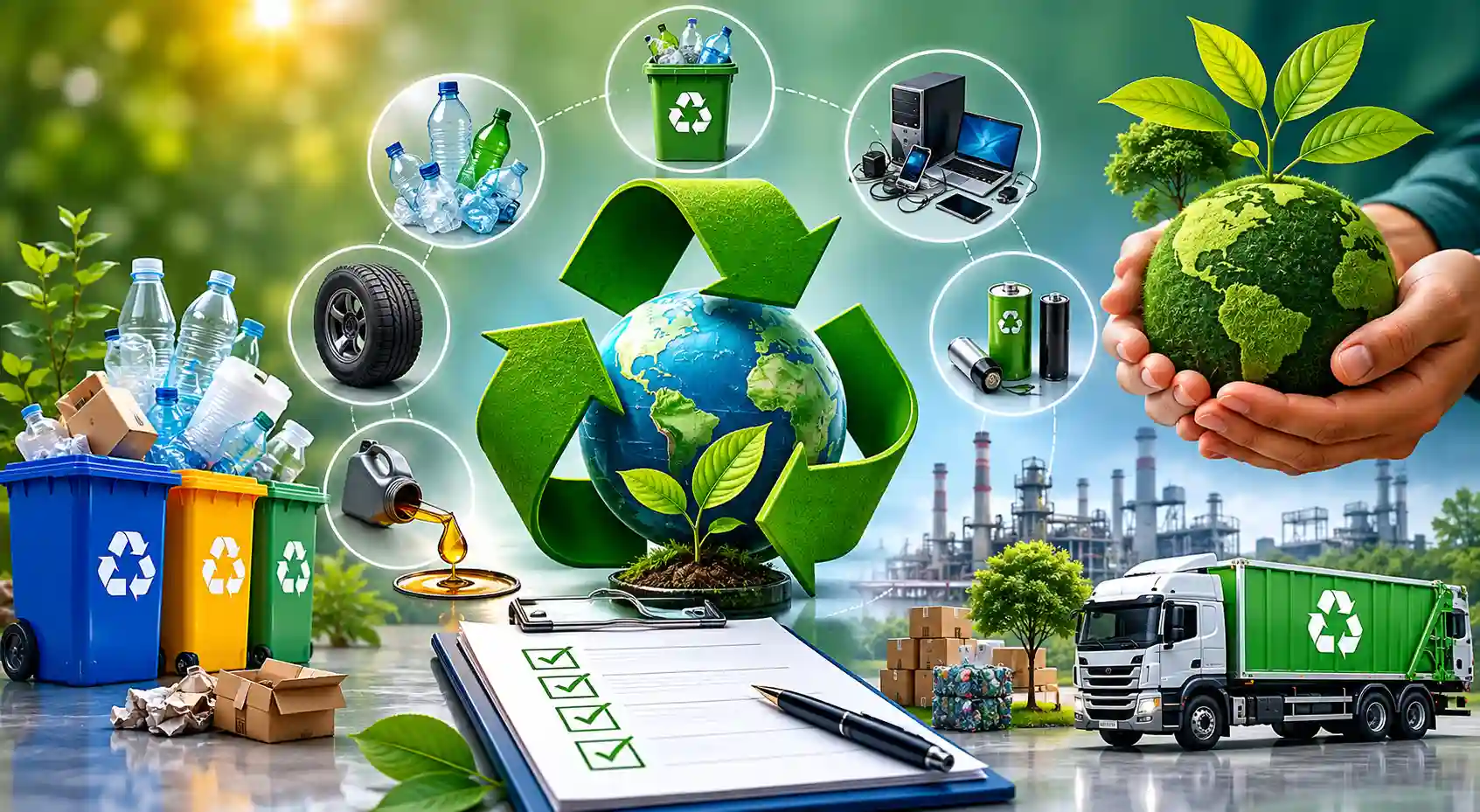
EPR Registration & Waste Management Compliance Guide
EPR compliance in India is regulated through rules issued by the Ministry of Environment, Forest and Climate Change (MoEFCC) and monitored by the Central Pollution Control Board (CPCB).
This section covers EPR registration processes, plastic waste management rules, e-waste compliance, battery waste regulations, waste tyre management, used oil EPR obligations, ELV portal compliance, and waste management obligations applicable across India.
What is Extended Producer Responsibility (EPR)?
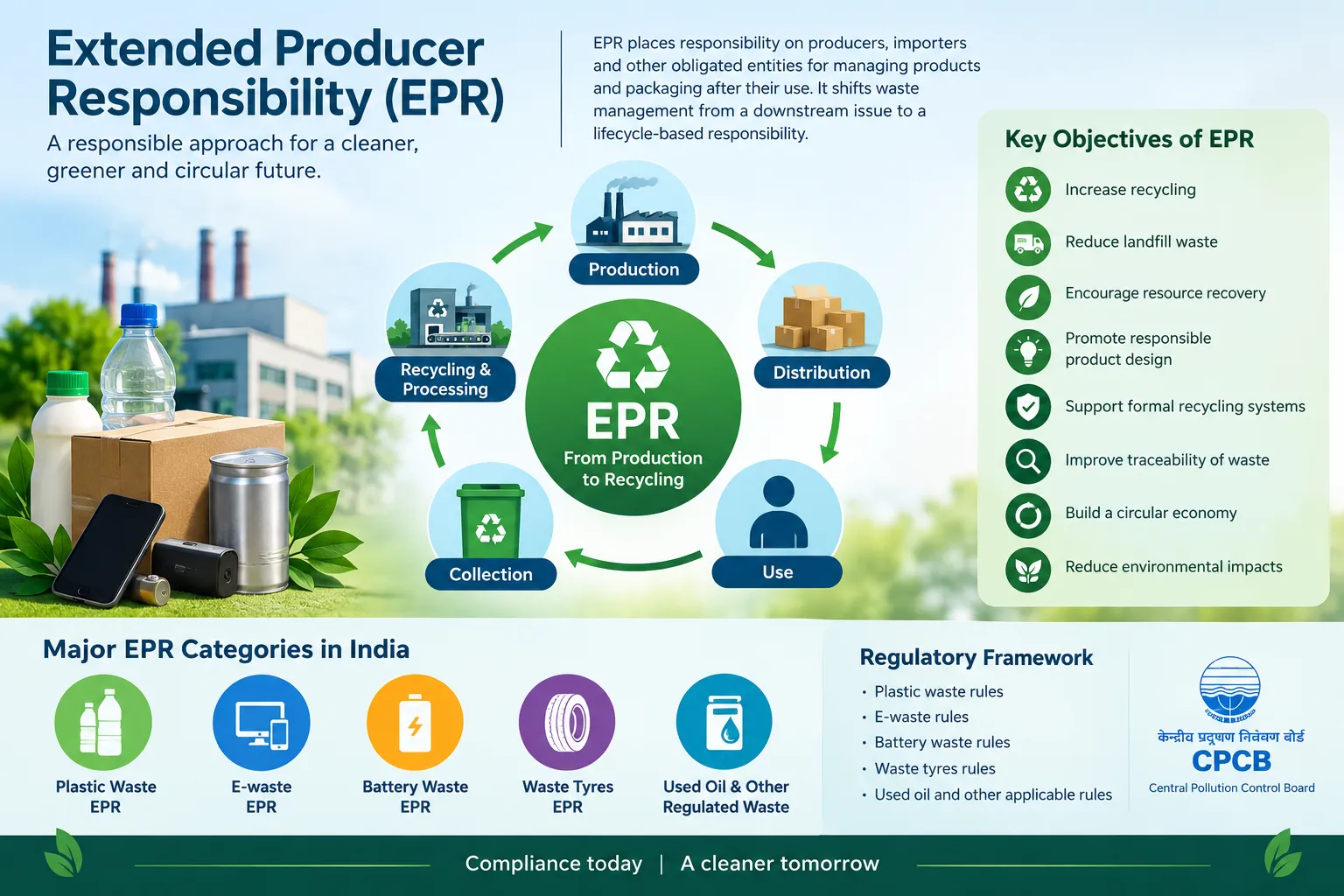
Extended Producer Responsibility (EPR) is a regulatory framework that makes producers and brand owners responsible for managing post-consumer waste generated from their products.
Definition
EPR encourages environmentally responsible product lifecycle management and promotes sustainable waste handling practices.
The Framework Promotes
- Waste collection
- Recycling and recovery
- Sustainable waste management
- Circular economy practices
- Reduction of environmental pollution
EPR Obligations Generally Apply To
- Producers
- Importers
- Brand Owners (PIBOs)
- Manufacturers
EPR & Waste Management Compliance Library
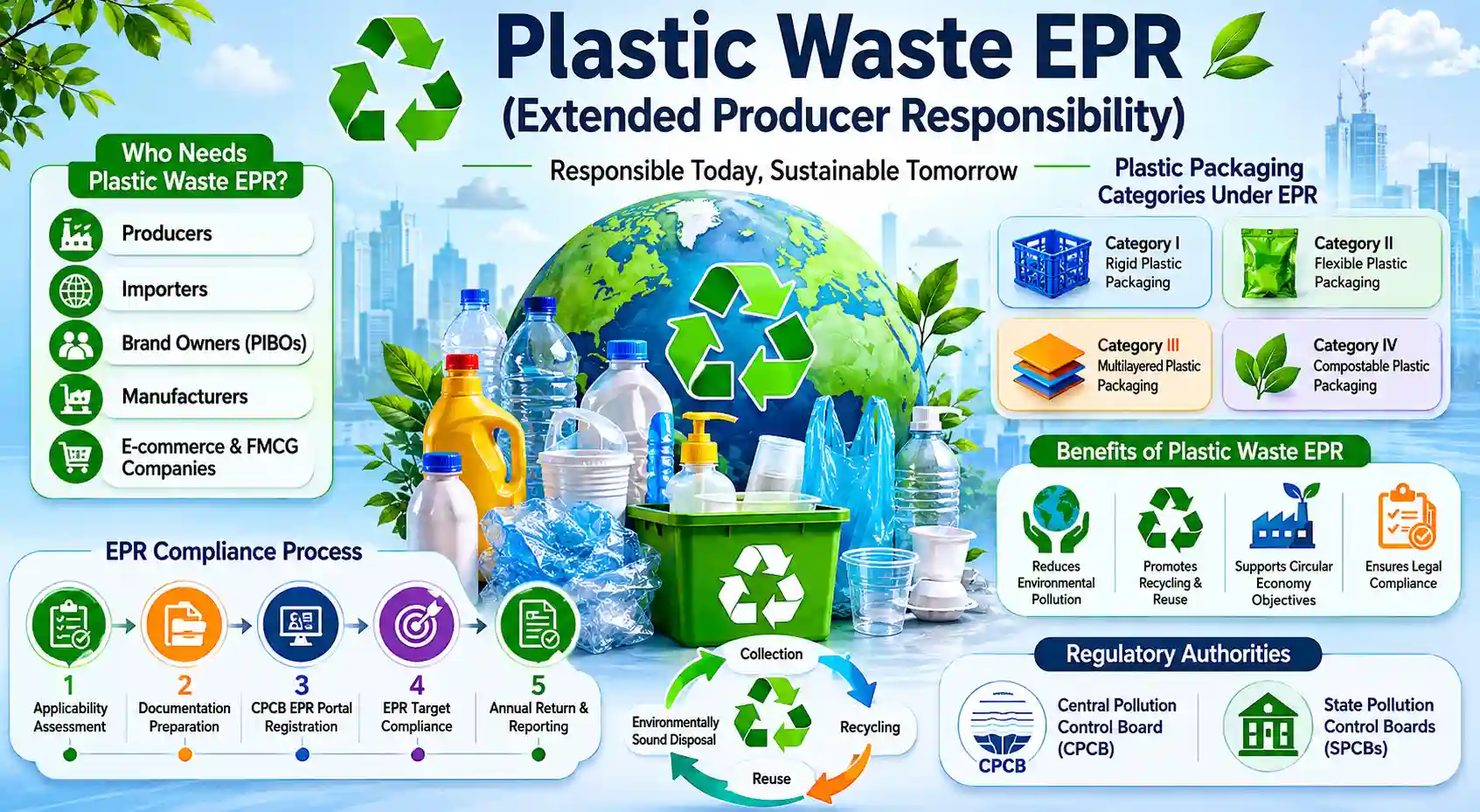
Businesses Commonly Requiring EPR Registration
EPR compliance may apply to:
Plastic packaging companies
Importers and exporters
Electronics manufacturers
Consumer goods brands
Battery manufacturers
Tyre manufacturers
Lubricant producers
Vehicle manufacturers
E-commerce businesses
FMCG companies
Applicability depends on product category and waste generation obligations.
Battery Waste Management Rules
Battery Waste Management Rules regulate:
Collection and recycling of batteries
Producer obligations
Waste traceability
Recycling efficiency targets
The framework applies to manufacturers, importers, and brand owners dealing with batteries and battery-operated products.
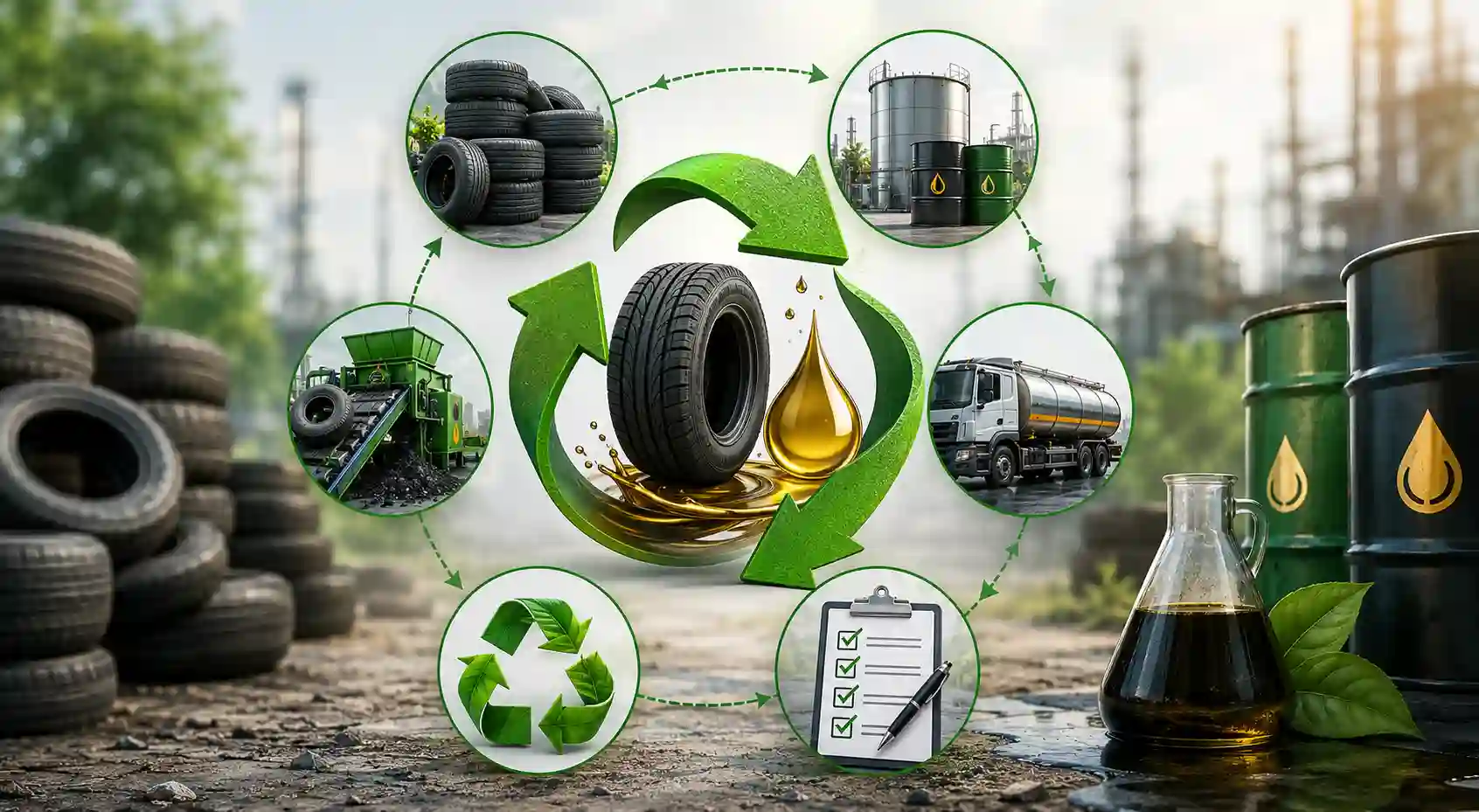
Waste Tyre & Used Oil EPR Compliance
Waste Tyre and Used Oil EPR frameworks regulate environmentally sound collection, recycling, reuse, and disposal mechanisms for tyre waste and lubricating oil waste generated across industries.
The compliance framework includes:
- Collection targets
- Recycling obligations
- Authorized recycler engagement
- CPCB reporting and documentation
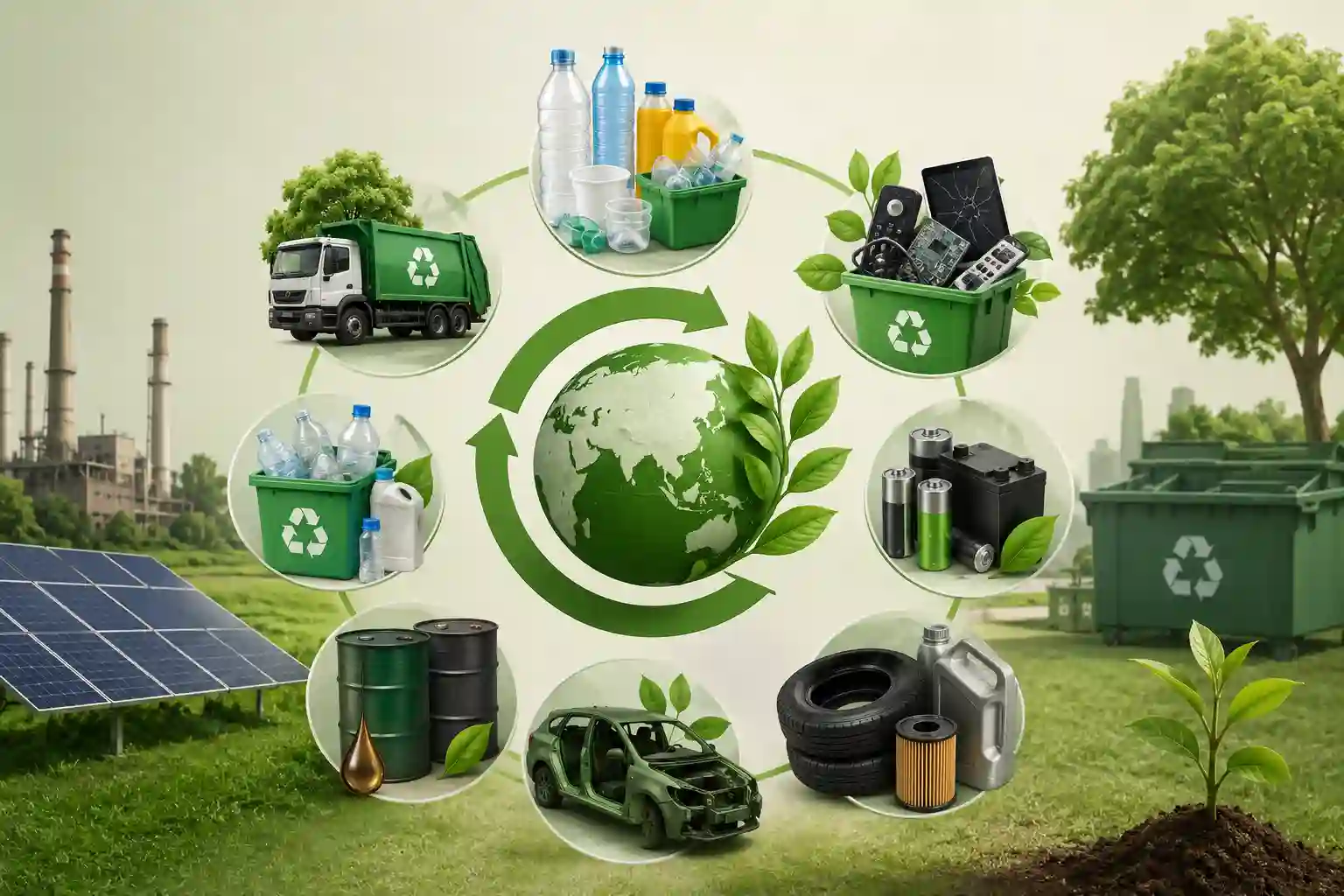
ELV (End-of-Life Vehicle) Compliance Framework
ELV compliance frameworks regulate vehicle dismantling, recycling, scrapping operations, and environmentally sound disposal of automotive waste.
Compliance obligations may apply to:
- Vehicle manufacturers
- Registered vehicle scrapping facilities
- Recyclers and dismantlers
Common Reasons for EPR Registration Rejection
Common causes include:
Incomplete documentation and incorrect product categorization
Mismatch in product details
Improper waste quantity declaration
Non-compliance with CPCB guidelines
Proper documentation and regulatory planning improve approval readiness.
Penalties for Non-Compliance
Failure to comply with EPR regulations may result in:
- Environmental compensation
- Registration suspension
- Regulatory notices
- Financial penalties
- Legal action
Entities operating without valid EPR registration may face enforcement action under environmental laws.
Online EPR Compliance Systems
CPCB operates digital platforms for:
EPR registration
Waste management reporting
Recycling certificate management
Annual return filing
Compliance monitoring
Digital systems improve transparency and waste traceability.
Need Help with EPR Registration & Waste Management Compliance?
Simplicomp provides support for:
- EPR registration
- CPCB compliance documentation
- Plastic waste management compliance
- E-waste and battery waste registration
- Waste tyre and used oil EPR compliance
- Waste management planning and reporting