

Introduction
Industries that manufacture, store, process, handle or import hazardous chemicals need effective systems to identify chemical hazards and manage the risks associated with accidental releases, fires, explosions and other major incidents.
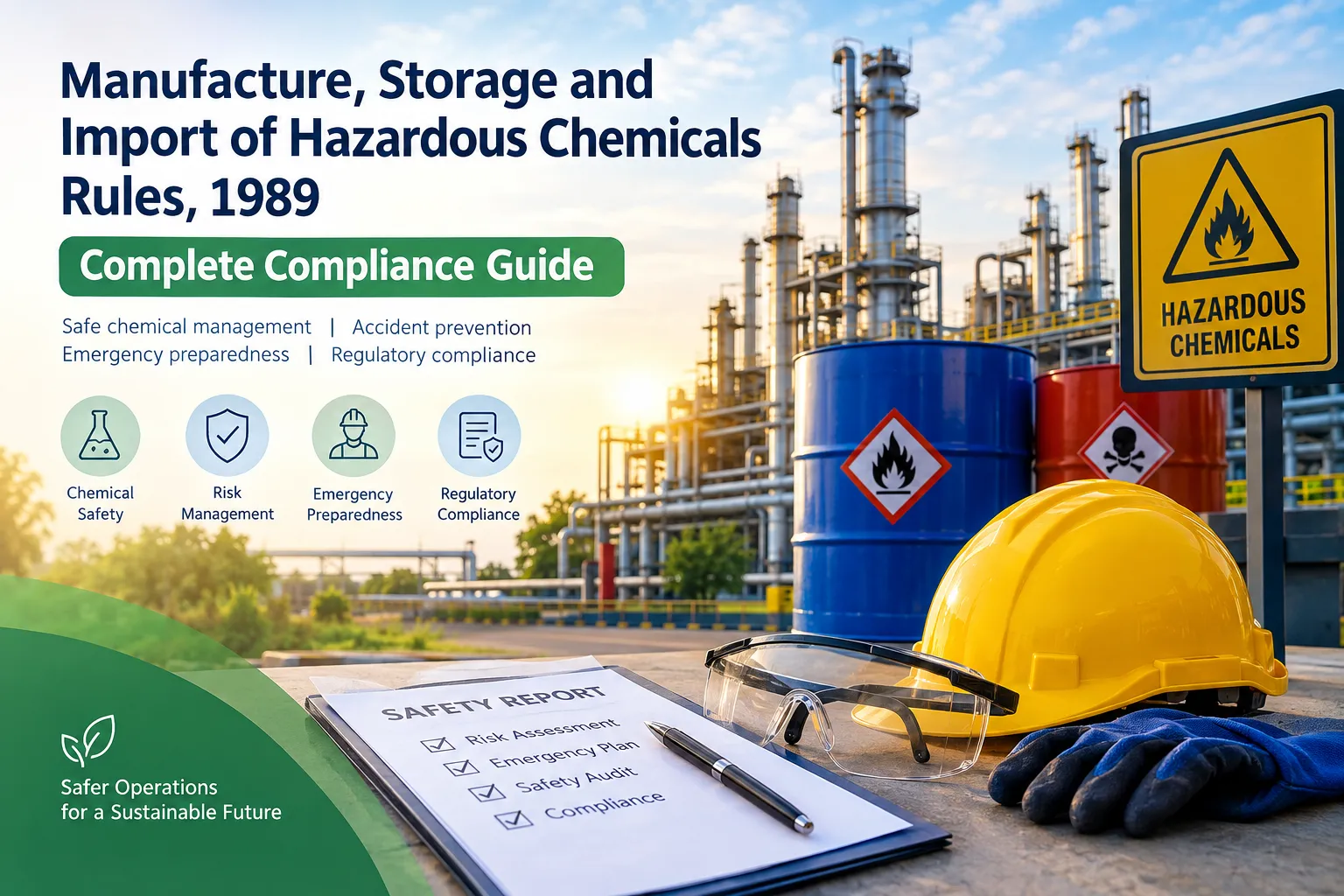
The Manufacture, Storage and Import of Hazardous Chemicals Rules, 1989 (MSIHC Rules) provide a regulatory framework for controlling risks associated with hazardous chemicals. The rules focus on safe chemical handling, accident prevention, emergency preparedness, safety reporting and information sharing.
For industries handling specified hazardous chemicals above applicable quantities, compliance may involve site notification, safety reports, emergency planning, safety audits, accident reporting and other regulatory requirements.
What Are the Manufacture, Storage and Import of Hazardous Chemicals Rules, 1989?
The MSIHC Rules, 1989 were introduced under the environmental regulatory framework to address risks arising from hazardous chemical activities.
The rules apply to specified activities involving the manufacture, storage and import of hazardous chemicals, subject to the conditions, quantities and applicability criteria prescribed under the framework.
The objective is not limited to chemical storage. The framework also addresses the prevention of major accidents and preparedness for situations that could affect workers, nearby communities and the environment.
Industries should therefore evaluate their chemical inventory, storage arrangements, manufacturing processes and emergency preparedness against the applicable requirements.
For a broader understanding of the legal framework governing environmental protection, see Environment Protection Act, 1986 Explained.
Main Objectives of the MSIHC Rules
The major objectives of the rules include:
- Identification of hazardous chemicals and associated risks
- Prevention and control of major chemical accidents
- Safe manufacture, storage and handling of hazardous chemicals
- Establishment of appropriate safety-management systems
- Preparation of emergency response plans
- Safety reporting for applicable industrial activities
- Independent safety audit requirements where applicable
- Proper communication of chemical hazards
- Reporting and investigation of major accidents
- Coordination between industries and concerned authorities
- Reduction of risks to workers, the public and the environment
These requirements encourage industries to treat hazardous chemical management as an ongoing compliance responsibility rather than only a storage-related activity.
Which Activities Can Fall Under the MSIHC Rules?
The applicability of the rules depends on the type and quantity of hazardous chemicals involved and the nature of the activity.
Activities that may require assessment include:
Chemical Manufacturing Units
Facilities manufacturing or processing specified hazardous chemicals need to evaluate whether their operations fall within the applicable provisions.
Chemical Storage Facilities
Warehouses, tank farms, storage terminals and industrial premises storing hazardous chemicals may need to comply with prescribed requirements depending on chemical type and quantity.
For practical guidance on managing industrial storage areas, leakage risks and spill response, see Hazardous Waste Storage & Spill Management for Industrial Units.
Industrial Processing Units
Manufacturing facilities using hazardous chemicals as raw materials, intermediates or process chemicals should assess their chemical inventory and associated risks.
Import Activities
Importers dealing with specified hazardous chemicals may have information, documentation and reporting responsibilities under the applicable framework.
Other Specified Industrial Activities
Facilities falling within the prescribed categories and threshold quantities should assess their obligations before starting or modifying operations.
Identification of Hazardous Chemicals
One of the first steps in chemical safety management is identifying which chemicals handled at the facility are covered by the applicable requirements.
A facility should maintain information regarding:
- Chemical name
- Chemical composition
- Quantity handled
- Maximum storage quantity
- Physical and chemical properties
- Hazard classification
- Storage location
- Handling method
- Safety information
- Potential accident scenarios
Chemical inventory should be reviewed whenever there is a change in raw materials, products, processes or storage capacity.
Threshold Quantities and Applicability
The applicability of several requirements under the MSIHC framework depends on prescribed quantities of hazardous chemicals.
Therefore, industries should not determine compliance only by asking whether a chemical is hazardous.
They should also examine:
- Which chemical is being handled
- Quantity stored
- Quantity manufactured or processed
- Maximum inventory
- Storage configuration
- Nature of the industrial activity
- Applicable threshold quantities
- Whether the activity falls within a specified category
A proper applicability assessment can help identify the regulatory requirements relevant to a particular facility.
Safety Management for Hazardous Chemicals
Hazardous chemical compliance requires a systematic approach to managing risks throughout the facility.
An effective safety-management system may include:
- Chemical inventory control
- Hazard identification
- Safe operating procedures
- Storage controls
- Handling procedures
- Equipment inspection
- Preventive maintenance
- Emergency preparedness
- Worker training
- Personal protective equipment
- Incident reporting
- Periodic safety review
The objective is to reduce the possibility of accidents and improve the facility's ability to respond if an incident occurs.
Chemical Storage Requirements
Safe storage is an important part of hazardous chemical management.
Industries should assess whether chemicals are stored in suitable areas and under controlled conditions.
Important considerations may include:
Proper Storage Area
Hazardous chemicals should be stored in designated areas appropriate for the nature of the chemical.
Container Identification
Containers should carry appropriate identification and hazard information so that workers can understand the chemical being handled.
Compatibility
Chemicals with incompatible properties should be assessed carefully before being stored together.
Spill Prevention
Storage arrangements should consider the possibility of leakage or accidental release.
Access Control
Access to hazardous chemical storage areas should be appropriately controlled.
Emergency Equipment
The facility should maintain suitable emergency-response arrangements based on the hazards present.
Safety Information and Chemical Labelling
Workers handling hazardous chemicals need access to relevant information about the substances they work with.
Important information may include:
- Chemical identity
- Hazard characteristics
- Handling precautions
- Storage precautions
- Exposure risks
- Emergency response information
- Fire-response considerations
- Spill-response measures
- Personal protective requirements
Proper identification and communication of hazards help workers take appropriate precautions during routine operations and emergencies.
Site Notification and Regulatory Information
Certain industrial activities covered by the rules may require information regarding the site and the hazardous chemicals handled at the facility to be submitted to the concerned authority.
The information may relate to:
- Site details
- Nature of industrial activity
- Hazardous chemicals
- Quantities handled
- Storage arrangements
- Safety measures
- Emergency preparedness
The exact requirement depends on the applicability of the rules to the facility.
Industries planning a new hazardous chemical facility should therefore assess regulatory requirements before construction and commencement of operations.
For a broader checklist covering environmental approvals for new manufacturing facilities, see Environmental Approvals & Compliance Checklist Required to Set Up a Manufacturing Plant in India.
Safety Reports for Applicable Facilities
Safety reporting is an important component of major-accident prevention.
Where applicable, an occupier may be required to prepare a Safety Report containing information necessary for assessing major accident hazards and the measures adopted to control them.
A safety report may address areas such as:
- Description of the facility
- Hazardous chemicals handled
- Major accident scenarios
- Risk-control measures
- Safety systems
- Emergency arrangements
- Accident prevention measures
The report should reflect the actual facility and its operating conditions.
Changes to the process, chemical inventory or plant configuration may therefore require regulatory review of the existing safety documentation.
Independent Safety Audit
Applicable hazardous chemical facilities may also be subject to safety-audit requirements.
An independent safety audit can help evaluate whether:
- Safety systems are functioning appropriately
- Major hazards have been identified
- Risk-control measures are adequate
- Operating procedures are being followed
- Emergency arrangements are maintained
- Previous safety observations have been addressed
Periodic review can help industries identify gaps before they develop into serious safety or environmental incidents.
For a broader compliance-focused approach to industrial audits, see Environmental Audit for Industries: Types, Process & Compliance Benefits.
Emergency Planning
Emergency preparedness is a major element of hazardous chemical compliance.
Industries handling hazardous chemicals should consider possible emergency scenarios such as:
- Chemical leakage
- Toxic gas release
- Fire
- Explosion
- Tank failure
- Pipeline leakage
- Transportation-related incidents
- Chemical exposure
Emergency planning should define the response arrangements, responsibilities and communication mechanisms required during an incident.
On-Site Emergency Plan
An on-site emergency plan focuses on incidents that can be managed within or immediately around the industrial facility.
Depending on the nature of the facility, the plan may address:
- Identification of emergency scenarios
- Emergency control organisation
- Alarm and communication systems
- Evacuation procedures
- Emergency shutdown
- Fire response
- Spill or leakage response
- First-aid arrangements
- Emergency equipment
- Coordination with local emergency services
The plan should be periodically reviewed and tested through appropriate emergency exercises or mock drills.
Off-Site Emergency Planning
Some major chemical incidents may have consequences beyond the industrial premises.
For such situations, off-site emergency planning involves coordination between the industry and relevant public authorities.
Depending on the circumstances, coordination may involve:
- District administration
- Fire and emergency services
- Police
- Medical services
- Local authorities
- Pollution-control authorities
- Other concerned agencies
The objective is to establish an organised response if an accident has consequences outside the facility.
Mock Drills and Emergency Preparedness
Emergency plans should not remain only as documents.
Industries should periodically evaluate whether workers understand the emergency procedures and whether the available response systems function effectively.
Mock drills can help assess:
- Alarm systems
- Emergency communication
- Evacuation arrangements
- Worker response
- Firefighting preparedness
- Spill-response procedures
- Coordination between responsible personnel
- Availability of emergency equipment
Observations from drills should be reviewed and corrective actions should be documented.
Reporting of Major Accidents
A major accident involving hazardous chemicals can require reporting to the concerned authorities under the applicable framework.
Industries should have an internal system for:
- Identifying the incident
- Taking immediate emergency action
- Informing responsible personnel
- Notifying the appropriate authority where required
- Recording the circumstances of the incident
- Investigating the cause
- Implementing corrective measures
- Reviewing preventive controls
Accident reporting should therefore be integrated into the facility's overall emergency-management system.
Responsibilities of the Occupier
The occupier of an applicable industrial facility has an important role in ensuring that hazardous chemical risks are properly managed.
Responsibilities may include:
- Identifying applicable hazardous chemicals
- Maintaining required information
- Implementing safety measures
- Preparing applicable safety documentation
- Establishing emergency arrangements
- Providing workers with relevant safety information
- Conducting required audits or reviews
- Reporting major accidents where applicable
- Maintaining regulatory records
- Ensuring corrective actions are implemented
The exact responsibilities depend on the applicability of the rules and the nature of the industrial activity.
Hazardous Chemical Import Requirements
Importers dealing with specified hazardous chemicals should assess the information and documentation requirements applicable to their activities.
Relevant information may include:
- Chemical identity
- Quantity imported
- Hazard information
- Supplier details
- Intended use
- Emergency information
- Transport-related information
- Required regulatory notifications
Import-related compliance should be reviewed before shipments are undertaken, particularly where hazardous chemicals fall within specified categories or quantities.
Worker Training and Safety Awareness
Employees working with hazardous chemicals should understand the risks associated with the substances they handle.
Training programs can cover:
- Chemical hazards
- Safe handling procedures
- Storage practices
- Personal protective equipment
- Spill response
- Fire response
- Emergency evacuation
- First-aid procedures
- Incident reporting
Training records should be maintained as part of the facility's safety-management documentation.
Chemical Accident Prevention
Accident prevention should begin with identifying potential failure points within the facility.
Industries can review:
- Chemical storage tanks
- Pipelines
- Valves
- Pumps
- Transfer systems
- Pressure systems
- Loading and unloading areas
- Process equipment
- Electrical systems
- Fire protection systems
Preventive maintenance and inspection programs can help reduce the likelihood of equipment-related chemical incidents.
Common Compliance Gaps
Industries handling hazardous chemicals may face compliance gaps when regulatory requirements are not integrated into day-to-day operations.
Common areas requiring attention include:
Incomplete Chemical Inventory
The actual chemical inventory may differ from the information maintained in regulatory records.
Poor Labelling
Containers may not have adequate identification or hazard information.
Outdated Safety Documentation
Safety reports, emergency plans or chemical information may not reflect current operations.
Inadequate Emergency Preparedness
Emergency plans may exist but may not be periodically tested.
Lack of Training Records
Worker training may be conducted without maintaining appropriate documentation.
Uncontrolled Chemical Storage
Storage arrangements may not adequately address segregation, leakage or emergency-response requirements.
Failure to Review Process Changes
Changes in production, raw materials or storage quantities may introduce new hazards and regulatory requirements.
Industries can use an Environmental Compliance Checklist for Industries in India to review broader environmental compliance areas alongside hazardous chemical requirements.
MSIHC Rules and Other Environmental Regulations
Hazardous chemical compliance does not operate independently from other environmental requirements.
Depending on the project and activity, industries may also need to consider requirements associated with:
- Environment (Protection) Act, 1986
- Environmental Clearance
- Pollution Control Board consents
- Hazardous and Other Wastes management
- Chemical waste disposal
- Air and water pollution control
- Groundwater permissions, where applicable
- Fire and emergency-safety requirements
- Applicable environmental standards
The applicable requirements depend on the industry's activity, location, chemical inventory and regulatory approvals.
Where pollution-control consent is relevant to the facility, industries can refer to Consent to Establish (CTE) Process in India | Pollution NOC & SPCB Approval Guide .
Compliance for New Industrial Projects
For a new project involving hazardous chemicals, compliance planning should begin during the project-design stage.
The project team should assess:
- Proposed chemical inventory
- Maximum storage quantities
- Manufacturing processes
- Hazardous chemical classification
- Storage areas
- Process safety
- Emergency response
- Fire protection
- Waste management
- Environmental approvals
- Safety documentation
- Regulatory reporting requirements
Early assessment can help incorporate safety and environmental controls into the project instead of making costly modifications after construction.
Compliance for Existing Industries
Existing facilities should periodically review whether their actual operations remain consistent with their regulatory documentation.
Important review areas include:
- Current chemical inventory
- Maximum storage quantity
- New chemicals introduced
- Changes in production process
- Changes in storage capacity
- Emergency plan validity
- Safety report updates, where applicable
- Safety-audit observations
- Mock-drill records
- Accident and incident records
- Worker training
- Chemical labelling
- Storage conditions
- Regulatory submissions
A compliance review can help identify gaps between approved arrangements and actual site practices.
How SimpliComp Can Help
Managing hazardous chemical compliance requires coordination between regulatory requirements, technical documentation and actual plant operations.
SimpliComp can support industries with environmental and regulatory consultancy related to hazardous chemical management, including:
- Hazardous chemical regulatory applicability assessment
- Compliance documentation support
- Safety and environmental compliance review
- Regulatory documentation assistance
- Chemical storage compliance assessment
- Emergency-planning documentation support
- Environmental compliance audits
- Hazardous waste management guidance
- Pollution-control consent support
- Environmental monitoring and compliance documentation
- Regulatory coordination and advisory support
Our approach focuses on understanding the facility's actual operations and identifying areas where environmental and regulatory requirements need to be strengthened.
Why Hazardous Chemical Compliance Should Be Planned Early
For industries handling hazardous chemicals, compliance should be considered before the facility becomes operational.
Early planning helps businesses evaluate:
- Chemical storage requirements
- Regulatory applicability
- Safety documentation
- Emergency preparedness
- Pollution-control systems
- Waste management
- Monitoring requirements
- Worker safety arrangements
Integrating these requirements during project planning can reduce compliance gaps and support safer industrial operations.
Conclusion
The Manufacture, Storage and Import of Hazardous Chemicals Rules, 1989 provide an important framework for managing risks associated with specified hazardous chemicals.
For applicable industries, compliance can involve chemical identification, threshold assessment, safe storage, safety reporting, emergency planning, safety audits, accident reporting and regulatory documentation.
Industries should periodically review their chemical inventory and operational practices to ensure that safety and environmental controls remain appropriate for current activities.
Professional environmental and regulatory consultancy can help businesses understand applicable requirements, organise documentation and identify potential compliance gaps.
Related Insight & Resources
- Consent to Establish Process →
- Hydrogeological Study →
- Hazardous Waste Authorization Process →
- Industrial Approvals Required Haryana →
- Difference Between Cte and cto →
Need Help with Environmental Monitoring Audits Services
Simplicomp assists industries with:
- Air, Water, Noise & DG Stack Testing
- Environmental Audits
- Hazardous Waste Audit
- E-Waste Audits
- Hazardous Waste Returns (Form IV)
- Battery Waste Audit