

Introduction
The Expert Appraisal Committee (EAC) is an expert body involved in the appraisal of projects that require Environmental Clearance under India's applicable environmental regulatory framework. The committee examines the potential environmental impacts of proposed projects and provides recommendations based on project information, environmental studies, and supporting documents.
The EAC plays an important role in evaluating whether a proposed project has adequately considered environmental risks and proposed suitable mitigation measures. Understanding the Environmental Clearance and EIA requirements helps project proponents prepare the necessary documentation and address applicable regulatory requirements.
What Is an Expert Appraisal Committee (EAC)?
An Expert Appraisal Committee (EAC) is a committee of environmental and technical experts constituted by the Ministry of Environment, Forest and Climate Change (MoEFCC) to appraise projects falling within its assigned Environmental Clearance appraisal scope.
The committee evaluates project proposals from an environmental perspective, considering factors such as:
- Project location and site characteristics
- Proposed activities and production capacity
- Baseline environmental conditions
- Potential environmental impacts
- Environmental Impact Assessment (EIA) studies
- Environmental Management Plan (EMP)
- Pollution-control measures
- Water and other resource requirements
- Risk assessment and disaster-management arrangements
- Public consultation outcomes, where applicable
- Compliance with applicable environmental safeguards
Depending on the project, the appraisal may require detailed environmental studies and technical documentation.
What Is the Role of EAC in Environmental Clearance?
The primary role of the EAC is to undertake the technical and environmental appraisal of projects referred to it under the applicable regulatory framework.
During appraisal, the committee examines whether the project proposal adequately identifies potential environmental impacts and includes appropriate measures to prevent, minimise, or manage them.
The review may cover project details, environmental baseline data, EIA and EMP documents, additional studies, and responses to observations raised during the appraisal process.
Project proponents should understand the applicable Environmental Clearance and EIA consultancy requirements Environmental Clearance and EIA consultancy requirements early in the planning stage to identify relevant studies, documentation, and approval requirements.
Key Functions of the EAC
Examination of Project Proposals
The EAC reviews project proposals and evaluates their environmental implications based on the information submitted by the project proponent.
Review of Environmental Studies
Where an EIA study is required, the committee examines the environmental assessment, supporting technical studies, and relevant project information.
An appropriate EIA Guidelines India 2026 can help project proponents understand the studies and documentation relevant to their projects.
Evaluation of Environmental Impacts
The committee may consider potential impacts on:
- Air quality and emissions
- Water resources and wastewater
- Land and soil quality
- Ecology and biodiversity
- Noise levels
- Socio-economic conditions
- Resource consumption
- Solid and hazardous waste generation
- Occupational and environmental risks
Examination of Mitigation Measures
The EAC evaluates whether the proposed pollution-control systems and environmental safeguards are appropriate for the identified risks.
Review of the Environmental Management Plan
The committee examines the proposed Environmental Management Plan (EMP), including mitigation measures, monitoring arrangements, responsibilities, and environmental management commitments.
Consideration of Public Consultation
Where public consultation is applicable, the EAC may consider issues raised during the process and the responses or commitments provided by the project proponent.
Seeking Additional Information
If the submitted information is insufficient, the committee may request clarifications, additional studies, or further technical details before completing its appraisal.
Making Appraisal Recommendations
After reviewing the available information, the EAC makes recommendations to the competent authority in accordance with the applicable regulatory process.
EAC and Environmental Clearance Assessment
EAC appraisal forms an important part of the Environmental Clearance decision-making process for projects falling within the committee's assigned scope.
The process may involve the following stages:
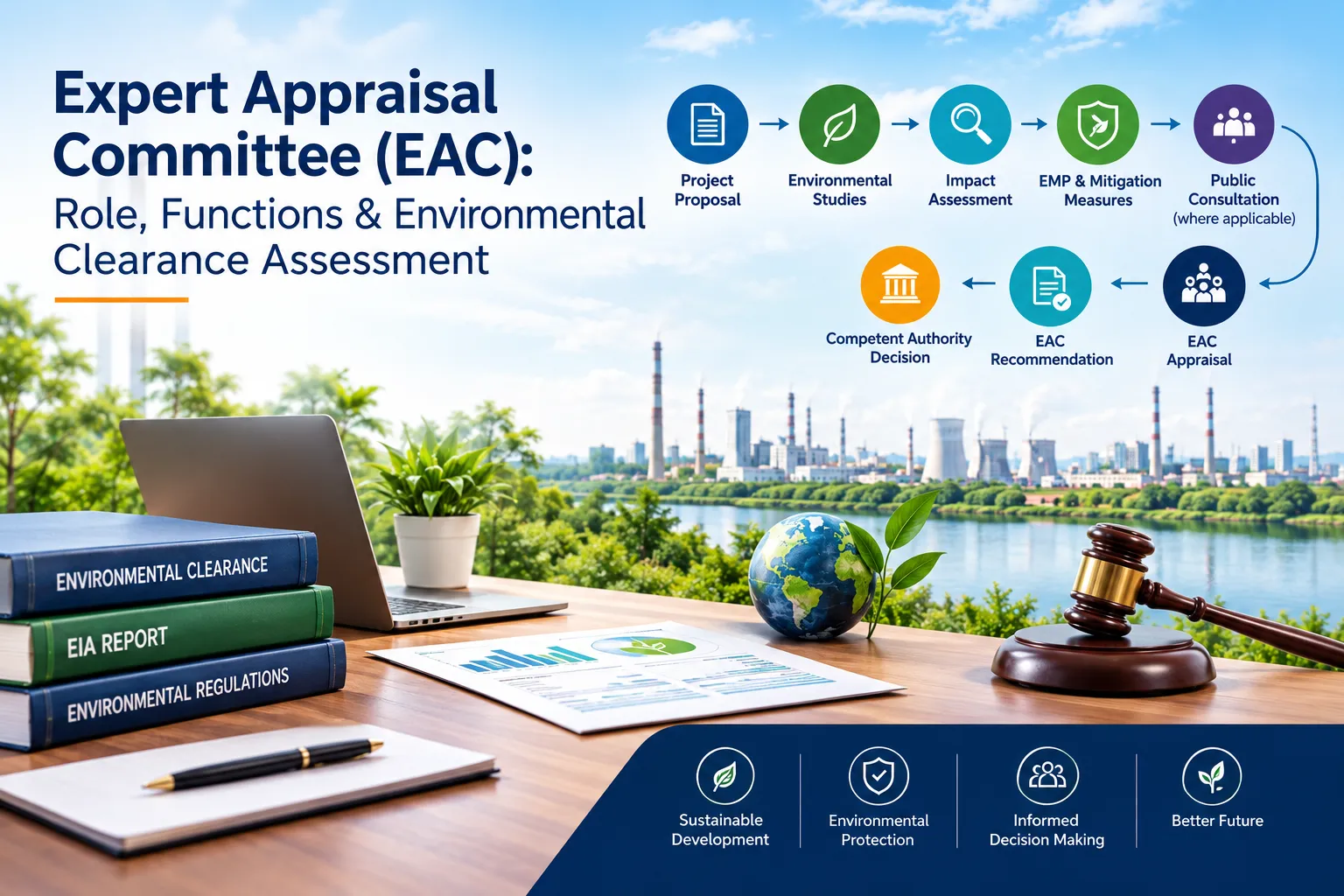
Project Proposal → Environmental Studies → Impact Assessment → EMP and Mitigation Measures → Public Consultation, Where Applicable → EAC Appraisal → Recommendation → Competent Authority Decision
The specific stages and documentation depend on the project's category, sector, and applicable regulatory requirements.
It is important to understand that the EAC's recommendation is not the same as the final Environmental Clearance. The competent regulatory authority takes the subsequent decision under the applicable framework.
Project proponents can review the EIA Clearance Process Service to understand how environmental assessment and approval requirements relate to project planning.
Documents and Information Considered During EAC Appraisal
Depending on the project type and appraisal stage, the committee may examine:
- Project proposal and application details
- Project location, layout, and capacity
- Terms of Reference (ToR), where applicable
- Environmental Impact Assessment (EIA) Report
- Environmental Management Plan (EMP)
- Baseline environmental data
- Risk assessment and disaster-management plan
- Public consultation documents, where applicable
- Information demonstrating compliance with approved ToR
- Additional studies and technical clarifications
- Responses to observations raised during appraisal
- Other relevant environmental documentation
Requirements vary according to the project category, sector, stage of appraisal, and applicable regulatory framework.
Maintaining complete environmental records and appropriate monitoring documentation can help project proponents respond to regulatory requirements. Relevant support may include Environmental Monitoring and Compliance Services
EAC Appraisal Meetings
EAC appraisal is conducted through meetings where project proposals are examined and discussed by committee members.
The project proponent or authorised representatives may be asked to present project details, explain environmental studies, and respond to questions or observations.
During appraisal, the committee may:
- Seek clarification about the project
- Request additional information
- Require further environmental studies
- Examine site-related environmental concerns
- Review proposed pollution-control measures
- Consider compliance with applicable requirements
- Defer consideration until essential information is provided
- Make recommendations based on its assessment
Providing clear, consistent, and technically supported information can help address questions raised during the appraisal process.
What Happens After EAC Appraisal?
After completing its review, the EAC records its recommendations in accordance with the applicable procedure. These recommendations may address the suitability of the proposal and environmental safeguards that should be considered by the competent authority.
Depending on the regulatory process and project circumstances, the proposal may proceed towards Environmental Clearance, require additional information or further consideration, or be rejected by the competent authority.
Where Environmental Clearance is granted, the project proponent must comply with the applicable conditions. These may include environmental monitoring, pollution control, resource management, waste handling, and periodic reporting.
Ongoing environmental monitoring and compliance support can help businesses review monitoring records, track applicable obligations, and identify compliance gaps.
Important distinction: The EAC performs the expert appraisal and recommendation function. The competent authority is responsible for the subsequent Environmental Clearance decision.
EAC vs SEAC
EAC and SEAC are expert appraisal committees associated with different levels of the Environmental Clearance framework.
| EAC | SEAC |
|---|---|
| Expert Appraisal Committee | State Expert Appraisal Committee |
| Associated with central-level appraisal within its assigned scope | Associated with state-level appraisal within its assigned scope |
| Constituted by MoEFCC | Constituted at the state level under the applicable framework |
| Appraises projects assigned to it under the relevant regulatory provisions | Appraises projects assigned to it under the relevant state-level provisions |
| Provides recommendations to the competent authority | Provides recommendations to the competent state authority |
The appropriate appraisal authority depends on the project category, sector, location, and applicable regulatory provisions. Project proponents should confirm the applicable route rather than assume that every project follows the same process.
Why Is EAC Important?
The EAC provides technical and environmental scrutiny during the appraisal of projects that fall within its scope. Its review helps bring environmental considerations into project planning and regulatory decision-making.
Key areas of consideration may include:
- Potential environmental impacts
- Pollution generation and control
- Water and energy requirements
- Waste management practices
- Ecological and biodiversity concerns
- Environmental risk management
- Mitigation measures
- Monitoring and reporting commitments
- Compliance with applicable safeguards
A thorough appraisal can help identify environmental concerns that require further study or improved management measures before a regulatory decision is made.
Role of the Project Proponent During EAC Appraisal
The project proponent is responsible for submitting accurate, complete, and technically supported information required for appraisal.
Responsibilities may include:
- Providing relevant project details
- Conducting applicable environmental studies
- Preparing EIA and EMP documents where required
- Addressing Terms of Reference requirements
- Submitting additional information requested during appraisal
- Responding to observations and technical queries
- Presenting the proposal when required
- Explaining proposed environmental safeguards
- Maintaining relevant records and supporting documents
The quality of project information and environmental studies can influence how effectively the committee assesses the proposal.
A structured Environmental audit and Guide may also help identify gaps in existing environmental documentation and management practices. An audit does not replace the project-specific studies or appraisal requirements prescribed by the competent authority.
Common Issues Examined During EAC Appraisal
Depending on the project, the committee may examine:
- Adequacy of baseline environmental data
- Site suitability and surrounding land use
- Water availability and consumption
- Wastewater generation, treatment, and disposal
- Air emissions and pollution-control systems
- Hazardous and solid waste management
- Ecological and biodiversity impacts
- Cumulative environmental impacts
- Environmental risks and hazards
- Rehabilitation and resettlement issues, where applicable
- Public consultation concerns
- Compliance with approved Terms of Reference
- Environmental management and monitoring arrangements
Identifying these issues during project preparation can help proponents address information gaps and develop appropriate mitigation measures.
EAC Recommendations and Environmental Clearance Conditions
The EAC's appraisal recommendations may inform environmental safeguards and conditions considered by the competent authority when deciding an Environmental Clearance proposal.
Depending on the project, conditions may relate to:
- Environmental monitoring
- Air and water pollution control
- Water conservation and reuse
- Solid and hazardous waste management
- Greenbelt development
- Biodiversity protection
- Occupational health and safety
- Environmental management responsibilities
- Periodic reporting and compliance submissions
Once Environmental Clearance is granted, the project proponent should identify the applicable conditions, assign responsibilities, maintain supporting records, and complete monitoring and reporting as required.
Appropriate environmental monitoring and compliance services can help businesses organise compliance activities and review relevant documentation.
EAC Appraisal: Key Takeaway
The Expert Appraisal Committee (EAC) is an expert technical body involved in Environmental Clearance appraisal for projects falling within its assigned scope. It examines project proposals, environmental studies, potential impacts, mitigation measures, and other relevant information before providing recommendations to the competent authority.
For project proponents, preparation is important. Accurate project details, adequate baseline data, technically sound EIA and EMP documents, and clear responses to observations can help address the committee's concerns.
Understanding the distinction between EAC appraisal and the final Environmental Clearance decision is equally important. The EAC provides expert recommendations, while the competent regulatory authority takes the subsequent decision under the applicable framework.
Conclusion
The Expert Appraisal Committee (EAC) plays an important role in environmental decision-making by providing expert technical and environmental evaluation of projects within its assigned scope. Its review may cover project proposals, environmental studies, potential impacts, mitigation measures, Terms of Reference compliance, and proposed environmental safeguards.
Effective preparation before appraisal helps project proponents organise the required information, address technical concerns, and understand applicable environmental requirements. A well-prepared assessment, supported by suitable studies and clear documentation, can help the appraisal process proceed with better clarity
Related Guides & Resources
- Environmental Approvals Checklist Manufacturing Plant India →
- Environment Protection Act 1986 →
- Environmental Compensation India →
- EIA Notification 2006 →
- EC Approval Timeline India →
Need Help with Environmental Compliance?
Simplicomp provides support for:
- Environmental Clearance & EIA
- Pollution Control Consent
- Groundwater Compliance
- Operational Environmental Compliance
- CAQM Closure & Resumption Support