

Introduction
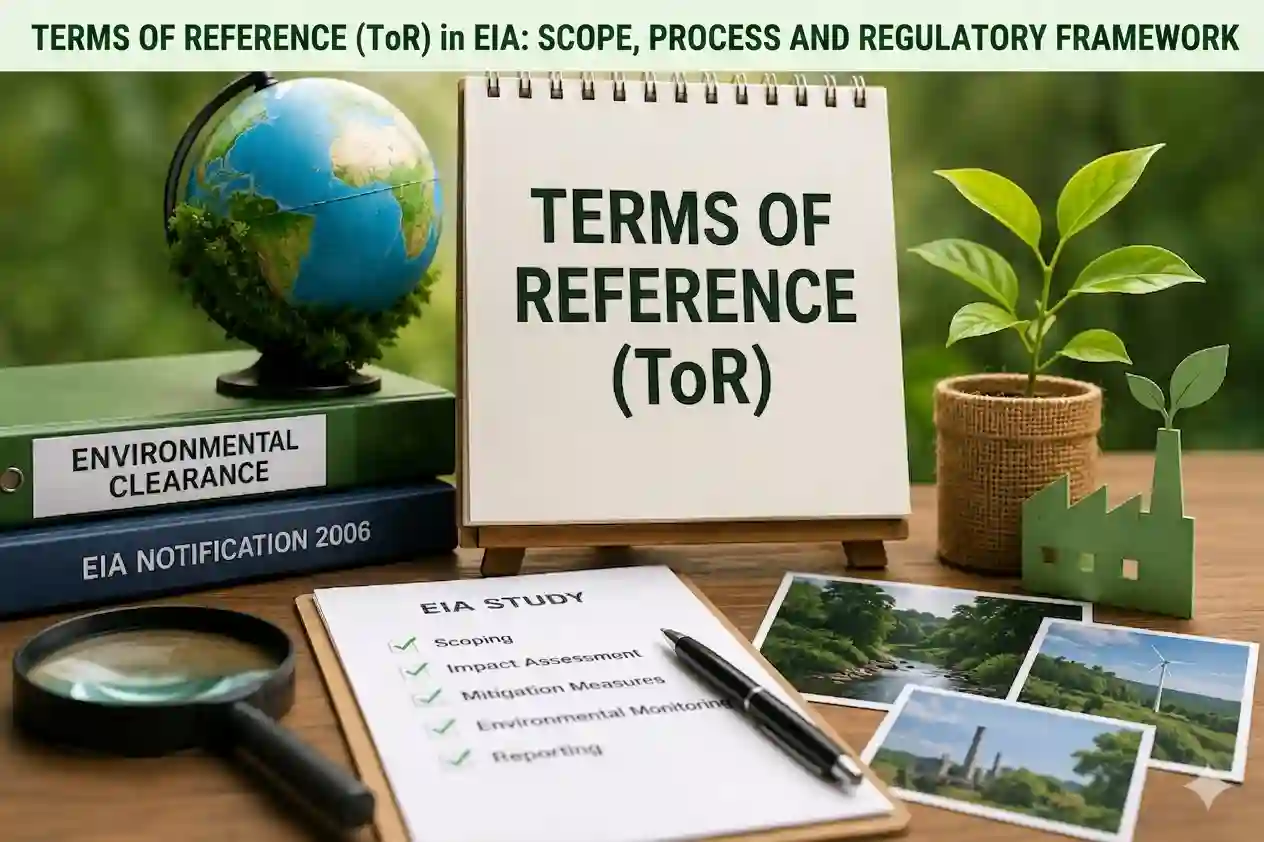
Terms of Reference (ToR) is a critical stage in the Environmental Clearance process defined under the EIA Notification 2006 issued by the Ministry of Environment, Forest and Climate Change.
It defines what needs to be studied, assessed, and reported in the Environmental Impact Assessment (EIA) study for a project.
What is Terms of Reference (ToR)?
Definition
Terms of Reference (ToR) is an official document issued by regulatory authorities that outlines the scope and methodology of the EIA study.
It acts as a guideline for:
- Environmental data collection
- Impact assessment
- Mitigation planning
Projects that fail to comply with these requirements may face delays, rejection, or penalties.
Purpose of ToR in Environmental Clearance
ToR ensures that:
- All relevant environmental aspects are studied
- The EIA report is comprehensive and standardized
- Project-specific impacts are properly assessed
- Regulatory expectations are clearly defined
A strong ToR reduces future delays and regulatory queries.
Where ToR Fits in the EC Process
ToR is issued during the Scoping Stage of the Environmental Clearance process.
Process Flow:
- Screening
- Scoping (ToR issuance)
- Public Consultation
- Appraisal
Who Issues ToR?
Category A Projects
Issued by Expert Appraisal Committee (EAC) under MoEFCC.
Category B Projects
Issued by State Expert Appraisal Committee (SEAC).
How ToR is Obtained
Step 1: Application Submission
Project proponent submits:
- Form 1
- Pre-feasibility report
Step 2: Review by Committee
EAC/SEAC evaluates:
- Project details
- Potential environmental impacts
Step 3: ToR Issuance
Authority issues ToR specifying:
- Scope of study
- Parameters to be assessed
- Data requirements
Key Components of ToR
A typical ToR includes:
Project Description
Details of project scope, size, and location.
Baseline Environmental Data Requirements
- Air quality
- Water quality
- Soil conditions
- Biodiversity
Impact Assessment Requirements
- Identification of environmental impacts
- Quantification of risks
Mitigation Measures
Steps to minimize environmental damage.
Environmental Management Plan (EMP)
Implementation and monitoring strategy.
Importance of ToR for Project Developers
A well-defined ToR helps:
- Avoid incomplete EIA reports
- Reduce regulatory queries
- Speed up approval process
- Ensure compliance from the beginning
Common Issues Related to ToR
- Incomplete application details
- Generic or copied data
- Failure to address all ToR conditions
- Delay in conducting studies
These issues often lead to delays in EC approval.
Digital Environmental Clearance System
Applications are processed through the PARIVESH Portal, enabling online submission and tracking.
Features:
- Online submission
- ToR tracking
- Communication with authorities
- Transparent workflow
Related Environmental Library Pages
Need Help with Environmental Clearance?
Simplicomp provides support for:
- ToR preparation and compliance
- Environmental Clearance applications
- EIA studies and documentation
- Regulatory coordination with authorities