


Introduction to the National Green Tribunal (NGT)
The Tribunal was created to provide a dedicated mechanism for handling environmental matters involving substantial questions relating to the environment and enforcement of legal rights connected with environmental protection.
NGT Orders & Environmental Case Laws in India Library
Chemical & Industrial Safety What is the National Green Tribunal (NGT)?
Overview
The National Green Tribunal (NGT) was established under the National Green Tribunal Act, 2010 to ensure speedy environmental justice and effective disposal of environmental cases.
The Tribunal has jurisdiction over civil cases involving substantial environmental questions arising under major environmental laws including:
as specified under Schedule I of the NGT Act.
NGT has powers to:
The Tribunal also hears appeals related to:
NGT decisions are legally binding and enforceable under environmental laws in India.
Key Environmental Principles Applied by NGT
NGT decisions are heavily guided by internationally recognized environmental principles incorporated under the National Green Tribunal Act, 2010.
Sustainable Development Principle
Projects and industries are expected to balance economic development with environmental protection and sustainable resource utilization.
Precautionary Principle
Where environmental risks are uncertain, preventive action may be required even without complete scientific certainty.
Polluter Pays Principle
Industries and entities responsible for environmental damage may be directed to pay environmental compensation and restoration costs.
Environmental Laws Covered Under NGT Jurisdiction
NGT primarily deals with environmental matters arising under
- Water (Prevention and Control of Pollution) Act, 1974
- Water Cess Act, 1977
- Forest Conservation Act, 1980
- Air (Prevention and Control of Pollution) Act, 1981
- Environment Protection Act, 1986
- Public Liability Insurance Act, 1991
- Biological Diversity Act, 2002
These laws are specifically listed under Schedule I of the National Green Tribunal Act, 2010.
Powers of National Green Tribunal (NGT)
NGT has powers to:
Summon and examine witnesses
Review environmental approvals
Award environmental compensation
Direct restoration of damaged environments
Order closure or restriction of polluting activities
Hear appeals against environmental clearances and SPCB decisions
The Tribunal is not bound by strict civil procedure rules and follows principles of natural justice while deciding environmental disputes.
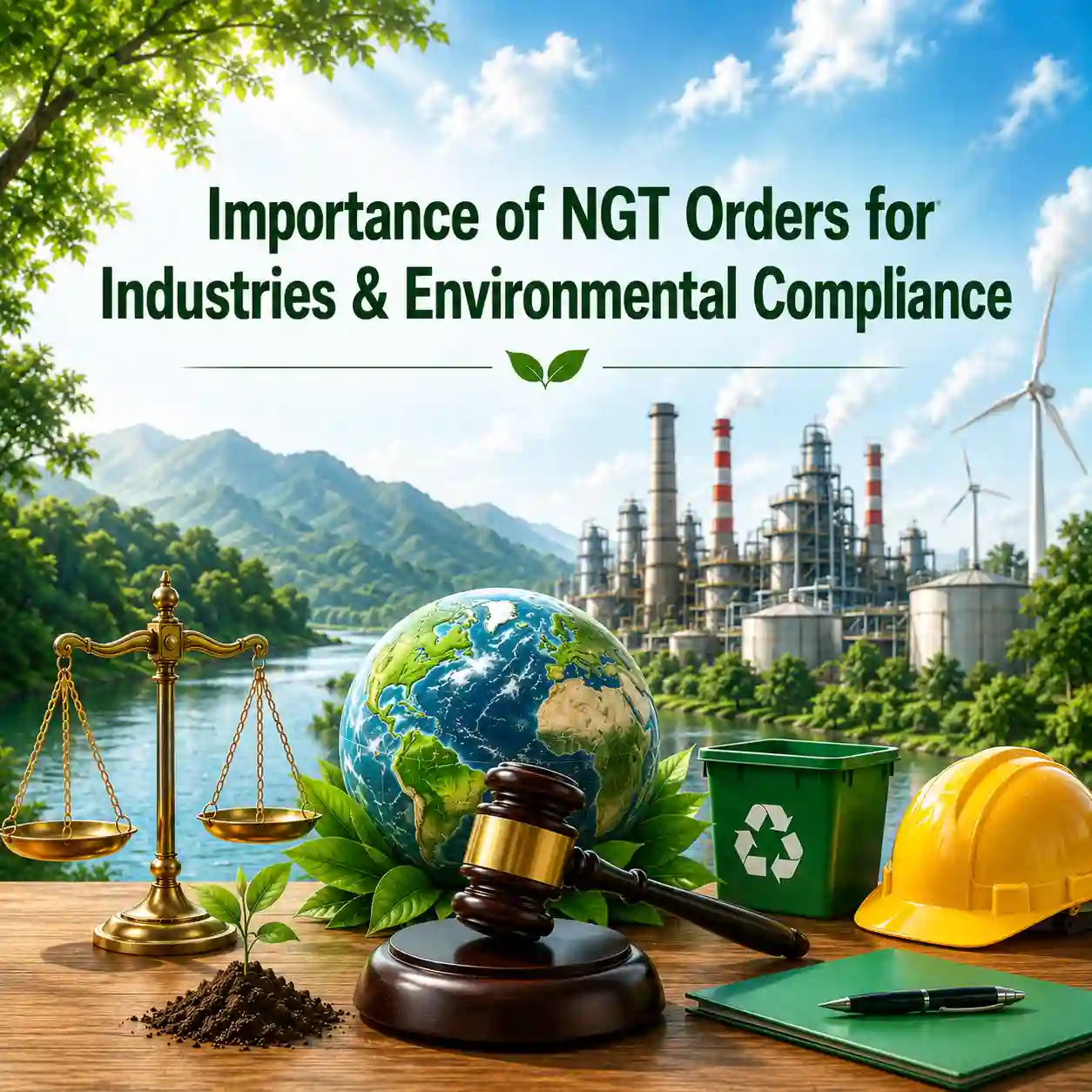
Importance of NGT Orders for Industries & Environmental Compliance
NGT judgments influence:
- Environmental approval processes
- Pollution control obligations
- Waste management practices
- Groundwater extraction permissions
- Environmental compensation mechanisms
- Industrial operational compliance
NGT rulings often shape future environmental regulations, compliance frameworks, and enforcement procedures adopted by regulatory authorities.
Major Environmental Issues Commonly Addressed by NGT
NGT frequently addresses:-
- Illegal groundwater extraction and river pollution
- Unauthorized industrial operations
- Pollution discharge violations
- Solid waste mismanagement
- Illegal mining activities
- Environmental Clearance violations
- Hazardous waste disposal
- Air pollution and emission violations
Regulatory Authorities Frequently Involved in NGT Matters
Ministry of Environment, Forest and Climate Change (MoEFCC)
MoEFCC is often involved in NGT proceedings related to:
- Environmental Clearance
- Environmental notifications
- Forest approvals
- Waste management regulations
Central Pollution Control Board (CPCB)
CPCB is frequently directed by NGT to:
- Conduct inspections
- Monitor pollution
- Develop environmental standards
- Assess environmental damage
- Calculate environmental compensation
State Pollution Control Boards (SPCBs)
SPCBs are commonly involved in NGT proceedings concerning:
- Pollution control violations
- Industrial inspections
- Consent violations
- Waste management compliance
- Environmental enforcement
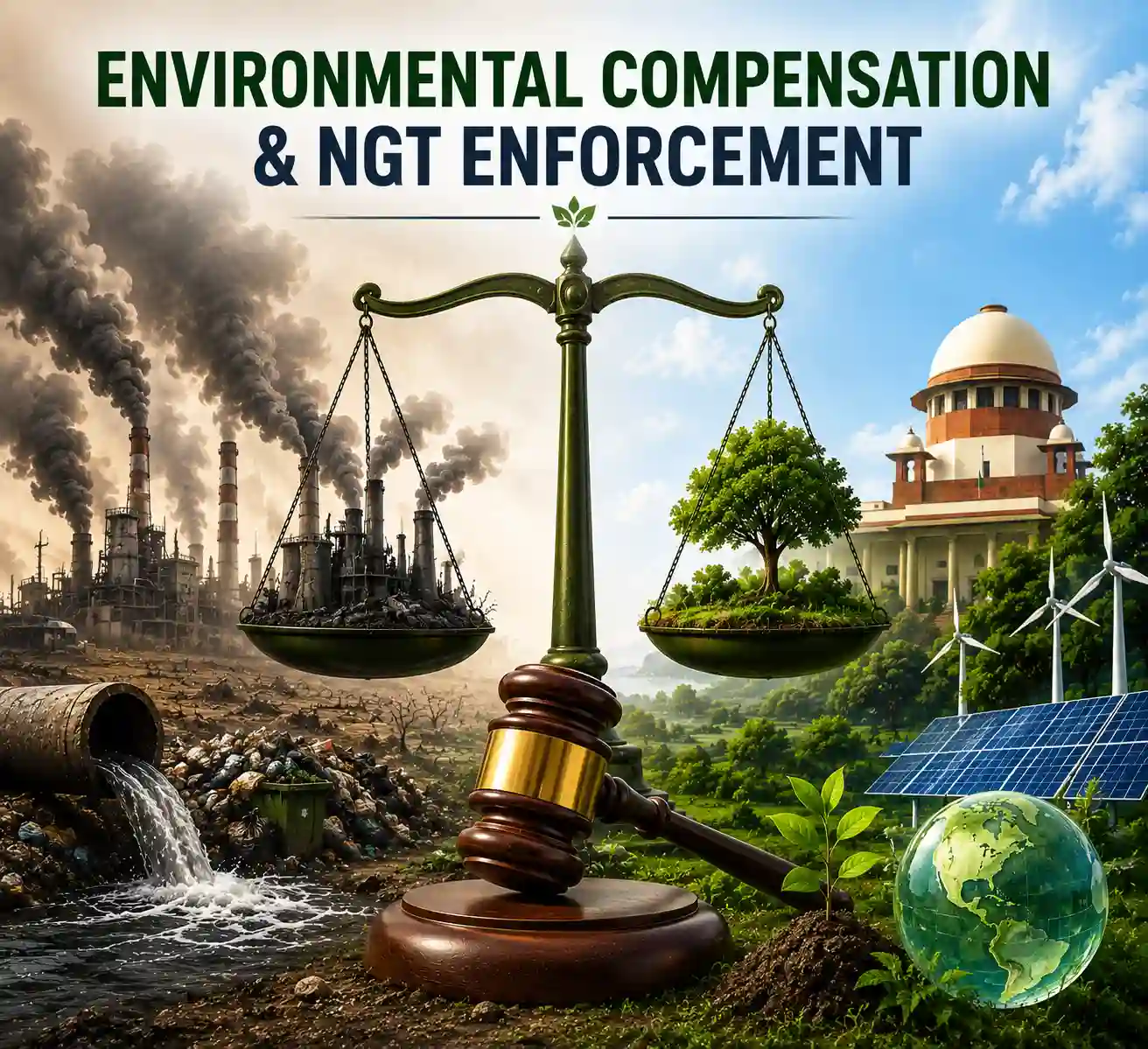
Environmental Compensation & NGT Enforcement
NGT frequently imposes environmental compensation for:
- Pollution violations
- Illegal groundwater extraction
- Waste mismanagement
- Unauthorized industrial operations
- Environmental damage
Environmental compensation mechanisms have become a major compliance and enforcement tool in environmental governance.
Impact of NGT Orders on Industries & Projects
NGT rulings may affect:
Project approvals and industrial operations
Environmental compliance costs
Construction activities
Mining projects
Infrastructure developments
Waste processing facilities
Industries are increasingly required to strengthen environmental compliance frameworks due to stricter tribunal enforcement.
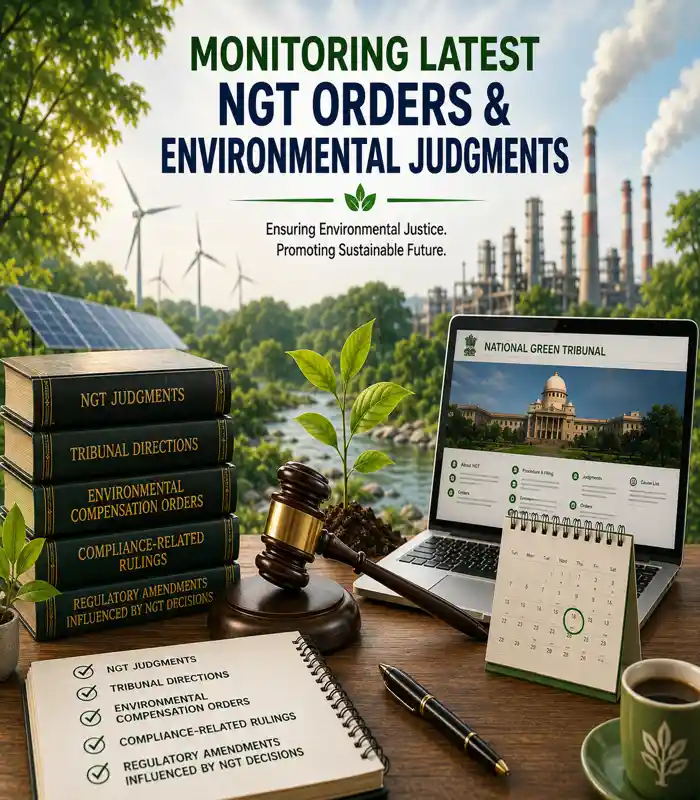
Monitoring Latest NGT Orders & Environmental Judgments
Environmental professionals and industries should regularly monitor:
- NGT judgments
- Tribunal directions
- Environmental compensation orders
- Compliance-related rulings
- Regulatory amendments influenced by NGT decisions
Staying updated helps organizations maintain environmental compliance readiness and reduce regulatory risks.
Need Help with Environmental Compliance & Regulatory Matters?
Simplicomp provides support for:
- Environmental compliance assessments
- Pollution control approvals
- Environmental Clearance compliance
- Groundwater approvals
- Waste management compliance
- Regulatory documentation and coordination