

Company Profile
Pollution Control Board Consent (CTE & CTO/CCA) Services in India

Treated Effluent Testing & Compliance Reporting for STP / ETP Systems

Treated Effluent Testing & Reporting for STP / ETP Systems

Treated effluent testing and compliance reporting services for STP and ETP systems
Facilities operating Sewage Treatment Plants (STP) and Effluent Treatment Plants (ETP) are required to regularly test treated effluent to ensure compliance with CPCB/SPCB discharge standards, Pollution Control Board consent conditions, and environmental regulations.

Treated wastewater must consistently meet prescribed limits before ischarge, reuse, or disposal, under CPCB/SPCB regulations, Environmental Clearance (EC) conditions, and Pollution Control Board consent requirements. and test reports must be maintained as part of statutory compliance and inspection readiness.

Simplicomp Tech LLP provides end-to-end support for treated effluent sampling, laboratory testing coordination, result interpretation, and regulatory reporting —ensuring accurate compliance verification and regulator-ready documentation.
What Is Treated Effluent Testing?

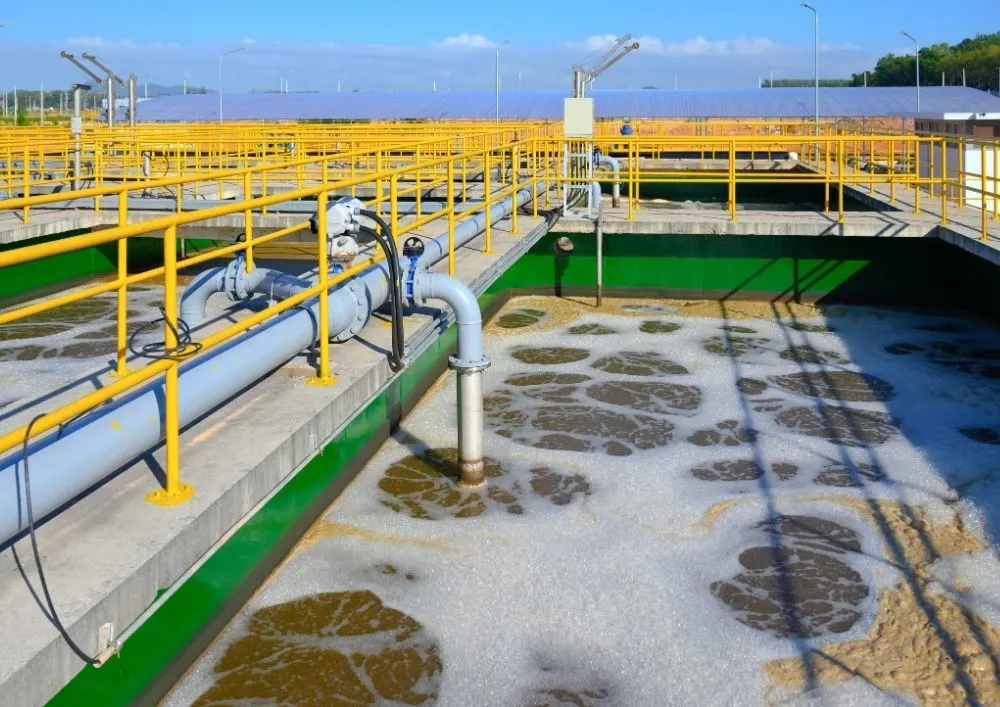
Treated effluent testing involves sampling and laboratory analysis of wastewater at STP / ETP inlet and outlet points to verify that treatment systems are effectively removing pollutants and meeting permissible discharge limits.

Testing ensures :-

Compliance with CTO discharge conditions

Adherence to CPCB/SPCB wastewater standards

Safe discharge into sewers, drains, surface water, or reuse systems

Early detection of treatment inefficiencies or process failures

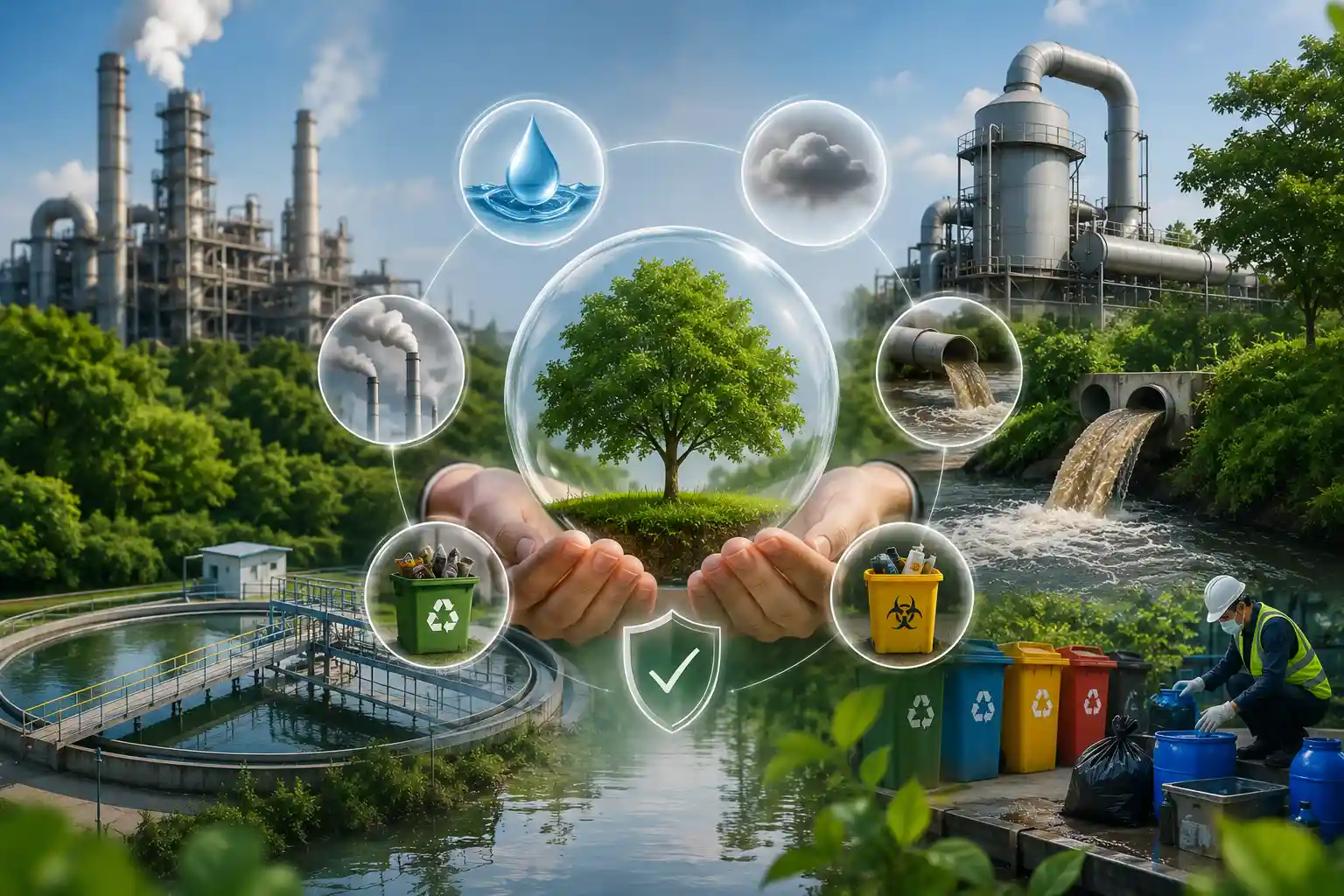
Environmental pollution control objectives showing water treatment, air emission control, industrial waste management, and hazardous waste compliance in India

Why Treated Effluent Testing Is Mandatory

Regular effluent testing helps organisations :-

Avoid regulatory penalties, closure notices, or legal action
Prevent environmental contamination of water bodies and groundwater
Demonstrate compliance during PCB inspections and audits
Enable safe reuse of treated water for gardening, flushing, cooling, or industrial processes
Support six-monthly EC compliance reports, Form V, and statutory filings
Enable safe reuse of treated water for gardening, flushing, cooling, or industrial processes
Monitor STP / ETP performance and treatment efficiency
Maintain reliable compliance records and performance logs

Sampling Locations & Parameters Covered

01

STP Inlet & Outlet Wastewater Testing

Parameters including BOD, COD, TSS, pH, ammonia, nutrients, oil & grease, faecal coliform, and other sewage-related indicators.

02

ETP Inlet & Outlet Industrial Effluent Testing

Analysis of COD, heavy metals, toxic contaminants, oil & grease, hazardous compounds, and industry-specific pollutants.

03

ETP / STP Sludge & Residue Testing

Testing of sludge and treatment residues to determine disposal classification and regulatory compliance.

04

Treated Effluent Quality for Reuse

Verification of treated water quality for gardening, flushing, cooling towers, construction, or industrial reuse.

05

Treated Water Reuse & Closed-Loop Circulation

Integration of recovered water into industrial processes, utilities, and non-potable applications.

Key Wastewater Parameters Evaluated During Effluent Testing

Effluent quality assessment may include analysis of physical, chemical, and biological parameters depending on the project category, wastewater characteristics, and regulatory requirements.

Common parameters include BOD, COD, TSS, TDS, pH, oil & grease, ammonia, nitrates, phosphates, heavy metals, residual chlorine, faecal coliform, conductivity, cyanide, sulphides, and industry-specific contaminants.

Environmental pollution control objectives showing water treatment, air emission control, industrial waste management, and hazardous waste compliance in India

Frequency of Testing Based on Project Category

Testing frequency depends on Pollution Control Board classification :-

Red Category Units: Recommended quarterly effluent testing

Orange Category Units: Recommended six-monthly testing

Green Category Units: Recommended annual testing


Additional testing may be required under EC conditions, CTO requirements, or SPCB directions.

Testing Process & Compliance Workflow

01

Sampling & Chain-of-Custody Management

Collection of wastewater samples following CPCB/SPCB protocols and proper preservation methods.

02

NABL-Accredited Laboratory Testing

Coordination with approved laboratories to ensure reliable, regulator-accepted test results.

03

Result Interpretation & Compliance Assessment

Review of test data to verify compliance with discharge limits and consent conditions. to determine disposal classification and regulatory compliance.

04

Reporting & Documentation for Regulators

Preparation of test reports, compliance summaries, and regulator-ready documentation PCB submissions and inspections.

05

Corrective Action Advisory (If Deviations Occur)

Guidance on process adjustments, operational improvements, or system upgrades when results exceed permissible limits.

Who Requires Treated Effluent Testing & Reporting?

This service applies to :-

Industrial and manufacturing units

Commercial and institutional facilities

Residential townships and real estate projects

Infrastructure and large development projects

Hospitals, hotels, and campuses

Any project operating STP / ETP systems under PCB consent approvals

Failure to comply may result in closure notices, fines, consent suspension, or legal enforcement.

Why Choose Simplicomp for Effluent Testing Support?

Strong understanding of PCB discharge standards and wastewater regulations

Experience across industrial, commercial, residential, and infrastructure sectors

Regulator-aligned sampling, testing, and reporting protocols

Accurate, timely, and audit-ready compliance documentation

Reduced risk of penalties, notices, or discharge violations

How Simplicomp Supports Effluent Testing & Reporting

Simplicomp provides structured support including :-

  • Coordination of inlet and outlet wastewater sampling
  • Laboratory testing through NABL-accredited labs
  • Compliance evaluation against CPCB/SPCB norms
  • Preparation of statutory test reports and compliance summaries
  • Support during PCB inspections and audit verification
  • Advisory on treatment performance improvements and reuse opportunities
Questions

Frequently Asked Questions (FAQs)

What is treated effluent testing?
Treated effluent testing involves laboratory analysis of wastewater discharged from STP or ETP systems to verify compliance with CPCB/SPCB discharge standards.
How often should treated wastewater be tested?
Testing frequency depends on PCB category, CTO conditions, EC requirements, and project-specific regulatory obligations.
Which parameters are tested in STP and ETP wastewater?
Common parameters include BOD, COD, TSS, pH, ammonia, oil & grease, heavy metals, nutrients, faecal coliform, and industry-specific contaminants.
Is NABL laboratory testing mandatory?
Most regulatory authorities prefer or require testing through NABL-accredited laboratories for compliance acceptance and inspection purposes.
Can treated wastewater be reused after testing?
Yes. Treated wastewater may be reused for gardening, flushing, cooling towers, construction, and industrial applications if it meets applicable reuse standards.

Need Treated Effluent Testing & Reporting Support?

Speak with our environmental compliance experts to manage wastewater sampling, laboratory testing, compliance verification, and regulatory reporting for your STP / ETP

Related Compliance Area: Monitoring, Reporting & Audits

Effluent testing forms a core part of environmental monitoring, statutory reporting, and regulatory audit requirements under Pollution Control Board and EC conditions.