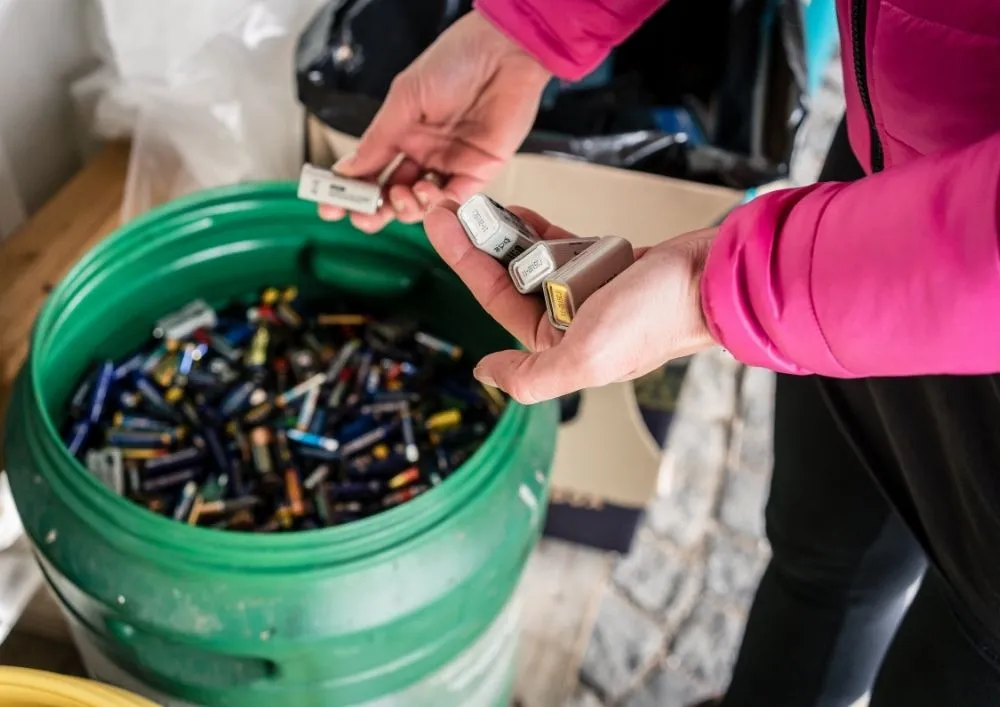
Extended Producer Responsibility (EPR) for Battery Waste in India
Extended Producer Responsibility (EPR) for Battery Waste
is a statutory obligation under the Battery Waste Management Rules, 2022,
requiring battery producers to ensure collection, recycling, refurbishment, and environmentally sound management
of waste batteries.
Under this framework, battery producers must register with the Central Pollution Control Board (CPCB),
meet annual EPR collection and recycling targets, obtain EPR certificates,
and submit periodic compliance filings through the centralised online portal.
Simplicomp Tech LLP provides end-to-end support for battery waste EPR compliance,
including registration, target planning, recycler onboarding, reporting, and renewals.
What Is EPR for Battery Waste?
EPR for Battery Waste makes producers responsible for the
environmentally sound management of waste batteries generated from their products at end-of-life.
Producers must ensure :-
Collection of used and end-of-life batteries
Recycling or refurbishment through registered facilities
Achievement of material recovery targets
Compliance with CPCB reporting requirements
Avoidance of landfilling or unsafe disposal
The objective is to promote resource recovery, circular economy practices,
and reduction of environmental and health risks.
Who Requires Battery Waste EPR Registration?
EPR registration applies to entities that :-
- Manufacture batteries under their own brand
- Sell batteries under private label
- Import batteries or battery-powered products
- Place batteries or battery packs in the Indian market
- Pollution prevention, environmental safeguards, and occupational safety
This includes producers of :-
- Portable batteries
- Automotive batteries
- Industrial batteries
- Electric vehicle (EV) batteries
Battery Categories Covered Under EPR
Portable Batteries
Small batteries used in consumer electronics and household devices.
Automotive Batteries
Batteries used in internal combustion engine vehicles.
Industrial Batteries
Batteries used in industrial and commercial applications.
Electric Vehicle (EV) Batteries
High-capacity batteries used in electric mobility.
Each category has specific collection and recycling targets,
reviewed and notified periodically by CPCB.
Key Obligations Under Battery Waste EPR Rules
Battery producers must comply with the following regulatory obligations:
- Register on the CPCB Battery EPR Portal
- Submit an EPR Action Plan
- Meet annual collection, recycling, and refurbishment targets
- Engage registered recyclers or refurbishers
- Obtain and utilise EPR Certificates
- File annual returns and compliance reports
- Maintain traceable records of battery sales and waste management
Non-compliance may lead to financial penalties, suspension of registration,
or regulatory enforcement.
Battery Waste EPR Services Offered by Simplicomp
01
➜
Eligibility Review & Scope Assessment
Assessment of battery type, product portfolio, and EPR applicability.
02
➜
CPCB Registration & EPR Authorisation
End-to-end handling of :-
- Producer registration on CPCB portal
- Application documentation & filing
- Digital signature & authority coordination
- Query resolution & approval tracking
03
➜
EPR Plan Development & Target Calculation
Preparation of CPCB-compliant EPR Action Plans, including :-
- Collection & take-back strategies
- Recycling and refurbishment targets
- Compliance timelines
04
➜
Recycler & Refurbisher Partner Onboarding
Assistance in engaging CPCB-registered battery recyclers and refurbishers
to meet target obligations.
05
➜
EPR Certificate Procurement & Management
Support for :-
- Tracking EPR certificate generation
- Certificate utilisation planning
- Compliance with material recovery benchmarks
06
➜
Annual Returns & Compliance Reporting
Preparation and filing of :-
- Annual EPR compliance returns
- Sales & waste management data
- CPCB portal reporting & documentation
07
➜
Renewals, Amendments & Ongoing Compliance
Support for :-
- Registration renewals
- Product or battery category updates
- Regulatory change management
Documents Required for Battery Waste EPR Registration
Typical documentation includes :-
- Copy of CTE / CTO approval
- Certificate of Incorporation / CIN
- Product and battery category details
- Sales and distribution information
- Authorised Signatory ID & Board Resolution
- EPR Action Plan
- Recycler / refurbisher agreements (if available)
Timelines & Validity
| Service Component |
Processing Time |
| EPR Registration Timeline :- |
Approx 30–45 days |
| Registration Validity :- |
5 years |
| Reporting Frequency :- |
Annual |
| Target Review Cycle :- |
As notified by CPCB |
Why Battery Waste EPR Compliance Is Important
Compliance helps organisations :-
Avoid CPCB penalties and enforcement action
Maintain legal market access for batteries
Ensure safe handling of hazardous battery materials
Support resource recovery and circular economy
Strengthen ESG and sustainability credentials
Prevent environmental contamination from heavy metals
Why Choose Simplicomp for Battery Waste EPR?
- Expertise in Battery Waste Management Rules, 2022
- Experience handling portable, EV, automotive, and industrial battery compliance
- CPCB-aligned documentation and reporting accuracy
- Network of registered battery recyclers and refurbishers
- End-to-end support from registration to annual compliance
- Reduced risk of delays, rejections, or penalties
Need Support for Battery Waste EPR Compliance?
Speak with our compliance experts to assess battery EPR applicability,
CPCB registration requirements, target obligations, and reporting timelines
for your organisation.
Next Compliance Stage: STP / ETP Solutions
For battery manufacturing or processing units generating wastewater or effluent, compliance with
Sewage Treatment Plant (STP) or Effluent Treatment Plant (ETP)
regulations becomes mandatory.